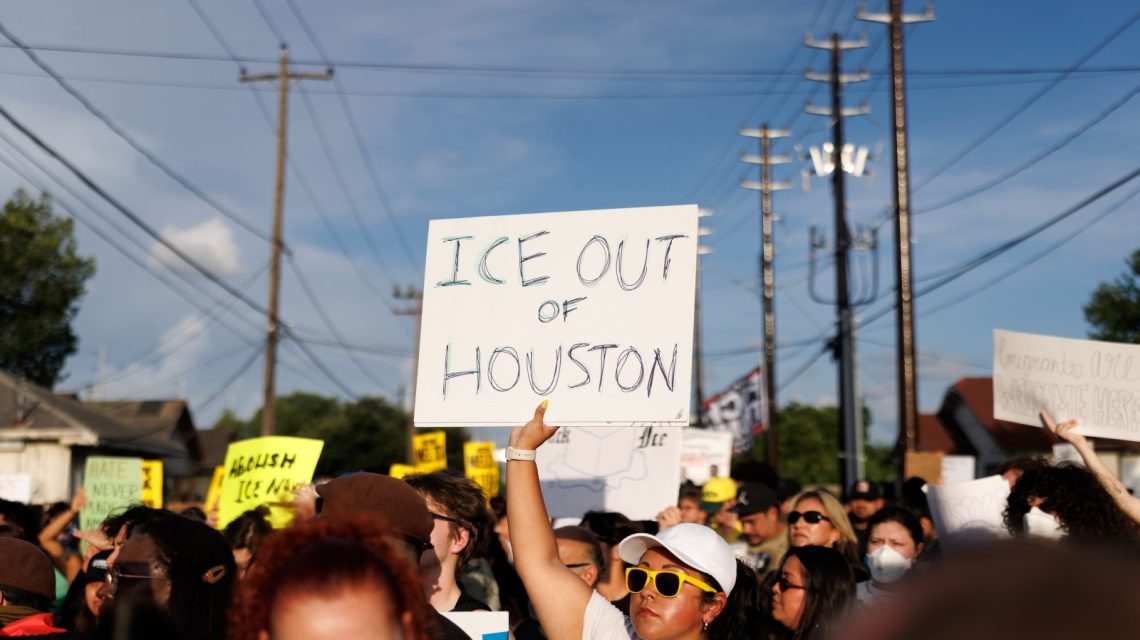
Two cities in Texas are taking steps to alter how local law enforcement engages with U.S. Immigration and Customs Enforcement (ICE) following recent election results. In Houston, an executive order was initiated, while Austin plans administrative updates.
On Tuesday, Democratic candidates gained control of every statewide race in Texas, traditionally a Republican stronghold. This victory ended a three-decade losing streak for Democrats in the state.
Notably, Democratic State Representative James Talarico won a U.S. Senate seat against Republican Ken Paxton. Meanwhile, State Representative Gina Hinojosa defeated Republican Governor Greg Abbott, becoming the state’s first Latina governor.
“Elections matter,” stated Houston Mayor John Whitmire, emphasizing the significance of the recent policy changes.
This week, Mayor Whitmire issued an executive order for the Houston Police Department. Officers are now directed to inform ICE only when an arrested individual holds an administrative immigration warrant for a jailable offense. The order stops officers from contacting ICE solely for administrative warrants resulting in warnings or citations. Whitmire expressed the necessity of this policy for reducing community fear and anxiety.
In Austin, Mayor Kirk Watson ordered Police Chief Lisa Davis to propose updates to the Austin Police Department’s general regulations regarding federal immigration interaction.
Federal Enforcement Encounters Raise Local Concerns
The changes follow several fatal incidents involving federal immigration officers this year. One case involved U.S. citizens Renee Nicole Good and Alex Pretti being shot by officers in Minneapolis. Another involved ICE fatally shooting Mexican national Lorenzo Salgado Araujo during an arrest attempt in Houston.
Critical voices demand independent investigations into these events, highlighting the need for revised local policies concerning federal immigration enforcement.
Nationwide, local governments are attempting to limit the role of local resources in federal immigration matters. This effort is a response to intensified immigration enforcement under the Trump administration, which pursued a goal of 1 million deportations annually.
The Migration Policy Institute reported approximately 980,000 deportations and returns during the initial 18 months of Trump’s second term.
White House spokeswoman Lauren Bis criticized the policy changes, stating that such actions compromise public safety.
State Preemption and Legal Constraints
Texas law restricts how much local authorities can limit cooperation with federal enforcement, particularly due to Senate Bill 4, which prevents cities from significantly hindering cooperation with federal immigration agencies.
Houston’s executive order does not end its cooperation with ICE, nor does it prevent federal operations within the city. However, officers must contact ICE when booking individuals with administrative warrants for jailable charges.
In Austin, any adjustments to police guidelines must comply with state legalities, which the city attorney will review. Earlier in the year, Austin’s police policy allowed, but did not require, officers to inform ICE about administrative warrants without arrestable charges. This policy was adjusted in response to potential state funding cuts.
Local leaders support further restrictions on cooperation. Austin City Council members advocate for limiting police interactions with ICE as much as federal law permits.
Cities with Restricted ICE Cooperation
Across the country, municipalities strengthened their limitations on local involvement in immigration enforcement. However, these regulations generally allow federal authorities to enforce immigration laws independently.
- Biddeford, Maine (October 20, 2026): Passed restrictions on municipal resources for immigration, effective November 19.
- Upper Darby, Pennsylvania (September 16, 2026): Restricted local resources for civil immigration enforcement with limited exceptions.
- Philadelphia (April 23 and May 7, 2026): Adopted the “ICE Out” package restricting municipal immigration enforcement support.
- Portland, Maine (May 4, 2026): Strengthened rules on municipal employee involvement in civil immigration enforcement.
- Davis, California (April 7, 2026): Extended sanctuary city laws limiting city resources for immigration enforcement.
- Lewiston, Maine (March 17, 2026): Made temporary restrictions permanent regarding local involvement in federal immigration operations.
- Buffalo, New York (January 26, 2026): Issued an executive order to restrict city resources for immigration enforcement.
Other cities such as Boston, Seattle, New York City, Newark, Jersey City, Providence, and San Diego also adopted measures to limit immigration enforcement cooperation. In August, a new law in New York restricted police and sheriff’s departments’ collaborations with ICE.
The impact of Houston’s policy change could influence similar trends across Texas.
 Senator Ron Johnson Critiques Trump Administration’s Alleged Corruption
 Inside the High-Stakes Role of White House Press Secretary
 Sen. Van Hollen Questions Schumer’s Leadership, Houston’s Changes in ICE Cooperation, and Holiday Shopping Trends Amid Inflation
 Eisenkot to Form New Israeli Government as Netanyahu Faces Setback
 Israeli President Assigns Gadi Eisenkot to Form New Government
 Bill Maher Urges Moderates to Challenge Socialists in Democratic Party