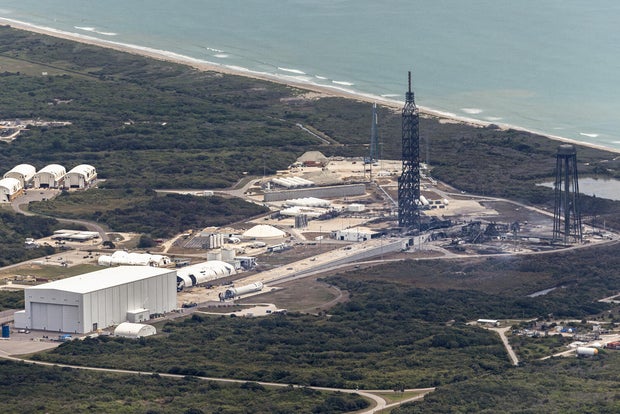
The recent explosion at Blue Origin’s launch pad affected their operations but not as severely as initially thought. The company aims to resume New Glenn rocket launches by the year’s end, as announced by CEO Dave Limp.
Launch Pad Damage Assessed
Post-explosion analysis revealed that crucial facilities such as propellant tanks and a nearby processing hangar were intact. The support gantry was damaged; however, repairs can proceed onsite without needing replacement.
“Now that we’ve had access to the pad and integration facility we can share a bit of good news,” Limp stated.
He added that the propellant farm, tanks for liquid hydrogen, oxygen, and cryogenic methane, remain in good condition. This mitigates fears due to their lengthy production times. Both the water and big support towers were also deemed salvageable.
The explosion last Thursday destroyed the New Glenn rocket and its transporter-erector. Fortunately, another booster and three upper stages in the integration facility were unaffected.
Operational Adjustments
Blue Origin had been contemplating an alternative assembly method, eliminating the need for the transporter-erector. The incident fast-tracked this transition, making it unnecessary to replace the transporter-erector.
Limp assured the public of their determination to resume flights before the end of the year.
Implications for Space Exploration
Blue Origin’s setback poses challenges for NASA’s Artemis moon program, crucial in the U.S. space race. NASA plans to conduct multiple moon landing missions by 2028, relying on both SpaceX and Blue Origin for safe passages.
Contracts were in place for the launch of science experiments under Artemis objectives. As such, Isaacman and NASA appreciate Blue Origin’s accelerated response, aiming to minimize any delays.
Impact on ULA and Vulcan Rocket
United Launch Alliance’s Vulcan rocket uses Blue Origin’s BE-4 engines. An extended investigation into the explosion could affect ULA’s schedule, yet the engines have not been identified as the cause.
NASA remains committed to ensuring American presence on the moon before 2028, showcasing technological and national capabilities.