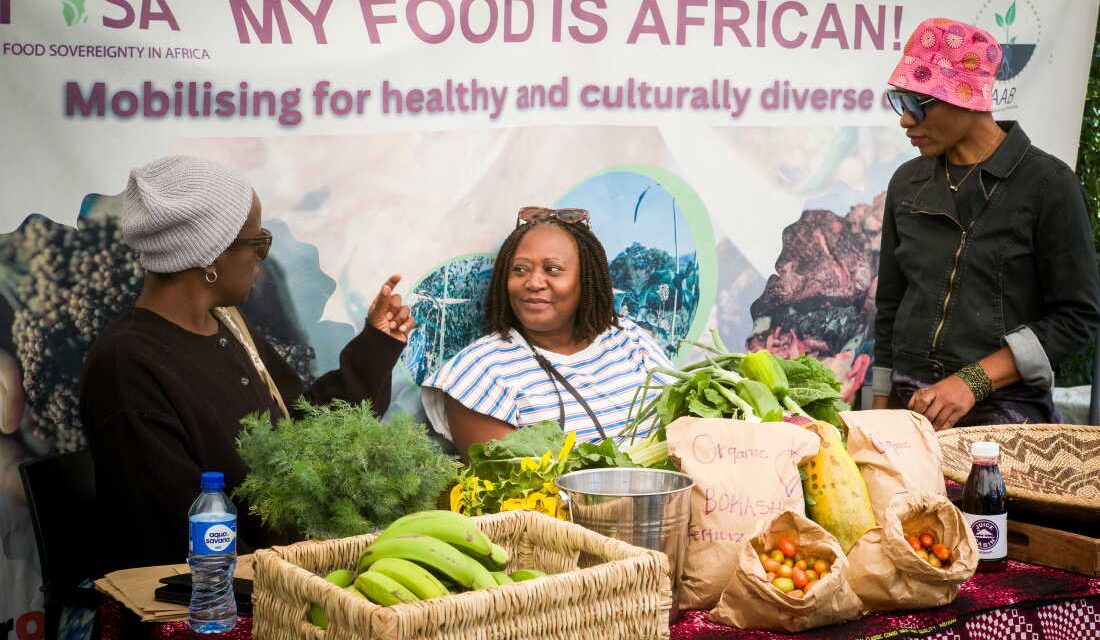
In a bustling market in Zambia, sellers offer bags of homemade bokashi fertilizer alongside organic vegetables, priced at around $2.50 each. On 12 acres near Lusaka, Kanangwa Newlove has cultivated a thriving farm. Her fields are adorned with fruit trees, and during the growing season, tomato vines cover trellises. She grows neat rows of corn, pumpkins, and a local green called blackjack, along with various lettuces.
Newlove recalls, “I began by sharing vegetables with colleagues, and soon I was supplying supermarkets.” The year 2026 posed difficulties for many farmers. A war in Iran disrupted trade through the Strait of Hormuz, severely affecting international shipments, including fertilizers, leading to global price spikes. African countries, with smallholder farmers, quickly felt the impact of changing fertilizer costs.
However, Newlove remained unaffected. She had been utilizing bokashi, a homemade, fermented compost, to fertilize her crops for years.
A Historical Fertilization Technique
Originating from ancient Korean traditions and popularized in Japan, bokashi is easy to produce. Newlove finds it highly effective, stating, “Bokashi is an organic, potent fertilizer ready in weeks. It was revolutionary for us.” Bokashi’s popularity has grown in Zambia, with farmers now selling homemade compost and sharing tips online. The Kasisi Agricultural Training Centre even offers training and sends students to observe the process on Newlove’s farm.
Zambian farmers have been seeking alternatives to grow food more cost-effectively, and bokashi provides a solution,says Rabecca Mwila from the Knowledge Platform for Organic Agriculture and Agroecology in Africa.
Bokashi Recipe and Benefits
For home composters, bokashi ferments food scraps in anaerobic conditions, free from oxygen. Farmers often create outdoor versions using readily available ingredients like leaves, crop residues, animal dung, charcoal, and ash. Yeast and sugar sources like molasses or bananas are added to initiate fermentation. After a few weeks, the mixture, warmed by microbial activity, is buried near crops to decompose completely.
“Farmers are excited about bokashi. It’s cheaper and revitalizes soil,” Mwila notes, adding that farmers observe the presence of earthworms. As climate change alters rainfall patterns and extends dry seasons, sustainable practices like bokashi gain interest. There are concerns over the long-term effects of commercial fertilizers.
“The overuse of synthetic fertilizers and pesticides has depleted the soil,” Mwila explains. Zambia, previously reliant on fertilizer imports, faced significant challenges when global prices soared post-pandemic and after the Russian invasion of Ukraine. Finding alternatives became crucial for food security. The government has supported domestic fertilizer production, and a Chinese-Zambian joint venture recently announced plans for a $1.5 billion fertilizer plant.
Global fertilizer prices have decreased, but some regions still experience high costs. In southern Africa, including Malawi, Tanzania, and South Africa, prices remain significant. Despite government subsidies, supply is limited. Donald Zulu, from Copperbelt University in Zambia, states that without subsidies, farmers may pay around $400 USD for enough fertilizer for 2.5 acres of corn, noting its inaccessibility for many smallholders.
Assessing Bokashi’s Effectiveness
Seeking an alternative, Zulu collaborated with WeForest and local farmers to evaluate bokashi on corn and cabbage in 2024. “Results were promising,” Zulu notes, “with bokashi mimicking mineral fertilizer yields.” This implies that bokashi, being cost-effective, offers comparable productivity. Remarkably, combining smaller amounts of bokashi and mineral fertilizers yielded the best results.
Newlove describes bokashi as non-toxic, requiring no mask during preparation. She emphasizes its alignment with offering sustainable agricultural practices. “It’s a labor of love,” she adds, highlighting the importance of preserving the land.
 Architects Warn of Housing Challenges Amid Climate Change and AI Concerns
  How Little Brown Bat Genes Are Outsmarting a Fungal Killer
  Criminal Investigation Underway at Lineage Cold Storage Warehouse
  Potential of Advanced Nuclear Power in Meeting U.S. Energy Demands
  U.S. Military Exercises in Arctic Highlight Strategic Shifts
  Supreme Court to Hear Landmark Cases on Climate Change and Immigration