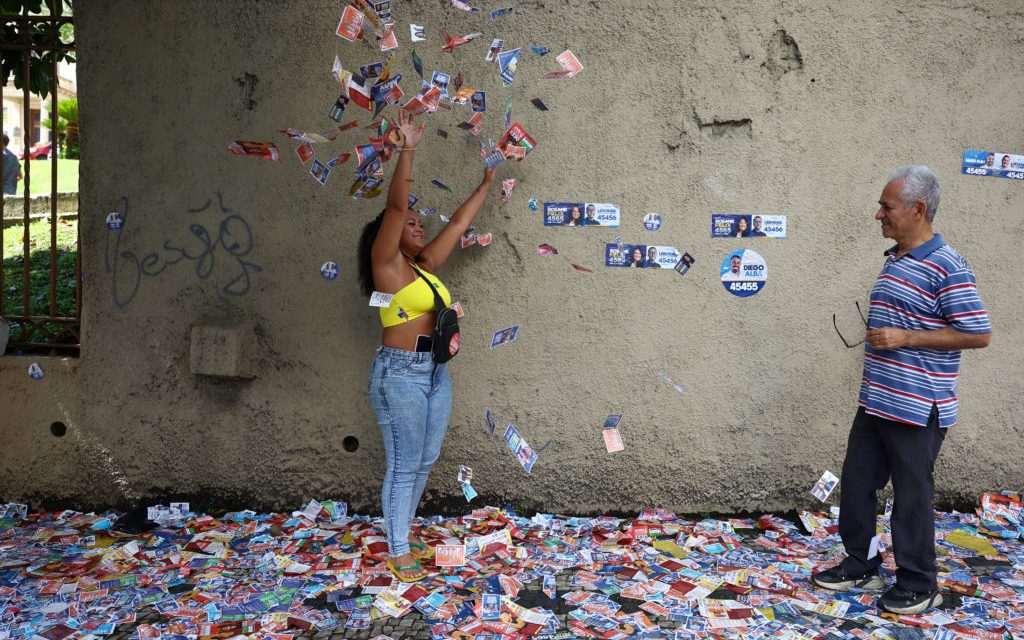
Voters in Brazil have begun casting their ballots in a crucial presidential election. The contest is between current President Luiz Inácio Lula da Silva and Senator Flávio Bolsonaro. Both candidates are seen as having a strong chance of winning outright.
If neither Lula nor Bolsonaro secures more than 50% of the vote, the election will go to a runoff on October 25. In total, there are ten other candidates in the election, though they are expected to receive far fewer votes.
Political Alliances and Tensions
Flávio Bolsonaro, whose father is the former far-right President Jair Bolsonaro, is an ally of U.S. President Donald Trump. Lula, aged 80, is one of the world’s oldest serving state leaders and has a history of improving relations with China. Bolsonaro emphasizes his ties to Washington, while Lula has expressed critical views of the United States, especially concerning recent tariffs and political sanctions.
Economic and Social Concerns
Brazil faces various challenges, with military, economic, and social policies at the forefront of the candidates’ campaigns. Senator Bolsonaro is keen on securing better economic terms with the U.S., especially regarding rare minerals.
He has also advocated for the release of his father from a lengthy prison sentence due to allegations of a coup attempt. Voter Rosane Wink, who experienced recent violence, supports Bolsonaro for his hard stance on classifying criminal groups as terrorists. Conversely, Maria Ribeiro supports Flávio because of his defense of Evangelical Christianity.
Many support Lula for his social programs aimed at aiding the less fortunate, like Rosangela Resende da Rocha from Brasília, who values his resistance to foreign influence. Similarly, Catia Oliveira, voting from Portugal, stands by Lula’s commitment to social initiatives.
Potential for Voter Impact
Political consultant Thomas Traumann notes that undecided voters could swing the election based on any last-minute errors by the candidates or their teams. In such a polarized environment, accusations often overshadow policy proposals.
Previous elections show the fine margins by which Lula won against Jair Bolsonaro, highlighting the tight nature of this race. Economic issues and previous corruption scandals involving both candidates contribute to voter unrest.
Challenges for the Future
Carlos Melo, a political science professor, emphasizes the grueling nature of this election, especially for the Lula campaign. The corruption allegations and economic challenges weigh heavily on both candidates.
Flávio Bolsonaro’s campaign has also faced troubles, including a scandal involving a banker and concerns among Catholic voters over evangelical influence.
With millions heading to polls, including elections for 27 state governors and numerous legislative seats, the stakes are high for Brazil’s political future. The election could reshape Brazil’s domestic and international policies.
Associated Press writers Eléonore Hughes, Anna-Catherine Brigida, and Helena Alves contributed to reporting from Rio de Janeiro, Brasilia, and Lisbon.
 U.S. Military Exercises in Arctic Highlight Strategic Shifts
  U.S. Marine Arrested in Japan Over Robbery and Murder
  Mystery of Lynette Hooker’s Disappearance in Bahamas
  Russia’s Resilience Amidst Western Sanctions
  Tensions Rise Between U.S. and South Africa Over Diplomatic Disputes
  Ukraine’s Challenges and Innovations Amidst Winter Warfare