The Historical Significance of Railroad Electrification
This weekend, the Pullman Railroad Days event marks an important milestone for the South Shore Line. It’s the 100th anniversary of a pivotal decision that significantly boosted ridership: the electrification of Illinois Central trains. This major change began on a Tuesday a century ago and is celebrated at Pullman National Historical Park in Chicago.
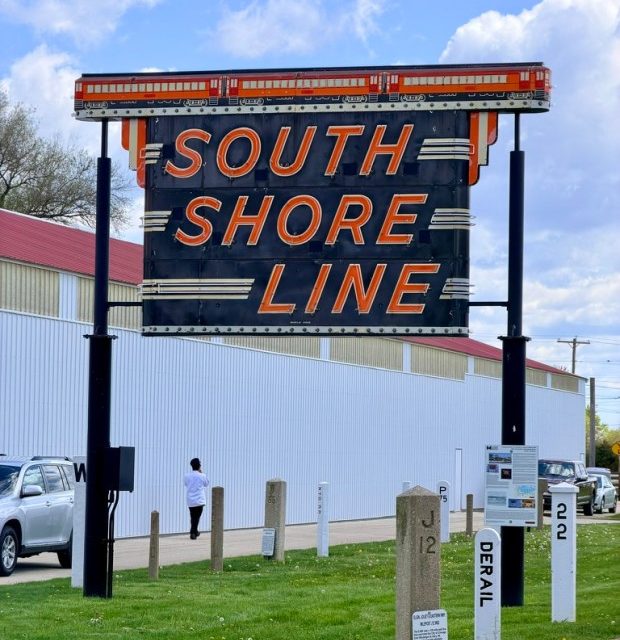
An iconic sign once stood at the South Shore Line’s downtown Gary station. It now resides at the Illinois Railway Museum in Union, Illinois. This change marks the shift from older railway cars to modern trains, highlighting the transformation in technology.
The Impact of Electrification
Regular commuters have grown accustomed to the shiny silver trains with distinctive orange stripes produced by Nippon Sharyo. However, those who have traveled the line for longer remember the more rustic orange cars. These were introduced as a direct result of the Illinois Central electrification effort.
Norman Carlson, who serves as the president and managing editor of the Shore Line Interurban Historical Society, offers his historical insights on the South Shore Line. “I’ll be either here, there or everywhere” he mentioned, marking his involvement in the Pullman event.
Driving Change with Electricity
Before electrification, the South Shore Line operated on 660 volts of alternating current (AC) power. This switch to 1,500 volts of direct current (DC) power was transformative. Interviewing Samuel Insull Jr. in 1978, Carlson sought to understand the influence of Insull’s father on local railroads and the broader Northwest Indiana area.
Insull was instrumental in merging railroads with his power supply ambitions. His plans led him to acquire the Chicago Rapid Transit Co., forming the North Shore Line in 1916, which evolved into today’s CTA Yellow Line. The South Shore Line was economically strategic, securing a connection to a coal-fired plant planned for Michigan City.
Economic Advantages and Strategic Moves
Insull’s operations allowed him to profit from coal transportation, with coal mined in southern Illinois being a significant part of the equation. Coal was transferred from trains to barges and then back to trains, generating revenue at every switch. “If they control the railroads, they could make even more money. So now the South Shore railroad was looking even better to them,” Carlson noted.
Another strategic advantage was reaching downtown Chicago directly, a longstanding goal for passengers. Previously, South Shore trains terminated at 111th Street, necessitating a transfer to an Illinois Central steam engine to continue downtown.
Challenges and Innovations
Electrification was partly driven by the need to reduce smoke pollution, especially around the lakefront. By 1930, passenger services had to electrify as per the Chicago City Council ordinance. The Illinois Central railroad met these regulations, but freight services lagged behind, using diesel-electric motors instead.
Another contribution was the transformation of Chicago’s geography. The Illinois Central’s activities from 1856 to 1926 filled significant areas, converting parts of Lake Michigan into train and infrastructure zones.
Rising Ridership and Economic Struggles
Launching in 1926, the electrified cars increased South Shore Line’s ridership. August 29 was the first direct service into downtown, which proved immensely popular. This move allowed continuous seating for passengers throughout the journey. The investment was substantial, with $3 million estimated for system overhauls.
A period of economic challenge followed during the Great Depression. Though ridership dropped, it didn’t compare to the impact of the COVID-19 pandemic. Still, innovations like dining car services momentarily elevated passenger experiences, even as changing economic landscapes altered travel habits.
Legacy and Restoration Efforts
Robert Harris is dedicated to preserving this history, inspired by a film project that chronicled the railroad’s influence in the region. As an extension, Harris went on to acquire several vintage rail cars.
The South Shore Line has continually evolved, incorporating modern cars in the 1980s. One such car has been restored to its original look and will be showcased at the Pullman National Historical Park.
Looking to the Future
The Northern Indiana Commuter Transportation District (NICTD) continues to modernize the South Shore Line. Initiatives include extending lines, adding substations, and improving reliability. A restored track into Millennium Station enhances service, accommodating increasing commuter traffic and technological innovations.
With new strategic plans in discussion, the future of the South Shore Line looks promising, combining historical preservation with technological advancement.
 FAA Ground Stops, Paramount Settlement, and ICE Shooting Incident
 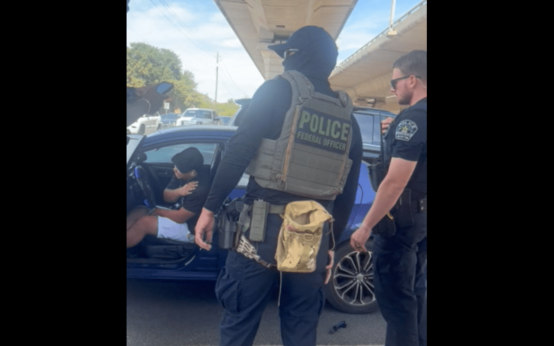 Details Emerge on Shooting of Venezuelan by ICE Officer in Austin
  Controversial Removal of ‘The Bluest Eye’ from Georgia School Libraries
 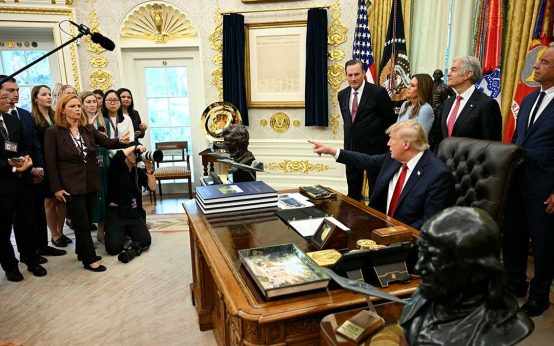 Legal Battle Over Media Ban at White House
  Kyler Murray Cleared from Concussion Protocol, Set to Start Against Buccaneers
  Fat Bear Week: A Unique Annual Tradition at Katmai National Park