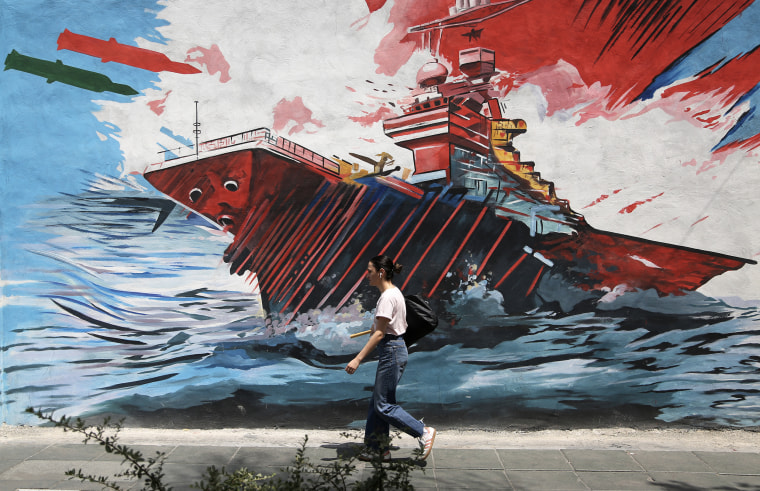
The Defense Department recently reclassified the casualty count for American troops affected by recent U.S.-Iran conflicts. Four American soldiers, initially included in the Iran war death toll, are now listed under a new category. This change calls into question how the U.S. administration is addressing the impacts on its service members. Recent military actions aimed at reopening the Strait of Hormuz have raised these issues.
The Defense Casualty Analysis System (DCAS), a key source for tracking dead and wounded from conflicts, made these changes last week. The system removed the four soldiers and dozens of wounded from its Iran tally. On Sunday, a new section named “Overseas Operations” appeared on the DCAS site, specifying the four Army deaths and accounting for 207 wounded. It remains unclear if all these injuries resulted from the Iran conflict.
U.S. Central Command, which manages operations in the Middle East, directed inquiries to the Pentagon. Both the Pentagon and the White House have not provided immediate comments. Pentagon press secretary Joel Valdez clarified that recent fluctuations in casualty figures are due to “anomalies” and “temporary data disruptions,” not attempts to obscure war casualties.
Up until Tuesday, official reports cited 18 deaths and 482 injuries. However, the report adjusted to reflect that, following the resumed conflict despite an interim ceasefire, four soldiers had died. Three of these deaths occurred in Jordan on July 17 due to Iranian ballistic missiles and drones, while another soldier died in Iraq following a controlled detonation of an Iranian drone.
Adding to the confusion, the Pentagon announced the deaths in Jordan as being associated with counter-Islamic State efforts; the other two were described vaguely as supporting overseas operations. President Donald Trump has confirmed the total number of casualties in a Truth Social post, noting 18 lives lost in the “Iran Military Conflict.”
By Wednesday, official reports reverted to 14 dead and 420 wounded. Yet, an anonymous U.S. official contended that the number of wounded was actually over 500. Pentagon spokesperson Sean Parnell attributed the reporting change to “temporary data disruption.”
A new casualty category was introduced after the U.S. and Israel initiated the Iran conflict on February 28, resulting in 14 immediate deaths. Though a ceasefire was attempted in April, renewed violence on July 7 saw Iran attack merchant vessels in the crucial Strait of Hormuz. This prompted U.S. retaliatory strikes. Consequently, the Pentagon website now counts casualties from July 7 onward under “Overseas Operations.”
Since the renewal of hostilities, the U.S. has engaged in almost continual exchanges with Iran over the strategic waterway. The situation has seen an escalation in attacks on neighboring nations hosting U.S. forces. Though there have been no strikes for two nights, diplomatic efforts are underway.
The Pentagon has not held a public discussion about the war since early May. Updates about military operations and casualties are scarce. Despite claims of transparency by officials like Valdez and Parnell, details remain sparse as the conflict continues.
 Google Earth Images Reveal Destruction in Gaza
  Sudan Defies U.S. Ceasefire Amid Visa Dispute
  DHS Warns Migrant Caravan Heading to U.S.-Mexico Border
  Adam Brody and Hollywood’s Political Climate
  International and Domestic Investigations Unfold
  Counterpressure, Not Concessions, Crucial for Russia-Ukraine Conflict