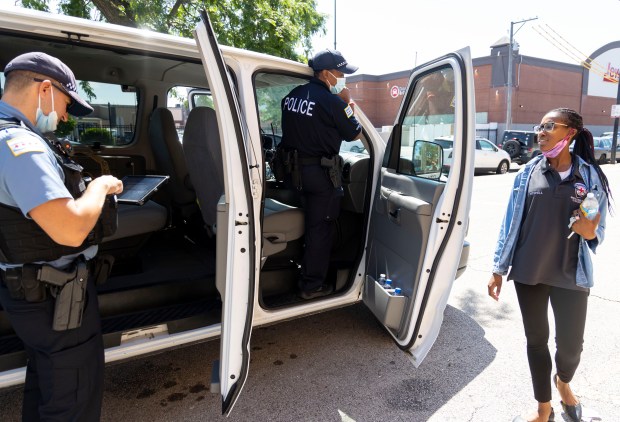
Mayor Brandon Johnson is emphasizing his plan to expand Chicago’s non-police mental health response team, despite recent challenges. Videos of him riding in the city’s Crisis Assistance Response and Engagement (CARE) vans highlight increased calls since May. A new evening shift for these teams, consisting of behavioral health workers and EMTs, aligns with Johnson’s progressive goals.
In a July 2022 photo by Brian Cassella of the Chicago Tribune, Chicago police Officer Dantra Daniel and mental health clinician Gabrielle Mitchell prepare their CARE team van. Johnson noted at a City Club of Chicago speech that requests rose by 51% despite bureaucratic and political challenges. From May to August, the program responded to 115 emergency calls, plus 72 via non-urgent channels, said Arturo Carrillo, deputy mayor of health and human services.
City Council Health Committee Chair Ald. Rossana Rodriguez-Sanchez acknowledged unexpected roadblocks. Carrillo outlined the need for citywide availability, interdepartmental coordination, and efficient dispatch during a hearing. Starting next week, a second shift will extend CARE’s hours to 8 a.m.-10 p.m.
Although some advocate for less police involvement, Lt. Rhonda Anderson of the Chicago police reassured that cooperation persists within CARE. Anderson also mentioned recent de-escalation training for CARE from the police. Johnson defended the approach during a press conference, emphasizing adaptability based on circumstances.
Despite political differences, there’s agreement on the necessity of expanding mental health care. Alderpersons mostly support CARE, although operational issues have emerged. Johnson faced opposition, with critics labeling CARE a broken campaign promise.
Chicago’s CARE program faces implementation hurdles. In June, oversight led OEMC to screen out 93% of eligible 911 calls, resulting in only 12 CARE responses, with others coming through non-urgent requests. By August, responses had increased, with 35 calls managed by CARE. Health leaders promised to reactivate the public dashboard tracking CARE’s response history from 2021 onward.
The “Treatment Not Trauma” campaign, advocating for non-police response to mental health crises, began around 2020. Rodriguez-Sanchez highlighted that systemic change requires perseverance and noted ongoing growing pains in the movement.
 The Ongoing Importance of ‘The Talk’ in Navigating Challenges for Black and Brown Youths
  Silent Atherosclerosis: Insights from New Research
  Dining with Loved Ones: A Boost for Blood Sugar Regulation
  Facing Life with a Terminal Diagnosis: A Story of Courage and Hope
  Foods Linked to Longevity and How to Include Them in Your Diet
  A Journey from Wedding Joy to Unexpected Health Struggles