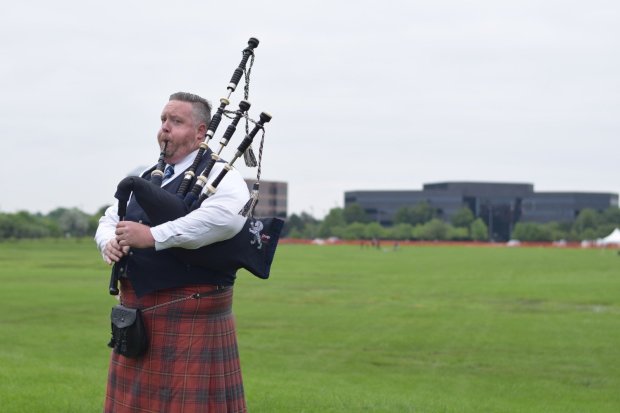
The state’s oldest charitable organization and a newer counterpart have collaborated to host a unique event. This gathering, known as Telling the Bees Fest: a Chicagoland Deathcare Education & Resource Festival, aims to promote discussions on end-of-life care, grief, and death. Two organizations are leading this effort: Wally’s Hearth, which achieved 501(c)(3) status approximately two years ago, and Caledonia Senior Living & Memory Care, backed by the Chicago Scots, initially established as the Illinois St. Andrew Society in 1845.
The Festival’s Origins
The festival’s name refers to a traditional practice from Celtic and British Isles cultures where families would share significant news with bees in their homes. Tiffany Johnson, co-founder and executive director of Wally’s Hearth, explained the symbolism of this practice. Wally’s Hearth’s co-founder Lydia Manning has Southern heritage, and Scottish immigrants in the South would incorporate hives into their settlements.
“They took hives along when they moved, sharing news about births and deaths,” Johnson noted. “I find this practice deeply symbolic and connecting.”
According to Gus Noble, president of Caledonia Senior Living and Chicago Scots, “Telling the bees signifies interconnectedness. The bees represent people and nature around us.” Noble mentioned that although the facility once raised livestock and maintained beehives, these have not been present in recent years.
Festival Details
The festival will be held from 10 a.m. to 4 p.m. on September 12 at Caledonia Senior Living in North Riverside. The event is free and open to everyone. Interested parties may register via [email protected]. The Chicago Scots emphasizes Scottish culture, which informs the care at Caledonia Senior Living.
Wally’s Hearth, located in Chicago’s western suburbs, serves as a pioneering social model hospice home in Illinois. According to Johnson, guests come to Wally’s Hearth knowing their journey is ending, but they are relieved of the caregiving burden at no cost to them or their families. This model, while not novel globally, was yet to be established in Illinois before.
A Joint Initiative
The festival arose from discussions about Wally’s Hearth opening a home at Caledonia Senior Living. Regulatory and architectural challenges prevented immediate progress, but shared values fostered collaboration. During their discussions, Noble and Johnson identified a need for end-of-life planning, often delayed due to unawareness of available options.
Noble stated that leaving these conversations unaddressed breeds conflict. Scots traditionally aimed to alleviate such issues. This festival presents an opportunity to educate communities and connect providers with residents needing information outside of stressful times.
Addressing End-of-Life Needs
Johnson emphasized various end-of-life topics, including home care, funeral services, body disposition, and alternative burial methods. Attendees will find resources on less traditional options, such as scientific donations and green burials.
Beyond death-focused conversations, the festival encourages attendees to live fully and preserve legacies. It addresses involving children in age-appropriate grief discussions, strengthening family resilience across generations.
Cultural Experiences
Accompanying short presentations, the festival includes food, music, and performances by the Threshold Choir, who offer comfort to those with terminal illnesses through song. Bagpipes also feature prominently, reflecting the Scottish heritage of many attendees.
As the festival aims to become an annual event, organizers consider space constraints and target attendance between 150 and 350 participants. Thoughtful placement of tents provides quiet spaces for reflection and conversation.
Encouraging Conversations
The festival encourages breaks from traditional thinking about death, aiding families in understanding concepts like hospice and palliative care. As a free event, it accepts donations to support future festivals. Noble remarked on personal experiences with careful funeral planning, stressing the reduced stress and direction it offered him.
Johnson hopes attendees leave the festival motivated to plan, prepared to engage their loved ones in vital conversations. The festival serves as a starting point for sharing stories and enriching community connections.
 Homemade Juices to Enhance Your Diet
  Comfort Food with Eastern European Flair at Maplewood Lounge
  Honoring Dolly Parton: Her Enduring Influence on Education and Literacy
  Predicting the Perfect Time for Fall Foliage
  Investigation Reveals Abuse in Youth Sports Organizations
  Celebrate Labor Day with a Flavorful Grill Menu