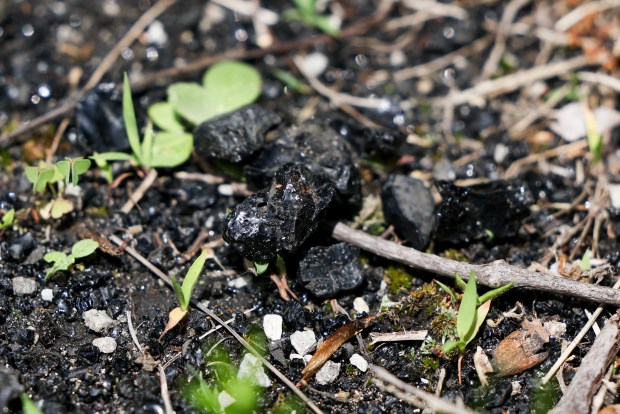
In Town of Pines, Indiana, Cathi Murray finds coal ash in her backyard. These glittering black rocks are remnants of waste from the nearby Michigan City Generating Station. This coal ash has affected life in Pines for over three decades.
Northern Indiana Public Service Co. used excess coal ash as fill material in the area during the late 1970s. The U.S. Environmental Protection Agency (EPA) notes that these substances contain heavy metals, which have been linked to health problems such as cancers and neurological disorders.
The Michigan City Generating Station distributed over a million tons of coal ash, impacting groundwater in the town of 700 residents. Pines, now a Superfund site, continues to struggle with pollution issues.
“Once you make a mess, it takes so long to right the wrong,” said Lisa Evans from Earthjustice.
The EPA is considering changing coal ash regulations, which worries environmentalists. Proposed changes include delaying cleanup requirements and weakening restrictions on coal ash reuse. Exempting “legacy” coal ash sites from cleanup could worsen the issue.
In Michigan City, a seawall protects the lake from coal ash, but concerns exist about its durability. Ashley Williams from Just Transition Northwest Indiana highlights the risk of the seawall failing during storm events.
Indiana cannot enforce stricter coal ash regulations than federal standards. This constraint raises concerns if the EPA lessens regulations. Illinois, on the other hand, has stricter coal ash laws, but faces its own challenges, particularly with legacy sites.
Debra Shore, former EPA administrator, expressed concern over potential inconsistencies in protections across states like Indiana and Illinois. She noted that different state regulations can impact neighboring communities.
The EPA introduced coal ash regulations in 2015 after a significant spill in Tennessee. However, these rules left many older disposal sites unregulated. Indiana has numerous coal ash sites, many in floodplains, which pose risks during weather events.
Environmental advocates fear the EPA’s actions might undermine coal ash protection gains. They argue for reassessing old storage sites, such as Michigan City’s seawall, to prevent future issues.
The Town of Pines stands as a warning about coal ash’s ramifications. In 2002, the EPA found high toxin levels in local water wells. NIPSCO has been required to fund cleanup efforts.
Murray, a local advocate, has personal concerns due to health issues potentially linked to coal ash, despite no direct connection confirmed.
A recent federal settlement obligates NIPSCO to pay for additional groundwater cleanups in Town of Pines.
Advocates worry that easing coal ash rules may reverse progress, leaving communities vulnerable. With a decision expected later this year, environmentalists are preparing their next steps.
 Far-Left Groups Allegedly Organize Protests in Austin
  Austin Police Release Footage of Arrest After ICE-Involved Shooting
  Himalayan Pilgrimage: A Couple’s Narrow Escape and Lingering Questions
  Religious Trends: Decline in Affiliation with LDS Church
  UC Berkeley Student’s Harrowing Encounter Raises Questions About Safety and Legal Protections
  Tinley Park Updates Downtown Parking Rules Amid Increased Congestion