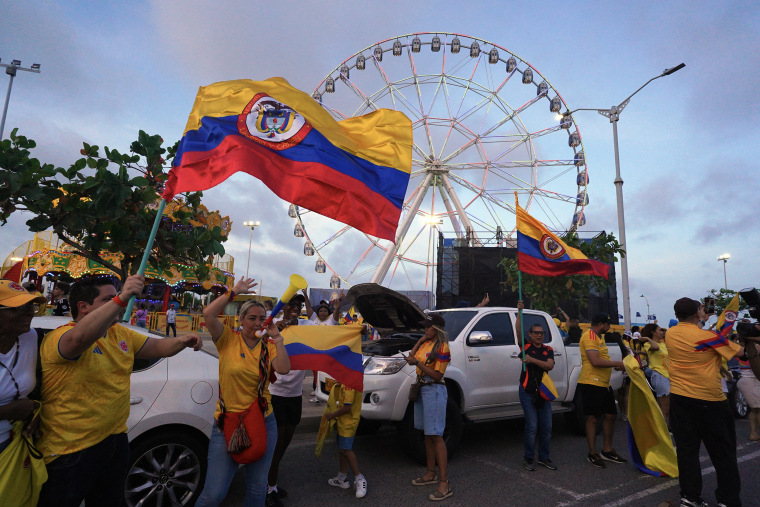
Bogotá, Colombia — Abelardo de la Espriella, a political outsider, led Colombia’s presidential election with a slim margin as votes concluded on Sunday. His potential victory represents a challenge to the outgoing President Gustavo Petro’s policies. Petro’s successor candidate had aimed to continue the current agenda but faced defeat from de la Espriella.
De la Espriella, a business owner and lawyer, secured 49.7% of the vote, with nearly all counted. His opponent, Iván Cepeda, received 48.7%. Official results are still pending. Standing behind bulletproof glass in Barranquilla, de la Espriella said, “The Colombian people have entrusted me with the supreme honor of serving them as their next president.” He promised inclusive governance, stating, “There will be no retaliation, no persecution.”
Cepeda labeled the vote count “unofficial and nonbinding,” planning to challenge results at over 30,000 polling stations. Historically, Colombian recounts have not changed election outcomes. He emphasized not allowing “the rollback of the social gains.” Petro also intends to challenge the results.
In Bogotá, supporters chanted against Petro, celebrating what some consider a turning point amidst fears of renewed conflict. Both candidates proposed distinct plans to avoid past violence, including car bombs and kidnappings, from returning.
De la Espriella’s Crime Strategy
De la Espriella, 47, pledged a hardline stance against crime, especially drug trafficking. He intends to end Petro’s failed peace talks with armed groups and construct large prisons, akin to President Bukele’s policies in El Salvador, which reduced homicides but raised human rights concerns.
Known as “The Tiger,” he holds dual Colombian and U.S. citizenship and aligns with Trump and the Republican Party. Retired economist Víctor Duque expressed the election’s significance, citing Colombia’s prolonged issues with armed conflict and drug trade.
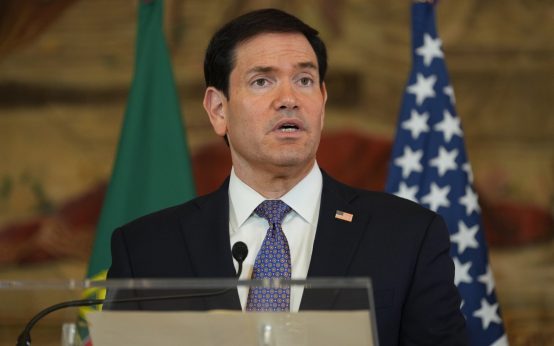
International leaders, including U.S. Secretary of State Marco Rubio, congratulated de la Espriella. Rubio highlighted aims for regional security and enhanced economic ties with Colombia.
Cepeda’s Campaign and Petro’s Legacy
In the initial round, Cepeda had 41% while de la Espriella had 44%. Despite Petro’s doubts about the May results, they remain unproven. Voter Yolanda Hernández, a former Petro supporter, chose de la Espriella, disillusioned by Petro’s unfulfilled promises amid congressional deadlock.
Will Freeman from the Council on Foreign Relations remarked the election didn’t decisively shift away from Petro’s agenda, indicating regional divisions play a significant role.
Persistent Violent Conflict
The election follows a decade after Colombia’s peace deal with FARC. Despite the accords, violence has surged, with rebel groups engaging in drug trafficking over ideological battles. Colombia’s illicit groups now encompass over 27,000 members.
In 2025, 14,780 homicides were reported, the worst since 2015 driven by clashes among these groups. Among the victims was conservative candidate Miguel Uribe. Extortions have also risen significantly.
De la Espriella vows a vigorous crackdown on criminal elements and plans to establish 10 megaprisons to reinforce his policies.
 Federal Judge Orders Diversity Visa Program to Open
  Karoline Leavitt on Her Relationship with Trump and New Career Path
  AI Policy Examined as Congress Faces Divisions
  New York Gubernatorial Debate: Hochul Avoids Direct Apology Over Sanctuary Policy
 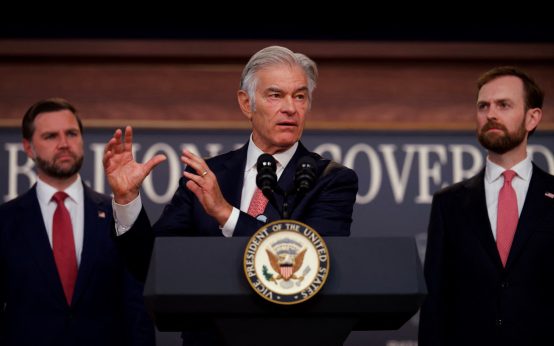 Medicare Insurer Sues Trump Administration Over 2027 Star Ratings Methodology
  Political Figures Energize Michigan Senate Race