
The Department of Commerce has announced plans to allocate over $870 million in federal incentives to semiconductor manufacturing. This move involves obtaining a minority equity stake in seven companies. The funding is part of the significant CHIPS and Science Act.
Details of the Announcement
On Wednesday, the National Institute of Standards and Technology (NIST) shared that the Commerce’s CHIPS Research and Development Office has reached agreements with seven companies. These businesses are set to receive a total of $874 million in federal funds for their research and development efforts. The focus will be on essential technologies and advanced integrated photonics, which utilize light instead of electricity for data transfer and processing. Additionally, these funds will support research into compute architectures and memory tailored for computing and artificial intelligence.
NIST highlighted the department’s plan to secure a minority, non-controlling equity stake in each company, aiming to ensure a return for U.S. taxpayers.
Fund Distribution
Significant funds are earmarked for specific companies:
- Up to $300 million will be allocated to GlobalFoundries.
- Kepler is set to receive up to $245 million for its AI memory and logic technologies.
- Multibeam Corp. will garner up to $140 million for semiconductor equipment manufacturing.
- The remaining funds will support Extropic, Thintronics, Obsidia Semiconductors, and Aeluma Inc.
Commerce Secretary Howard Lutnick expressed that these investments are strategic, aiming to boost domestic capabilities, generate high-paying jobs, and maintain America’s leadership in the semiconductor sector.
Broader Impacts
This initiative is part of a broader policy affecting the tech sector. Elon Musk has initiated plans to funnel at least $100 million through his super PAC to support Republicans in eight states for the upcoming 2026 midterms. Furthermore, airlines are imposing bans on humanoid and animal robots due to safety concerns, reflecting the changing landscape in tech policy and regulation.
Concerns in Digital Assets
Bipartisan senators have offered new ethics language for the Clarity Act to the White House. This proposal aims to address ethical considerations involving digital assets and is part of ongoing negotiations to uphold ethics in handling such technologies.
As technology continues to evolve, surveys indicate a growing skepticism toward AI. Many Americans are increasingly concerned about AI’s long-term impact, with a substantial portion now viewing AI as harmful rather than beneficial.
 First Lady Melania Trump’s AI Education Push Amid Concerns
  Expansion of Data Centers Fueled by AI Development
  Beijing’s Tactical Undermining of U.S. Supremacy Through AI
 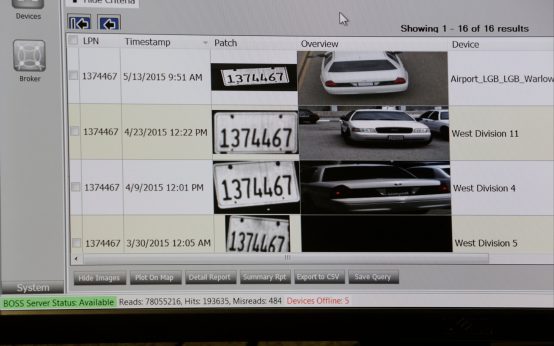 Controversy Surrounds Automated License Plate Readers Across the U.S.
  Trump and Harp Sued Over Truth Social Subscriber Program
  Implications of AI in College Admissions