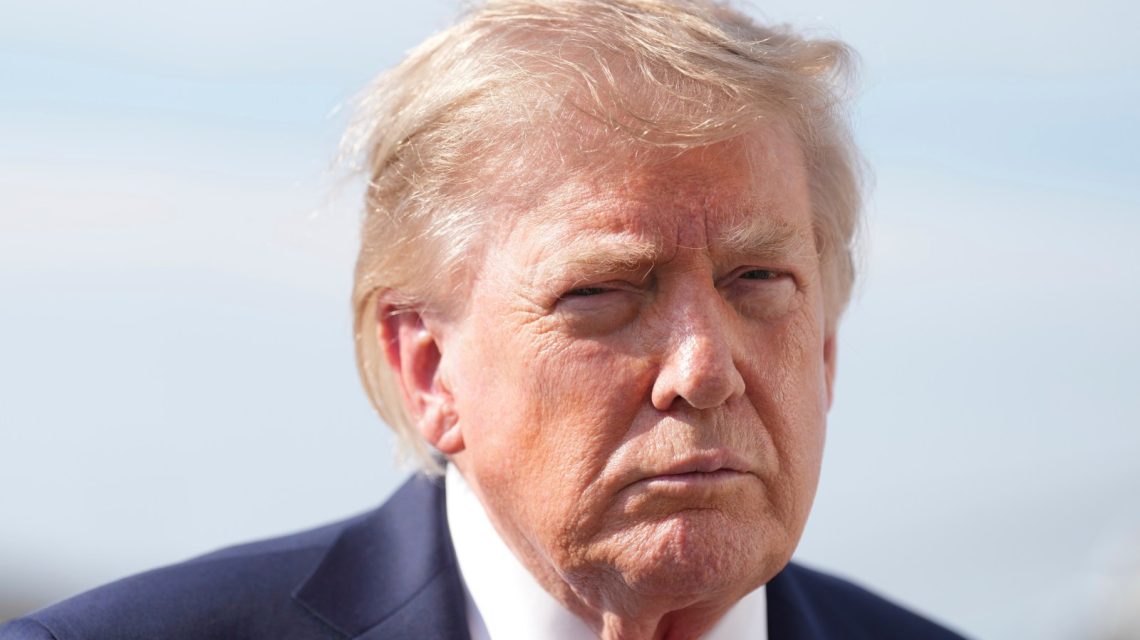
Members of Congress face pressure to examine President Donald Trump’s strategy to import substantial quantities of foreign beef to lower grocery costs. This proposal has raised concerns among farm-state lawmakers and ranchers already struggling in the industry.
The plan aims to introduce up to 300,000 metric tons of lean beef trimmings into the U.S. without tariffs over a three-month period starting September 1. Trump claims this would be sold at prices 25% lower than current market rates.
“Congress needs to have an emergency hearing on this,” said John Boyd, founder of the National Black Farmers Association. He expressed that while the initiative aims to decrease prices for consumers, it could jeopardize ranchers and spur safety concerns without significantly affecting retail prices or aiding the American cattle herd.
Boyd called this move an “in-your-face betrayal,” highlighting that although Trump had gained farmer support in past elections, trust has been unstable since his return to office.
White House Spokeswoman Anna Kelly defended the administration’s agricultural efforts, citing accomplishments like new trade deals, lower input costs, and tax reform supporting rural areas.
Industry Reaction
Boyd, based in Virginia, criticized prior efforts by the administration, including importing beef from Argentina. He noted the absence of communication with his organization, which represents numerous farmers across the nation, regarding this initiative.
Concerns have arisen about the sources of the beef, with speculation around countries like Argentina, although specifics remain undisclosed.
“Farmers and ranchers are extremely disappointed,” said American Farm Bureau Federation President Zippy Duvall, highlighting that an increase in imports could surpass previous records. Senator Tim Sheehy from Montana advised against this course, cautioning about adverse effects on ranchers who predominantly support Trump’s policies.
Will the Plan Lower Prices?
Rising input costs and environmental challenges have driven U.S. beef prices upward, compounded by reduced domestic cattle numbers. Trump pledges to curb these rising prices, yet skepticism persists among industry experts.
According to Ben Spell of Good Ranchers, the proposal serves as a temporary measure but does not address deeper issues affecting prices. Academic perspectives, such as Sylvain Charlebois from Dalhousie University, suggest that while there may be short-term impacts, the overall effect on prices might be limited and uneven.
Both the USDA and the White House maintain that current trends will continue unless action is taken. The effectiveness of importing beef to bring down prices remains under scrutiny.
For further information, Newsweek contacted the Department of Agriculture and other involved parties.
 The Latest Developments in U.S. Politics and Policy
  Mayor Daniel Lurie’s Approach to Local Governance
  Karoline Leavitt’s Departure and Influence on Choosing Successor
  Virginia Supreme Court Invalidates Democrats’ Redistricting Plan
  Trump’s Role in Releasing American Prisoners in China
  The Trump Administration’s Challenge to Germany’s Drug Price Controls