Congressional Republicans are working to pass significant parts of the Safeguarding American Voter Eligibility (SAVE) America Act by the year’s end. This election integrity bill is supported by President Donald Trump but faces strong opposition from Democrats. Senate Majority Leader John Thune, R-S.D., has hesitated to initiate a vote, noting that the bill is unlikely to pass.
For the Senate to overcome a filibuster, they would need at least several Democrats to reach a 60-vote requirement. Yet, liberal lawmakers in the House and Senate criticize the bill, viewing it as either undermining confidence in U.S. elections or as voter suppression.
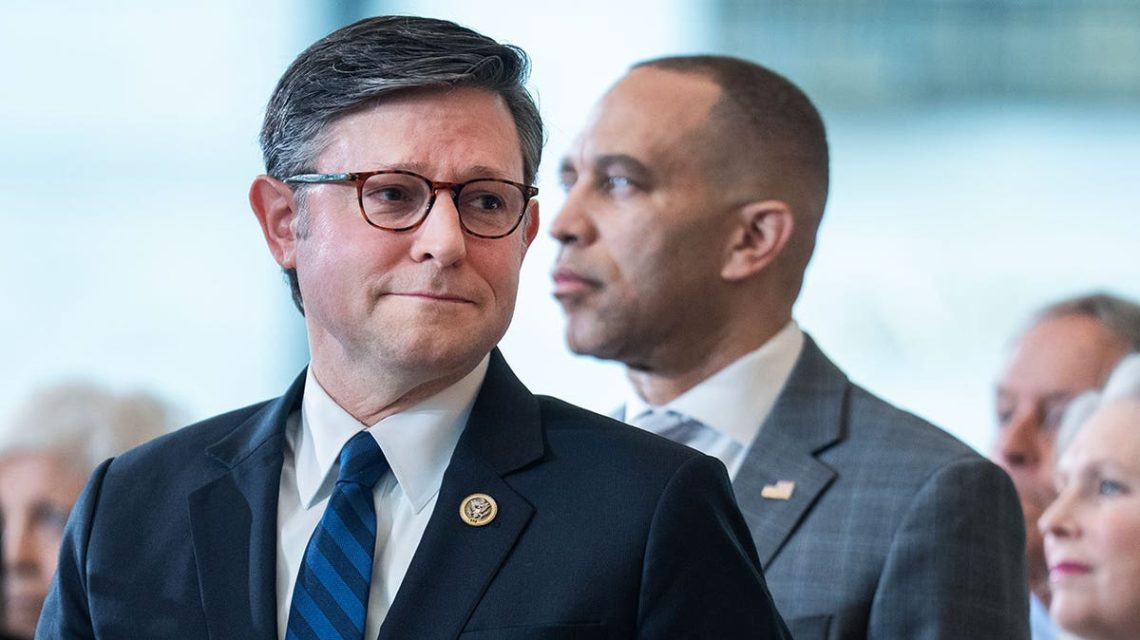
House Speaker Mike Johnson, R-La., is urging Republicans to use the budget reconciliation process. This process allows the majority party to enact substantial fiscal policy changes without needing input from the minority. Rep. Bryan Steil, R-Wis., chairman of the Committee on House Administration, is tasked with ensuring these parts of the bill are implemented.
TRUMP QUESTIONS THUNE’S LEADERSHIP AS SAVE AMERICA ACT STALLS
Johnson is collaborating with Senate Minority Leader Hakeem Jeffries, D-N.Y., aiming to leverage parliamentary procedures to lower the threshold to 50 votes and implement practical reforms. Steil told Fox News Digital about ongoing discussions with both his congressional colleagues and the Senate.
SENATE FACES ‘COME-TO-JESUS’ MOMENT ON TRUMP’S ELECTION PRIORITY UNDER GOP’S NEW PLAN
Steil hopes Congress will pass a reconciliation bill with SAVE America prior to November midterms. However, he acknowledged the limited time remaining. Efforts to pass last year’s One Big, Beautiful Bill Act took Republicans around six months. Both legislative chambers must approve budget frameworks, directing relevant committees to enact policies related to budget spending or cuts.
Committees pass sections of their policies before referring them back to House and Senate budget committees. Then, these committees consolidate them into one extensive bill, which must be identical in both chambers before reaching Trump’s desk.
Steil’s committee oversees federal election laws, aiming to include two primary elements from the SAVE America Act: mandatory citizenship proof for voter registration, and a nationwide photo ID requirement to vote.
READ THE DOCUMENTS: WHITE HOUSE RELEASES ELECTION INTEGRITY FILES AFTER TRUMP SPEECH
Steil expressed frustration over the Senate’s slow progress. He believes there are 50 Senate votes for some of these fundamental provisions. The reconciliation process becomes challenging when the Senate parliamentarian reviews the bill draft and removes items not adhering to procedural rules. Anything not affecting the federal budget, tax policy, or national debt is usually deleted.
TOP TRUMP OFFICIAL MAKES NEW SAVE ACT CASE TO REPUBLICANS BEHIND CLOSED DOORS
Steil noted that elements of the SAVE America Act might pass filtration by affecting state funds linked to the Help America Vote Act (HAVA), a reform law from 2002. He explained these funds could support post-election audits—an essential aspect of election integrity.
The Trump administration supports the initiative. Office of Management and Budget (OMB) Director Russell Vought has informed Republicans that the White House favors using reconciliation for the SAVE America Act, considering it the optimal method for enacting GOP election reforms.
The House approved its version of the reconciliation bill earlier this summer, with a $95 billion budget focused on boosting U.S. military and enhancing election safety.
In the Senate, Budget Committee Chairman Ron Johnson, R-Wis., revealed his committee’s framework. It proposes up to $150 billion in spending, a considerable difference.
GOP CIVIL WAR ERUPTS OVER TRUMP’S LATEST AGENDA PUSH AS KEY REPUBLICANS THREATEN TO SINK MEGABILL
Speaker Mike Johnson acknowledged this gap, stating complexity increases with additional measures. The Senate involves more committees, adding weight and slowing the process. He emphasized the urgency, needing election integrity measures immediately.
Steil remains hopeful for an agreement, highlighting alignment among GOP members, despite differing spending figures. He stressed the need for resources to support military personnel and election protection.
Elizabeth Elkind is a politics reporter for Fox News Digital focused on House coverage, with prior work seen at Daily Mail and CBS News. Follow her on Twitter or reach her at [email protected].
 Left-Wing Journalist’s Criticism of Trump Staffer Sparks Online Reactions
  House Bill Proposes Additional Leave for Parental Involvement in Education
  Challenges Ahead for Both Parties in the 2026 Midterm Elections
  Concerns Rise Over Senator John Fetterman’s Commitment to Duties
  Charlie Kirk’s Legacy: Controversies and Consequences
  AI Safety Concerns and Political Implications