
From a distant land, a father in exile reminds his son to perform household chores. Moussa Diawara, originating from Mali, spent nearly two decades in the United States. He built a life there, marrying and fathering two U.S. citizen children while contributing through work and taxes. Recently, U.S. Immigration and Customs Enforcement deported him to Ghana. Despite having no ties to Ghana, this country became his temporary abode because a judge ruled he couldn’t return to Mali due to the risk of persecution.
Unexpectedly, soon after Diazara’s arrival in Ghana, he was coerced onto a plane to Mali. “I still say to myself, ‘This isn’t real,’” Diawara expressed. For many, third-country deportations have become a harsh reality under the Trump administration, which aims to implement the largest deportation in U.S. history. When deporting to a home country is impossible, immigrants might end up in third countries. Investigations reveal some third countries send deportees back to places where their lives are at risk, undermining prior U.S. judicial decisions.
Diawara’s Journey
At 57, Diawara entered the U.S. on a tourist visa at age 32. He overstayed and sought refugee protection, fearing persecution in Mali due to his conversion to Christianity. Mali, a predominantly Muslim country with an Islamist insurgency, posed a threat to him, although he carried no criminal record. In 2012, a judge decreed that deportation to Mali was not permissible, yet allowed for removal to a safe third country. With a work permit in hand, Diawara worked as an Uber driver. On July 11, after a night shift, he found ICE agents awaiting him at his Houston residence.
He endured a three-week detention in Texas, with no legal counsel or judicial communication, before deportation to Ghana on July 31, a country entirely unfamiliar to him. In Ghana, detainees, including Diawara, were lodged in a hotel under armed guard, stripped of communication means. “This is kidnapping,” Diawara remarked, highlighting the total deprivation. CBS’s 60 Minutes contacted Diawara in August. At that point, he was homeless and in concealment, fearing for his life in Mali after Ghanaian officials abandoned him there without resources. Aided by truckers, he fled Mali for another unspecified location to ensure his safety.
Diawara acknowledged the U.S. right to deport him but maintained it shouldn’t lead to Mali. He alleged U.S. authorities knew Ghana’s plans, evident in a medical document marking Mali as his destination, with “SHRC” alluding to his flight’s classification as a Special High Risk Charter. Diazara’s baggage tags issued by the Department of Homeland Security (DHS) also listed Mali. James Percival, a top DHS lawyer, stated, “He was flown to Ghana… not Mali,” attributing conflicting information to clerical errors by contractors.
DHS stated Ghana assured the U.S. regarding Diazara’s safety, but they questioned the validity of Diazara’s persecution fears in Mali. Democratic officials and immigration lawyers criticize third-country deportations, with past administrations deporting infrequently in Diazara’s situation. Under Trump’s mass deportation drive, ICE has deported 25,000 people to third countries, often involving significant financial agreements.
Political and Legal Opposition
A judge can approve deportation but prevent return to a home country, leading to “withholding of removal.” Diawara held this protection, like many on his deportation flight found by 60 Minutes. His flight included 63 people, and a large number ended up in countries they were meant to avoid: Niger, Mali, Nigeria, Gambia, and Guinea, contrary to U.S. immigration judges’ findings. Immigration attorney Meredyth Yoon suggested U.S. authorities were aware of Ghana’s practices, given prior legal warnings. Despite this, the U.S. persisted in sending multiple deportation flights to Ghana, which Yoon argued breached international law.
A Senate Foreign Relations Committee report led by Sen. Jeanne Shaheen criticized the third-country deportation program as costly and detrimental to U.S. interests. It pointed out that these deals funnel taxpayer money to foreign governments, disregarding human costs and diplomatic risks.
DHS’s Defense of Third-Country Deportations
Percival insisted on the misunderstanding of third-country deportations, unaware of instances where Ghana forcibly sent deportees elsewhere. He postulated that individuals might voluntarily return to dangerous home countries or might disguise voluntary consent. Alternatively, foreign governments could apply their own laws to decide repatriation possibilities.
Video evidence from last year depicts Ghanaian authorities forcibly returning deportees to prohibitive countries like Sierra Leone. These individuals, including nurse Rabbiatu Kuyateh, possess legal orders preventing deportation to unsafe countries. Beyond Ghana, Sierra Leone also plays host as a temporary transit point for deportees pending further arrangements.
Percival insists on a security threat from the deported population and asserts that prior administrations neglected their duty, failing to remove criminals and secure diplomatic solutions. Third countries like Eswatini and South Sudan receive deportees with severe criminal records when origin countries refuse repatriation.
Within Diawara’s flight, 19% of the deportees had criminal convictions involving theft, assault, drugs, or weapons. A smaller percentage faced traffic violations, while 62% had no criminal record. Percival advocates for Trump’s adherence to legal mandates from Congress, addressing serious criminal threats, yet a federal appeals court opposed the third-country policy, citing due process violations. Despite this, the Supreme Court permitted ongoing deportations until the case proceeds in December.
Diawara’s Fight for Reunion
Diawara’s lawyer, Reuben S. Kerben, has sought a court order to return him to the U.S. In Texas, his wife Barbara, a registered nurse, and their children, Corey and Chloe, await with heavy hearts. Corey, 16, describes an emptiness without his father, with added concern for his mother’s well-being. “I try to be strong for them,” said Barbara, masking her own distress.
The United States contends with deepening debate over immigration policies as individuals like Diawara navigate a maze of legal and geopolitical complexities.
 Israeli Elections: Key Developments and Key Figures
 Harry Kane and Alexia Putellas Shine at Ballon d’Or Ceremony
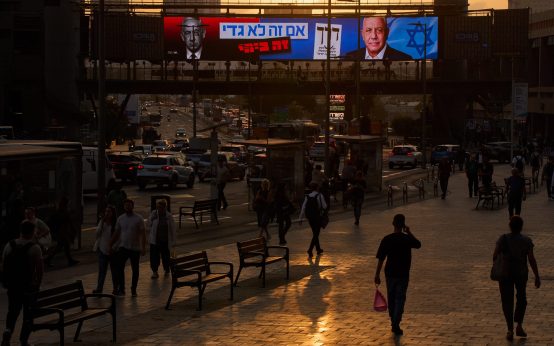 Netanyahu Faces Crucial Election Amid Security Challenges
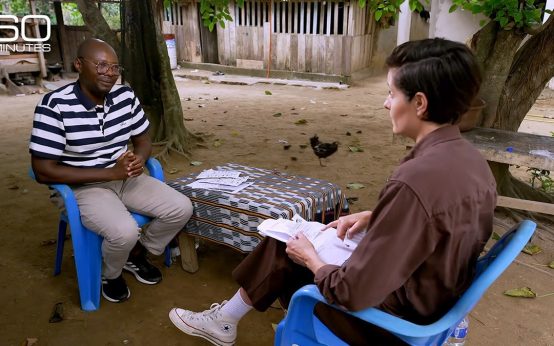 Controversy Surrounds Malian Asylum Seeker Featured on ’60 Minutes’
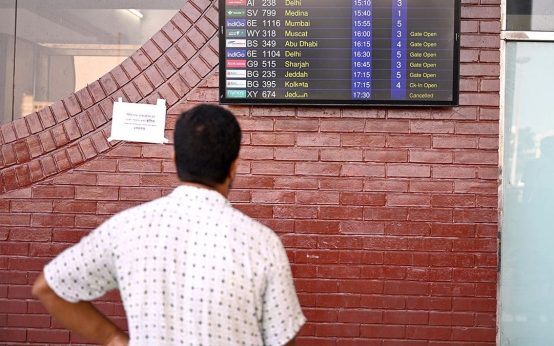 U.S. Updates Travel Advisories for Middle Eastern Countries Amid Security Threats
 American Tourist Suffers Fatal Fall in Italy’s Dolomites