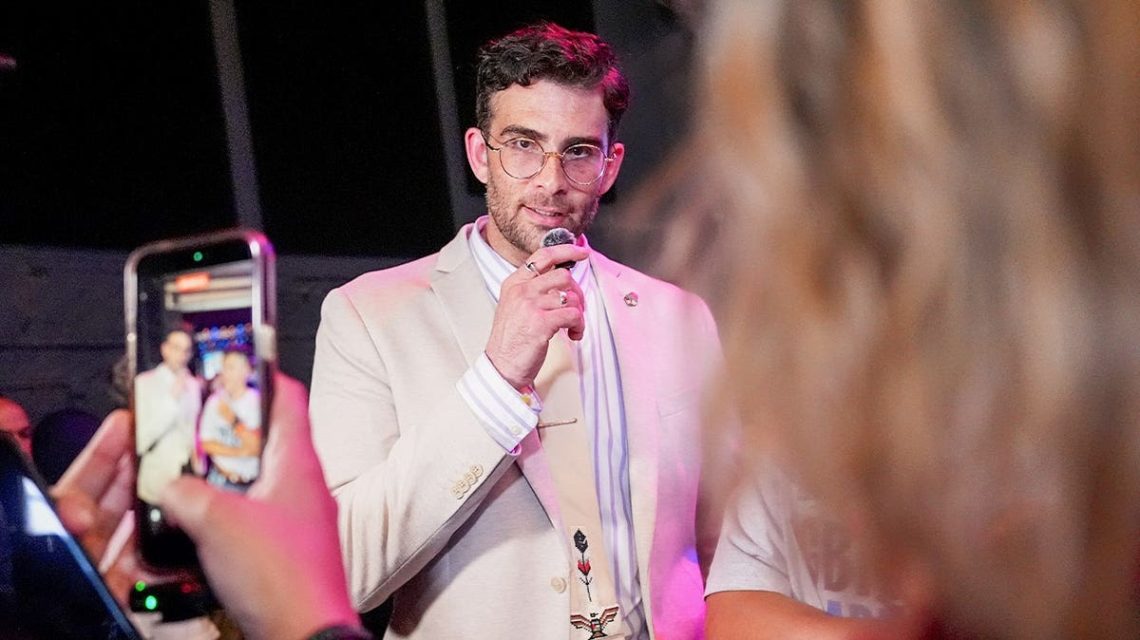
The recent cancellation of Hasan Piker’s speaking event at the University of Washington has sparked discussions about political correctness and free speech. The university decided to cancel the controversial podcaster’s engagement due to concerns over his contentious rhetoric.
The university released a statement highlighting the need to update procedures for university-hosted events. They emphasized the importance of elevating dialogue on divisive topics in a polarized environment. This decision appears to be a precaution against Piker potentially making inflammatory statements at the event.
“We have no idea if this individual will make controversial claims, and we don’t want to be responsible for it,” the statement suggests.
Interestingly, conservative entities, including those with a history of their own encounters with campus cancellations, have supported Piker’s right to speak. However, the Democratic politicians and liberal media that previously endorsed Piker now remain silent on his cancellation.
Piker himself pointed out the disparity in media attention, noting that if conservative figures like Charlie Kirk or Ben Shapiro faced similar censorship, conservative media would likely have given it extensive coverage. Piker argues that liberal outlets will not cover it with the same fervor because they might favor his silencing.
Even those previously aligned with Piker, like Michigan Senate candidate Abdul El-Sayed, have not publicly addressed the issue. This situation raises questions about why Piker is considered too divisive for the University of Washington but tolerated in Democratic circles.
Conservatives are critiquing the censorship for two reasons. They uphold free speech as a principle, and they aim to highlight Piker’s statements during political campaigns. This stance presents a challenging scenario for progressive candidates like El-Sayed and others, who may distance themselves from Piker in general elections.
Piker, however, holds some influence as he can mobilize his young, radical followers against the party establishment, although this outcome seems unlikely. Instead, Piker’s influence is considered more significant in primary elections than in general contests.
For Republicans, particularly in races like El-Sayed’s against Mike Rogers in Michigan, Piker’s rhetoric remains a point of contention, even as Piker remains less visible. Conservative groups may offer him platforms, allowing his ideas to be scrutinized publicly.
 Federal Appeals Court Decision Against Trump’s ‘Third-Country’ Deportation Policy
  President Trump’s Controversial Ban on Media Outlets Sparks Press Freedom Concerns
  U.S. Security Agreement in Greenland Sparks Optimism and Concerns
  Cook County’s Property Tax Bridge Loans
  A Controversial Stance on Immigration Policies Sparks Debate in South Carolina
  Trump Administration Challenges In-State Tuition for Undocumented Students