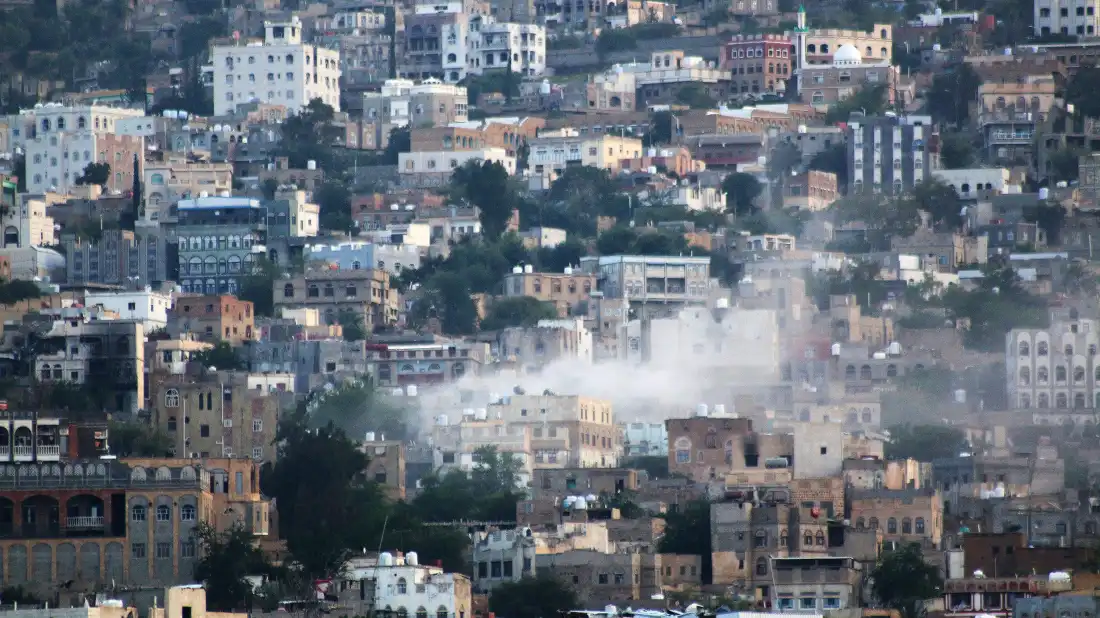
For over a decade, Taiz has grappled with a severe water shortage. The crisis has reached a critical point as Houthi rebels, backed by Iran, intensify their siege on Yemen’s third-largest city. Humanitarian organizations report that the needs of over a million residents in Taiz are barely being met as access to wells is restricted, desalination plants face fuel shortages, and water delivery trucks are largely unable to enter the city.
Families like that of Hadil al-Shahid have been forced to ration supplies. Prior to the siege, Hadil and her children used about 10 liters (2.6 gallons) of bottled water daily for drinking and cooking. Now, they stretch this amount over four days. With bottled water prices jumping by 75%, some families resort to buying on credit.
“We stopped drinking coffee and tea, which were daily staples,” Hadil al-Shahid explained in a phone interview.
The siege has further implications. Groceries price hikes and fuel scarcities make maintaining essential services like hospitals and sanitation challenging, increasing public health risks. Amnesty International urges the Houthis to open routes into the city, warning that Taiz approaches a severe humanitarian disaster.
The conflict in Yemen escalated into civil war in 2014 when the Houthis seized much of the north, including the capital, Sanaa. This forced the internationally recognized government into exile. Taiz has been a battleground ever since. Damages to the city’s aging water infrastructure, compounded by population growth and frequent droughts, have worsened the water crisis.
By August, Yemen saw intensified warfare, with the Houthis advancing on Taiz after capturing Mokha, a vital port city 130 kilometers (80 miles) away necessary for controlling Red Sea shipping lanes. Control of land and roads surrounding Taiz cuts residents from wells and diminishes external water deliveries. The few truckers managing to deliver water face increasing rates due to the perilous journey.
Taiz’s fuel shortage further hampers the water utility’s operations, pushing desalination plants below capacity. Food and fuel shortages have intensified as Taiz houses roughly half of Yemen’s displaced population, estimated at 124,000 people according to the UN. Many displaced families survive under makeshift shelters or tents on a meal a day.
Rising fuel costs, with cooking gas prices quadrupled, force families to cook using wood, charcoal, or cardboard fires. These constraints limit community kitchens from providing free meals and halt waste-collection services.
“The shortages feed into each other. Without fuel, water pumps, hospital generators, and waste collection cannot function, leading to increased disease risk,” Jens Laerke, a UN emergency aid spokesperson, explained.
Skyrocketing food prices further strain the population. Flour and rice prices have surged by 50% since summer, and fresh produce is scarce. One resident, Ahmed Abdel Gaber, lives with nine family members in ruins after displacement. The family’s reliance on assistance for food underscores the fragility of their situation.
Hadil al-Shahid, who once owned a hair salon, now sees her income vanish as the salon closes with customers focusing on food and water essentials. Her children, aged 10 and 5, mostly consume rice, bread, and cheese.
The Houthi siege’s strategic importance pertains to regional control. Though Yemeni government forces hold Taiz’s center, supply challenges persist due to the siege. The Houthis control about 80% of the surrounding countryside and several city neighborhoods, though these claims remain unverified independently.
Civilian safety presents another challenge. Recent Houthi-fired missiles in a residential area killed two teenage girls, highlighting the volatility in Taiz. Loud nightly explosions compound residents’ fears.
“Leaving is not feasible due to travel and rent costs,” al-Shahid remarked. “Staying home remains our only choice, regardless of the dangers.”
 France Prepares for New Round of Protests Amid Rising Tensions
 Iran’s Targeting of U.S. Personnel Abroad Increases
 Concerns in the U.S. Over French Riots
 US Vice President JD Vance Chooses Not to Endorse Netanyahu Amid Israeli Elections
 Rising Violence in Europe and Its Political Impact
 Christiane Amanpour to Leave CNN After Over Four Decades