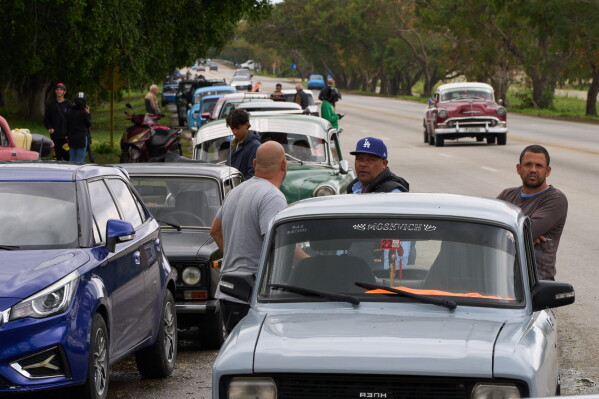
The ongoing fuel shortage in Cuba is putting a strain on the country’s infamous vintage American cars, known as almendrones, used as shared taxis. These antique vehicles, emblematic of Cuban resourcefulness, now often sit unused due to dwindling fuel supplies. Cuban authorities attribute these shortages to a U.S. energy blockade.
Drivers line up at a gas station in Bacuranao near Havana, a common scene since the crisis began in January. At his home in Las Minas near Havana, Diriel Valdez works on restoring a 1951 Chevrolet Deluxe. The car’s burgundy exterior is intact, but acquiring fuel is a major challenge.
Valdez relies on a government app to secure fuel, yet his wait continues, with him being around number 2,800 on the list. He anticipates receiving only 20 liters of gasoline, sufficient for a beach trip.
The term almendrón refers to the rounded shape of these cars, reminiscent of almonds.
Cubans have adapted to a history of sanctions and limited imports by becoming skilled at improvising. They replace engines, rebuild bodies, and scavenge for parts wherever possible. During a recent blackout, taxi driver Leonardo Daniel González maneuvered a friend’s bright purple 1948 Chevrolet Fleetmaster through the streets of Havana.
“These cars have been passed through my family for generations,” González, aged 30, shared, recounting his history with vintage cars.
The Search for Fuel
Cuba faces a severe energy crisis, leading to daily blackouts lasting up to 20 hours. The country’s energy production meets only 40% of its needs, making it dependent on imports. A nearby gas station sits empty, accentuating the island’s predicament. U.S. sanctions under the Trump administration and threats of tariffs have further hampered Cuba’s access to oil, with only a single Russian tanker making a delivery recently.
Valdez oversees an auto body shop and laments how the shortage impacts his work. Learning the trade from his stepfather at a young age, he continues restoring classic cars despite bleak prospects for their regular use.
As gasoline becomes scarce, many resort to the black market where prices surge to $8 per liter. Omar Everleny Pérez, an economist, notes that almendrones remain crucial for public transport since new vehicles are unaffordable for most Cubans.
Modern cars have appeared in Cuba but remain costly, keeping the old American vehicles running. Nevertheless, a shift is underway with the introduction of electric motorcycles and small vehicles from China. Solar charging stations are aiding this transition towards renewable energy.
Back in Havana, González sees potential in the enduring popularity of almendrones. Despite fueling hardships and declining tourism, he continues to find income opportunities through online networks. Yet, he acknowledges tourism struggles in Cuba.
— Reporting assistance provided by Ariel Fernández in Havana
Follow AP’s coverage of Latin America and the Caribbean for more information.
 Iranian Military Capabilities and Potential Actions
  Comparing Trump and Reagan’s Approaches to Iran
  Mexico Seeks Justice for Citizens Killed During U.S. Immigration Operations
  USS George Washington Arrives in Arabian Sea to Relieve Aircraft Carrier
  Harry and Meghan’s Return to the UK Sparks Interest
  U.S. Engagement in Eurasia Through TRIPP