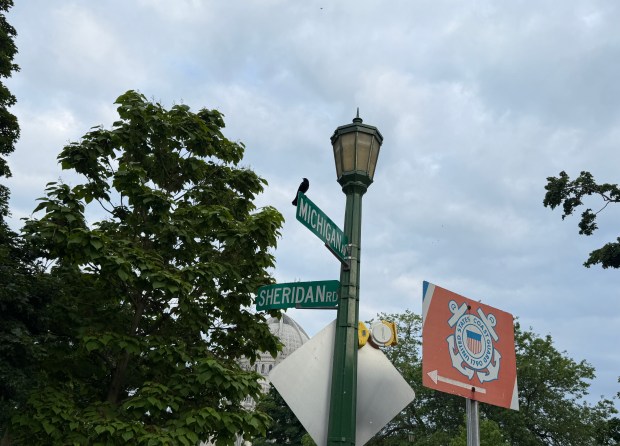
Most days, Teri Weber enjoys walking along Sheridan Road in Winnetka, catching glimpses of Lake Michigan between the homes. However, in the 400 block of Sheridan, she encountered an unexpected situation when red-winged blackbirds began dive-bombing her. Weber, a resident of Winnetka, described the experience: “The first one came from behind, and then the second one came toward my face. But I ducked and waved my hat and started screaming.”
Her social media post about the incident garnered 50 responses. Although it hasn’t reached the level of bird attacks depicted in Hitchcock’s film “The Birds,” others shared similar experiences. Nancy Davidson from Wilmette commented on the post, stating she had been attacked twice recently by red-winged blackbirds during her walk on Sheridan Road. “I was completely surprised, as the bird came out of nowhere,” said Davidson. She added, “I was not aware of the species prior to this year.”
JP McNamara, Marketing and Communications Manager for the Wilmette Park District, explained that red-winged blackbirds are common in Illinois during the spring and summer nesting seasons. The males often exhibit territorial and aggressive behavior to protect their nests. “While the behavior can be startling, it is generally intended to deter potential predators rather than cause injury,” McNamara noted, emphasizing that physical contact is uncommon and the behavior typically subsides after the nesting season.
Experts clarify that this dive-bombing behavior is a natural part of the species’ breeding season. Bridget Kiernan, a horticulturist and bird walk leader at the Chicago Botanic Garden, noted an increase in aggressive behavior from male red-winged blackbirds recently. She remarked, “Red-winged blackbirds are good at what they do. The trait to defend their territory and offspring aggressively has allowed the species to thrive.”
Red-winged blackbirds often nest near water sources, like wetlands, ponds, and lagoons. Their aggressive behavior peaks in June after chicks hatch and diminishes by July when the breeding season ends. Leah Pietrusiak of Chicago shared her experience at Humboldt Park, recalling a bird attack near the lagoon. She received responses from others with similar encounters and plans to be more cautious, saying, “I’m not gonna be walking in the park without a hat in the summer.”
Weber suggests more proactive measures by local officials to prevent nest building in public areas, noting that once eggs are laid, removing nests is illegal under the Migratory Bird Treaty Act of 1918 and the Illinois Wildlife Code. Residents can take precautions during nesting season. Kiernan advises wearing a wide-brimmed hat and protecting the head and neck if attacked. She also recommends familiarizing with red-wing blackbirds’ warning calls, which can signal their presence. The National Park Service provides audio samples of these calls online.
 California Governor Declares Statewide Emergency Ahead of El Niño Storms
  EPA Rollbacks and the Impact on Indiana Communities
  The Impact of Battery Innovations on Renewable Energy
  Challenges in California’s Home Insurance Market
  Race Against Time: Preserving Quinhagak’s Archaeological Heritage
  Managing Drying Rivers: The Need for New Approaches