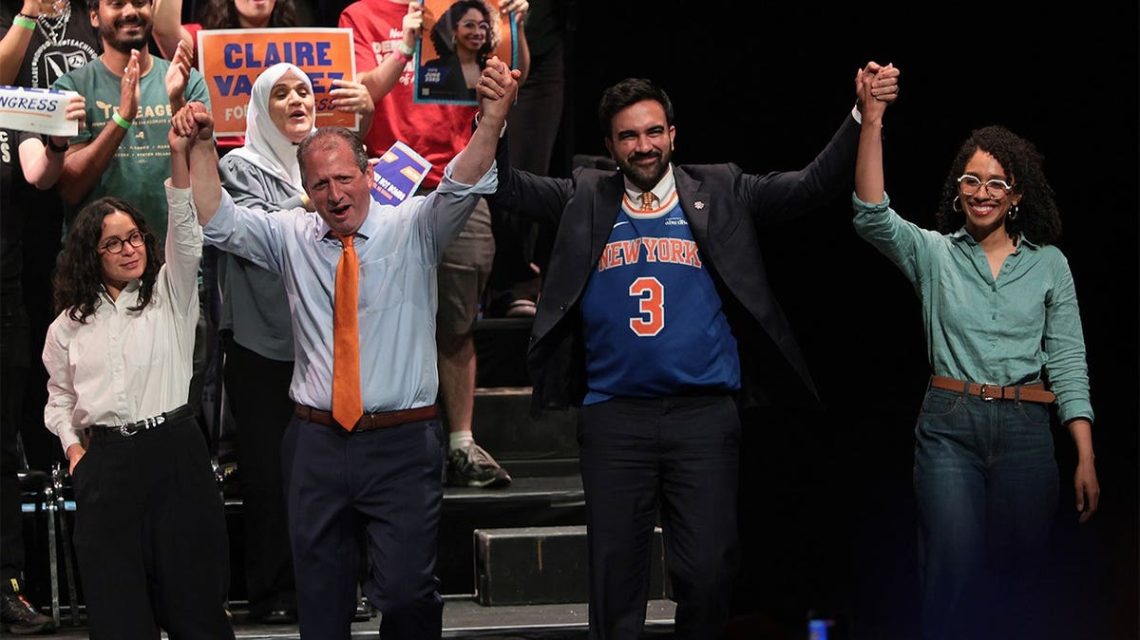
The Democratic Party faces a significant ideological battleground extending from deep-blue districts to statewide contests in Michigan, Wisconsin, and Minnesota. Progressive victories in these areas might reshape the party and threaten essential seats in November.
Last month, far-left and socialist candidates triumphed over moderates in deep-blue districts. Now, upcoming Senate primaries in Michigan and Minnesota, and Wisconsin’s gubernatorial primary, will test if these victories can lead to statewide influence.
Sen. Bernie Sanders highlighted recent successes: “In the past year, we have won mayoral races in cities like New York, Seattle, and Washington, D.C. We have secured congressional victories in Arizona, Ohio, Pennsylvania, California, Montana, Colorado, New Jersey, and New York.”
Resistance to Far-Left Politics
There’s resistance from the center. Former New York Gov. Andrew Cuomo criticized socialism on a Fox Business interview, saying, “Socialism hasn’t worked anywhere. Promises of free services are unrealistic because nothing is free. Someone always pays.” Cuomo stepped down amid scandals five years ago, and his attempt at a political comeback failed when socialist Zohran Mamdani defeated him in New York City’s mayoral race.
Victories by far-left candidates in New York and Colorado have emboldened progressives pushing a national agenda within the Democratic Party. The Democratic Socialists of America (DSA) praised these outcomes, stating, “Only socialism can remedy decades of capitalist mismanagement in the US. Our leaders will fight for the working class.”
Controversy and Critical Voices
Not everyone agrees with these perspectives. Democratic analyst Van Jones criticized extreme far-left ideas in a social media post. He stated, “Supporting Hamas and radical ideas like ‘no police, no prisons, no borders’ is regressive, not progressive.” Jamie Metzl, a technology and healthcare expert, urged Democrats on Fox News Channel to “stand up to bigots” within their party who try to seize control of their brand.
Key Primary Races and Challenges
Sen. Gary Peters abandoned neutrality in Michigan’s Democratic Senate primary, backing Rep. Haley Stevens over progressive rival Abdul El-Sayed. Stevens, supported by Democratic leaders like Sen. Chuck Schumer, is viewed as more electable than El-Sayed, who has previously sparked controversy with his views.
The winner of this primary will face former Republican Rep. Mike Rogers in a crucial midterm faceoff, with the open Senate seat being a Republican target as Democrats aim to reclaim the Senate majority.
El-Sayed, potentially the nation’s first Muslim senator, supports Medicare for All and has criticized Israel amid its conflict with Hamas, calling actions in Gaza “genocide.” He refuses PAC donations and has faced scrutiny for past remarks.
Battles in Wisconsin and Minnesota
One week post-Michigan primary, Wisconsin will hold its elections. DSA-backed state Rep. Francesca Hong is gaining traction in the race to replace retiring Gov. Tony Evers. In Minnesota, Lt. Gov. Peggy Flanagan and Rep. Angie Craig lead the Democratic primary to succeed retiring Sen. Tina Smith.
The outcomes of these primaries will shape party dynamics, but the immediate focus is on this year’s midterm elections, which will determine congressional control.
Joe Caiazzo, a veteran strategist, stressed the stakes: “Democratic seats must be held in November to maintain influence.”
 Trump Delivers Warning to Iran, Cuba at UN General Assembly
  Trump Delivers Stern UN Speech on Iran, AI, and Global Security
  Lukashenko and Putin’s Unique Relationship and Belarus’ Strategic Role
  Harris Discusses Potential 2028 Presidential Run
  Far-Left Groups Allegedly Organize Protests in Austin
 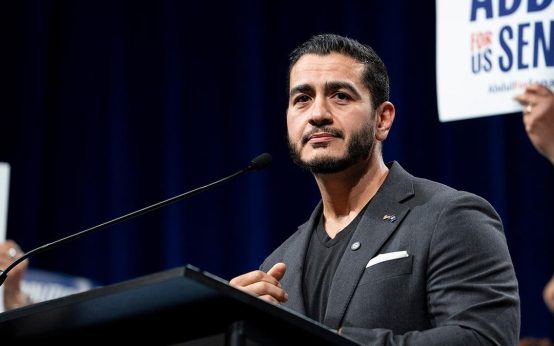 Michigan Senate Nominee Abdul El-Sayed Criticized for Remarks on Reproductive Rights