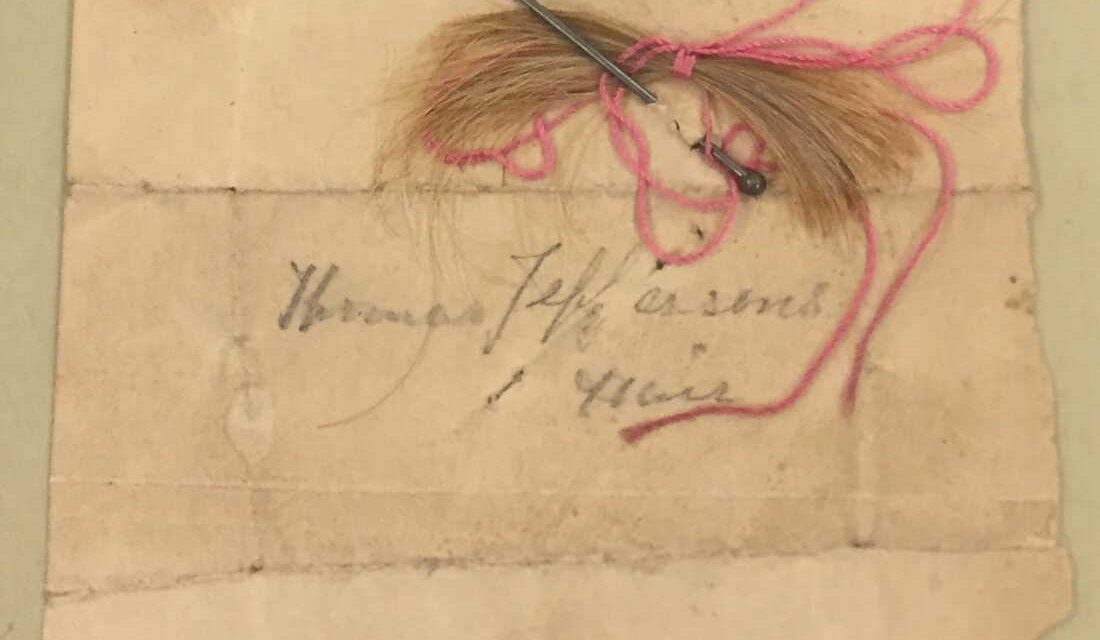
A hair clipping labeled as belonging to Thomas Jefferson is part of the Thomas Jefferson Foundation at Monticello, his main home and plantation. For over 200 years, questions have persisted about whether Thomas Jefferson fathered children with Sally Hemings, a woman he enslaved, who was 30 years his junior. This issue has fueled debates about slavery, race, power, and the legacy of Jefferson.
Richard Kurin, a distinguished scholar from the Smithsonian Institution, spoke to NPR about his years-long research into Jefferson’s DNA to address these paternity questions. The exploration began with hair strands found in Jefferson’s Bible and included scientists, genealogists, archaeologists, and descendants of both Jefferson and Hemings.
The Historical Debate
Jefferson, the primary drafter of the Declaration of Independence, faced accusations of fathering children with Hemings as early as the late 1700s. These claims have been debated by families, biographers, and historians. Kurin’s team continued the work first undertaken by pathologist Eugene Foster in the late 1990s. Foster’s team analyzed Y chromosome markers from Jefferson’s descendants and Eston Hemings. This study suggested a connection, but skeptics argued the DNA could point to other male relatives of Jefferson.
Scientific and Ethical Considerations
Some scholars argue that Hemings, due to her status as an enslaved woman, could not consent to a relationship with Jefferson. Kurin’s research aims to avoid moral judgments, focusing instead on DNA evidence.
In collaboration with experts Beth Shapiro and Richard “Ed” Green from the University of California, the research team pursued purely scientific inquiry. This objective approach aimed to avoid moral interpretation of historical events.
Breakthrough in DNA Research
A key discovery came when a lock of hair thought to be Jefferson’s emerged, which provided a DNA sample. This new evidence strengthened the case for Jefferson being the father of Sally Hemings’ children. The DNA findings show that Madison and Eston Hemings, Sally Hemings’ youngest surviving sons, possess significant amounts of Jefferson’s DNA.
“The DNA speaks for itself,” Kurin remarked about confirming Jefferson’s paternity.
Unanswered Questions
While the research identified descendants of Madison and Eston Hemings, it did not locate descendants of Hemings’ other children, Harriet and Beverly. These two children left Monticello and assimilated into white society in Washington, D.C., obscuring their lineage.
Kurin aims to make Jefferson’s genome publicly available to aid in tracing family connections. He notes ongoing prospects for rediscovering these historically concealed heritages as the scientific paper awaits publication.
 Ari Emanuel’s Memoir: A Business-Centric Narrative
  Celebrating Day of the Dead: Students Craft Calaveras in Pilsen
  Controversial Revelations from Charles Spencer’s New Book on Princess Diana
  Discover Five Simple Art Projects to Try at Home
  Chicagohenge: When Sunlight Aligns with City Streets
  Navy Veteran Generald Wilson Reflects on Emotional National Anthem Performance