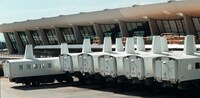
Over fifty years ago, the trams at Washington Dulles International Airport represented cutting-edge travel solutions. Now, their days might be numbered. President Donald Trump has shared plans for a significant overhaul of the Northern Virginia airport. This ambitious project includes features like large glass windows and gold accents, as noted by reporters Dan Diamond and Liam Scott. Part of this revamp could involve phasing out the mobile lounges, which many travelers find inconvenient.
The mobile lounges currently transport passengers between the Main Terminal and Concourse D, as well as between Concourses A and D, and to customs in the International Arrivals Building. Although some may miss these vehicles, others are likely to welcome a change. Our travel reporters discuss the end of this distinct Dulles experience.
It’s time to say goodbye to an era!
The discussion around the retirement of these mobile lounges evokes mixed emotions. While some travelers are nostalgic, others recall more recent incidents, such as the 2025 crash that caused injuries. The consensus is that although often criticized, these people movers held a certain charm.
The confusion around using these mobile lounges is notable. Many passengers never figured out the best seating strategy or found the system intuitive. Designed by architectural legend Eero Saarinen, they promised a futuristic, chic design that mainly fell short in functionality.
Saarinen’s vision for these vehicles was mobile waiting rooms with cocktail service, an idea that could have enhanced their appeal. Despite this, today’s travelers prefer a more streamlined experience without secondary transportation steps after disembarking from flights.
The mobile lounge’s inconvenience includes its disjointed flow and the shortness of its journeys, often making the boarding process longer than the travel itself. New solutions should address these inefficiencies.
As proposals for replacing these mobile lounges emerge, travelers express desires for straightforward and connected inter-terminal transit, akin to the system at Minneapolis airport. They hope the $22 billion renovation budget will support practical improvements.
Some advocate for an interconnected airport with amenities like beautifully landscaped paths linking terminals or efficient trains for those in a rush. While the new design’s specifics are still unfolding, highlights like gold-mirrored ceilings catch attention, even if they might not address the core needs of passengers.
Reflections overhead after a long travel day might not be ideal!
As Natalie points out, most modern airports prioritize intuitive navigation, ample seating, and convenience over aesthetics. Beyond functionality, accessibility and clear signage, especially for accessing the Metro after landing, remain essential.
Retired people movers offer creative repurposing potential. Suggestions include transforming them into bars, boutiques, or play areas, echoing the TWA Hotel’s innovative concepts. Whether as attractions or functional spaces, they could live on in new forms.
 ICE Shooting Incident in Austin Sparks Demands for Transparency
  Bishop Blase Cupich Announced as New Archbishop Designate for Chicago
  Daring Rescue of American Fighter Pilots in Iran
  Giants Honor 9/11 Anniversary During Game Against Cowboys
  Tragic Incident at Shasta Lake: Man Dies Trying to Rescue Dog
  High-Speed Crash in Irvine Results in Two Fatalities