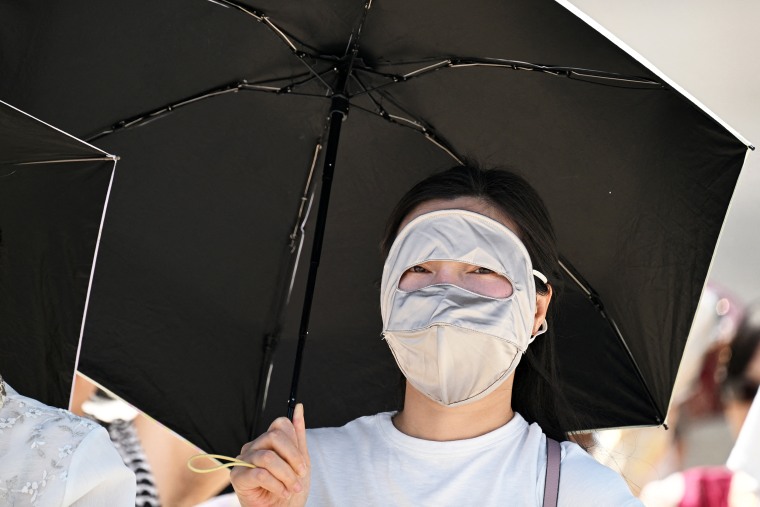
On August 4, 2026, the East Asia region is facing an unprecedented heat wave, registering the hottest temperatures in South Korea’s history and complicating post-earthquake recovery efforts in Japan. Since mid-May, South Korea has attributed 19 deaths to the severe heat, which President Lee Jae Myung has declared a national disaster. He emphasized the need for a complete revamp of the national crisis management system, stating at a cabinet meeting that this intense weather is becoming the norm.
“We need to make efforts for a fundamental overhaul of the national crisis system, since this extreme weather is becoming normal,” said President Lee Jae Myung.
On Sunday, the southeastern city of Yangsan experienced a scorching 42.5 degrees Celsius (108 Fahrenheit), marking the highest temperature in 122 years of record-keeping. Even though the extreme heat was initially concentrated in the south, it has recently intensified in areas closer to the capital, Seoul.
For the first time, the Korea Meteorological Administration issued a comprehensive “severe” heat wave warning for all of Seoul on Tuesday. Previously, it had only been issued for parts of the city. This warning signifies a maximum perceived temperature of at least 38 degrees Celsius (100.4 Fahrenheit). Authorities urged the residents in Seoul’s metropolitan area, with over 26 million inhabitants, to remain indoors, stay hydrated, and pay attention to vulnerable individuals.
In North Korea, temperatures have also surged, prompting state newspaper Rodong Sinmun to advise citizens to limit outdoor activities and ensure crops are safeguarded from the intense heat.
The extreme temperature conditions have exacerbated disaster relief challenges in Japan. Since the 7.1-magnitude earthquake struck Kumamoto prefecture on Kyushu on July 28, thermometer readings soared beyond 100 degrees Fahrenheit. More than 40,000 households are without water, reported public broadcaster NHK. Many displaced individuals are residing in emergency shelters or sleeping in cars, wary of further tremors.
Kumamoto Governor Takashi Kimura described the situation as “heartbreaking” following the heat stroke death of a woman in her 70s while sheltering in a car post-earthquake. The cumulative death toll has reached 38. Kimura pleaded with those displaced to keep air-conditioning running in vehicles or relocate to air-conditioned evacuation centers.
During discussions on Monday with Prime Minister Sanae Takaichi, Kimura highlighted that “abnormal heat” is worsening the living conditions for displaced residents. Takaichi assured continuous water supply to evacuation centers and vowed to swiftly restore services and repair household equipment.
Elsewhere in Japan, the extreme heat has affected Tama Zoological Park near Tokyo. Officials disclosed on Monday that three lions died within a week from suspected heat-related causes. Ten of the zoo’s 16 lions exhibited distress signs since mid-July, including reduced activity and appetite, with some unable to stand. Despite temperature regulation attempts, three female lions succumbed to dehydration and multiple organ failure. While four lions are recuperating, three remain sick. The zoo emphasized prioritizing animal health, suspending public displays.
To raise awareness about heat dangers, the Japan Meteorological Agency introduced “kokushobi” or “cruelly hot day” to describe days exceeding 40 degrees Celsius (104 Fahrenheit). This term was selected following over 200,000 votes in a public poll, with the initial kokushobi documented last month over five consecutive days.
Japan’s highest temperature recorded was last August in the city of Isesaki, at 41.8 degrees Celsius (107.2 Fahrenheit).
 Venezuelan Leadership at the United Nations
  Ontario Synagogue Shooting During Yom Kippur Leaves One Officer and Shooter Injured
  Pope Leo XIV’s Upcoming Visit to Latin America: An Overview
  Ukraine Deploys Ground Robots in ‘Operation Vivaldi’
  Understanding AI’s Impact Compared to Historical Threats
  State Department Alerts on Middle East Travel Amid Rising Tensions