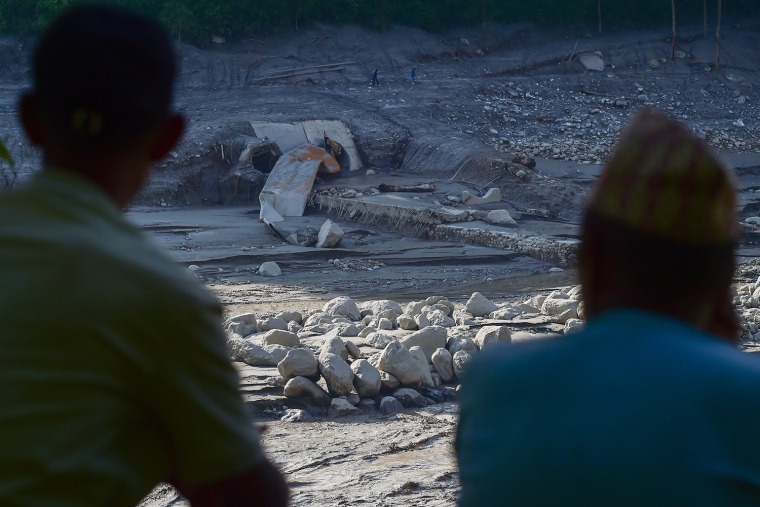
Hopes dimmed for finding more survivors among the many still unaccounted for in Nepal a week after a glacier collapse triggered catastrophic flash floods. Authorities remained optimistic about discovering survivors among workers trapped in hydroelectric project tunnels.
The calamity resulted in at least 1,114 lives lost and nearly 4,000 missing. Rescue teams concentrated efforts on the remains of power plants, suspecting workers could remain alive within the tunnels. Authorities noted these facilities have areas where people can shelter, and 639 individuals, including those in tunnels, remain missing.
We are very confident they must be alive after one week because they have food and water over there in the building,
stated Amhsu Kiran Shahi from the Nepal Electricity Authority.
Despite dwindling chances of finding survivors elsewhere, rescue operations persisted around the mountainous border with China where floods ravaged towns and valleys.
The hope of finding survivors is decreasing,
commented Phanindra Paudel of Nepal’s National Emergency Operation Center. We pray and are hopeful. Hope is hope!
Hopes of Survivors Inside Tunnels
Major rescue attempts targeted tunnels across four projects. Notably, two projects, with nearly 100 individuals missing, showed promising chances of survival due to available air. At Trishuli-3A, officials believed dry space existed inside with expected oxygen flow. They used pipes for pushing oxygen inside.

Specialized rescue squads from India, China, and the United States engaged in tunnel rescue efforts. Across the border in Tibet, China’s reported figures remained unchanged: 16 dead and 546 missing.
Tibet Disaster Zone Now Accessible
Tibet fully reopened the main road to the Gyirong border crossing, enabling heavy machinery to reach the disaster zone for the first time. China dispatched large equipment to aid search operations, as reported by state broadcaster CCTV. They showed scenes of rescuers equipped with life-detection technology and search dogs working in a narrow mountain gorge with difficult terrain.
China’s missing tally included 104 Indians, 49 Nepali citizens, and 33 Latvians, primarily tourists visiting revered Tibetan sites. Additional Chinese aid involved sending DNA experts and emergency supplies to assist rescue efforts in Nepal.
Survivors Attempt to Rebuild
Nepal’s affected inhabitants salvaged remnants from decimated villages and towns. My husband and I escaped safely, but took nothing with us,
said Shanta Sunar, a shopkeeper from Nuwakot. We lost everything, yet feel fortunate we were unharmed.
Save the Children reported minors in Nuwakot and Rasuwa displayed signs of trauma, having witnessed distressing scenes during the floods. Children voiced fears over seeing friends washed away and homes destroyed.
Nepali Prime Minister Balendra Shah prioritized restoring telecommunications, power, and transport with international help. By Tuesday, 95% of telecom services resumed. Shah reported to parliament that the disaster disrupted 431 megawatts of electricity generation. This was a major disaster experienced by human civilization,
he stated. He highlighted prompt local resident warnings by security personnel, many of whom went missing themselves.
 USS Abraham Lincoln’s Impactful Visit to Pattaya, Thailand
  Tensions Rise as Putin Accuses Ukraine of ‘State Terrorism’
  Inferno Erupts at Bali Restaurant Following Balloon Explosion
  Royal Family Faces New Challenges with Sussexes’ Return
  Ongoing Iran-U.S. Conflict: Recent Developments
  Increased Entry Denials for International Travelers to Israel