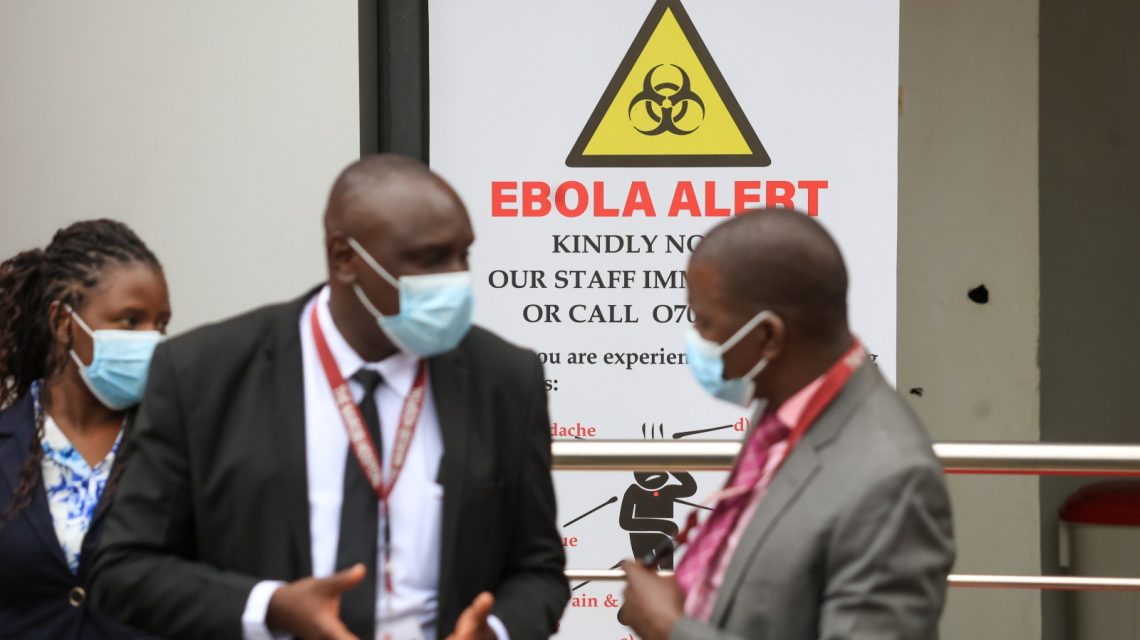
An Ebola outbreak with a case-fatality rate near 50% has reached Kenya. Health authorities confirmed a second infection linked to the deadly outbreak originating in the Democratic Republic of the Congo.
The latest patient is a 39-year-old relative of Kenya’s first confirmed Ebola case. Symptoms developed while he was in quarantine, according to the Health Ministry’s statement issued on Wednesday. Officials assured that the two cases are linked and there is no community spread evidence.
The outbreak is marked as the second-largest on record by the CDC. New data shows 9,144 confirmed cases and 4,410 deaths in the Democratic Republic of the Congo as of October 12. The outbreak crosses borders, which was already evident when Uganda and France reported cases earlier this year.
The CDC reported Uganda’s 21 confirmed and probable cases, with three deaths. The outbreak surpassed 1,000 confirmed cases within 40 days of response activation, which is much faster than the 2018 outbreak’s timeline.
The United States remains unaffected, with a CDC assessment of very low likelihood for Ebola spread to the country.
Kenya’s Response
Kenya’s Health Ministry confirmed two Ebola cases. The second patient, linked to the first, was already quarantined when symptoms appeared. The first patient was a 40-year-old Kenyan who contracted the virus in the Democratic Republic of the Congo.
After traveling from Congo to Uganda, he flew to Kenya, tested positive for Ebola, and died on October 5. Kenyan health authorities tracked 128 contacts associated with the first patient, placing 108 in quarantine within the country.
Kenya has increased screenings at airports and border crossings. The Health Ministry emphasized that early detection enhances recovery chances.
Current Situation in the Democratic Republic of the Congo
The Democratic Republic of the Congo is at the center of the epidemic, as the country faces its 17th Ebola outbreak. The CDC confirms it’s one of the largest recorded, with a case-fatality rate at 48%.
The Bundibugyo virus is identified as the cause. Confirmed cases have spread across seven provinces, including Bas-Uele, Haut-Uele, Ituri, North Kivu, South Kivu, South Ubangi, and Tshopo.
Transmission remains intense nationally, and WHO reported a crude case-fatality ratio of 48.2% as of early October.
Future Actions
Kenyan authorities continue contact tracing and monitoring after confirming the second case. By October 13, 108 contacts remain in quarantine, undergoing daily checks for 21 days post-exposure. Efforts to trace 15 additional contacts persist.
People interacting with the second patient, including healthcare workers, are assessed. Those showing symptoms will be isolated and tested, while infection-control measures are reinforced.
WHO’s response in the Democratic Republic of the Congo includes strengthening surveillance, contact tracing, clinical preparedness, community engagement, and cross-border readiness.
The Bundibugyo virus poses challenges due to the lack of licensed vaccines or specific treatments. Research to test potential candidates is ongoing.
 Southern California Faces Santa Ana Winds and Elevated Wildfire Risks
  U.S. Army Prepares for New Challenges Amid Emerging Threats
  Tropical Depression Champi Threatens Guam and Northern Mariana Islands
  Mass Shooting Attempt at Aurora Hindu Temple Prevented
  Travel and Diplomacy: Jared Kushner’s Envoy Role
  Americans’ Confidence in Food Safety Hits Record Low