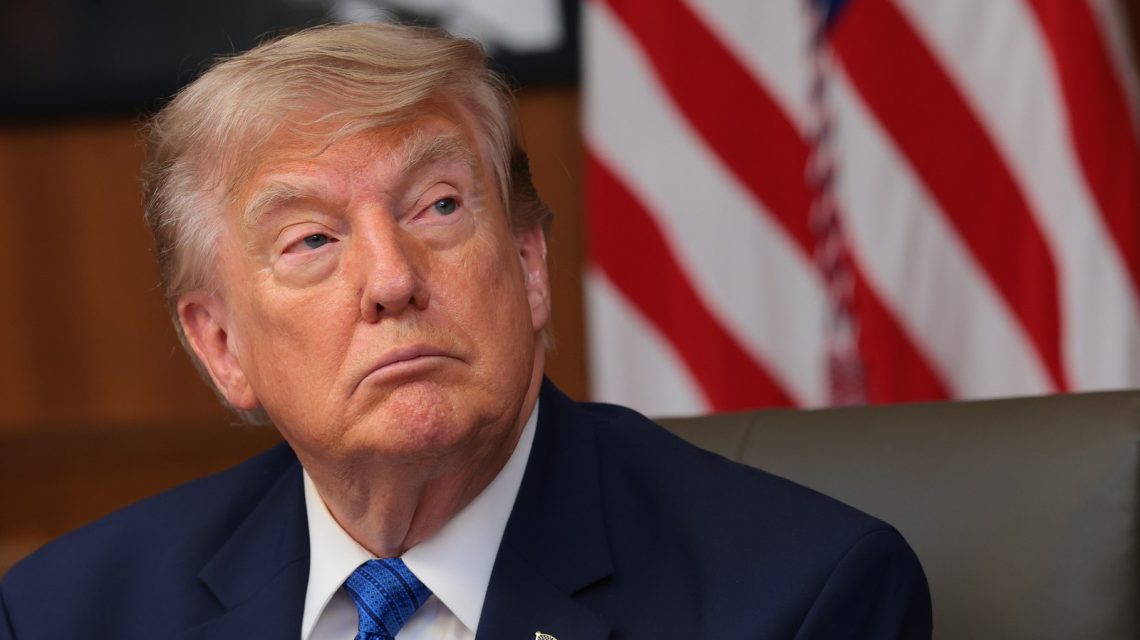
President Donald Trump is encountering fresh challenges regarding public confidence in the economy, just 70 days before the midterm elections in 2026. Numerous recent polls indicate increasing voter dissatisfaction with his administration.
The Conference Board announced that the Consumer Confidence Index decreased to 89.4 in August, down from 90.2 in July. Dana M. Peterson, Chief Economist of the Conference Board, stated that consumers felt more pessimistic about business conditions and the labor market in the coming six months.
Economic issues are weighing heavily on the midterm elections. These elections often serve as a referendum on the president’s popularity and policy effectiveness. Poll respondents have pointed to concerns like inflation and living costs.
Democrats anticipate that President Trump’s declining approval rating may decrease support for Republicans in key races, enabling Democrats to compete in traditionally conservative areas. Negative economic polling could be problematic for Republicans hoping to counter a potential “blue wave” in November.
White House spokesperson Kush Desai stated, “Hard data on consumer spending and retail sales have consistently shown that the American consumer remains strong, thanks to the president’s proven economic policies of tax cuts and deregulation.” He emphasized that ongoing economic policies, trade deals, and investments should lead to further progress.
Consumer Confidence Index Declines in August
The Consumer Confidence Index saw a 0.8-point drop due to sustained concerns about inflation. According to the report, consumers expressed increased pessimism in August, citing elevated prices, including oil and gas, along with concerns about war/conflict, food/groceries, trade, and jobs.
The Expectations Index also fell, indicating weakened net expectations for business conditions, the labor market, and household income in August. In contrast, the Present Situation Index showed improvement, mainly due to better perceptions of employment conditions. More consumers reported that jobs were “plentiful,” while fewer reported that jobs were “hard to get.”
Robert Y. Shapiro, a political science professor at Columbia University, remarked that voters’ perceptions of the economy are solidifying. To alter these views, Trump and Republicans need to change economic reality by addressing issues without worsening conditions. He argued that raising tariffs is not an effective method to control inflation; lowering tariffs would help maintain lower prices. He also noted that narrowing the Strait of Hormuz could reduce gasoline prices and diminish the negative impact of the ongoing war on election outcomes.
Trump’s Approval Ratings Dropping
Recent polls reveal a decline in Trump’s approval ratings in the past months. A poll from YouGov and The Economist indicates that 36% of Americans approve of Trump, with 57% disapproving. This survey covered 1,536 adult citizens from August 21 to August 24, with a margin of error of +/- 3.5 percentage points. Additionally, 67% of respondents stated that things are “off on the wrong track.”
A Reuters/Ipsos poll found 65% disapproval of Trump’s performance, while 33% approved. The poll surveyed 1,215 adults nationwide from August 21 to August 24, with a margin of error of +/- 3 percentage points.
An Echelon Insights poll showed Trump’s approval at 40%, with 59% disapproval. This survey included 1,002 likely voters from August 13 to August 17, with a margin of error of +/- 3.4 percentage points.
In a Morning Consult poll, Trump’s approval was slightly less negative, with 54% disapproving and 43% approving. This poll surveyed 2,201 registered voters from August 14 to August 17.
Trump claimed on Truth Social, “They’re putting [polls] out at levels never seen before.” He suggested these efforts aim to “demoralize Republicans so that they don’t vote.” He added that internal polling shows “tremendous” support and a high “Spirit in our Country.”
Midterm Implications
The public’s perception of the economy is crucial for the midterms. Democrats have focused on the economy and affordability, while Trump has portrayed the economy as strong. Earlier this month, he highlighted the economy’s favorable performance on Wall Street and job growth. Despite these claims, many Americans remain dissatisfied with current economic conditions.
The YouGov poll revealed that economic concerns are paramount for voters heading into the elections. Twenty-six percent cited inflation as their primary issue, whereas 15% prioritized jobs and economic matters.
Only 3% rated the economy as excellent, while 21% considered it “good,” 33% categorized it as “fair,” and a 40% majority labeled it “poor.”
On managing the economy, 39% believed Democrats are more effective than Republicans, 32% favored Republicans, and 15% felt both parties perform equally. An additional 15% were unsure.
Regarding economic outlook, 57% felt the economy is worsening, while just 14% saw improvement.
Political analysts see Democrats as likely to retake the House of Representatives, needing to gain only a few seats due to the Republicans’ narrow 218-212 majority. However, securing the Senate presents a greater challenge. Democrats need to flip four seats to achieve a majority in the Senate, with Republicans holding a 53-47 margin.
Democrats are defending seats in Georgia and Michigan, both won by Trump in 2024, and are aiming to compete for GOP-held seats in North Carolina and Maine. However, they must also target seats in conservative states such as Alaska, Texas, Iowa, and Ohio to achieve a majority, driven by Trump’s declining popularity.
Future Outlook
Consumer confidence and Trump’s approval rating will remain closely observed measures leading up to the midterms. Economic concerns could significantly influence voter sentiments and shape Trump’s potential for recovery in approval.
 DOJ Subpoenas Rep. Ilhan Omar’s Family in Federal Investigation
 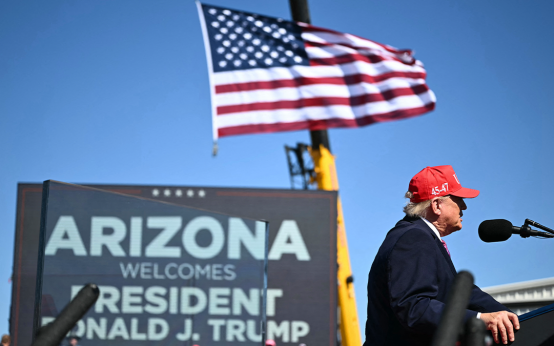 Trump Encourages Arizona Voters to Support GOP in Upcoming Elections
  The Impact of Trump’s Presidency and Midterm Elections
  Challenges Facing Polling and Public Understanding
  Former U.S. Ambassador to Greece Faces Ethical Violation Allegations
  Maintaining America’s Infrastructure: A Crucial Task