
Economic Indicators Ahead of Midterm Elections
New unemployment benefits claims have dropped to historic low levels, signaling economic trends closely watched by voters as midterm elections approach. Last week, initial filings for unemployment benefits were reported at 194,000, a figure reminiscent of lows not seen since the late 1960s. This data was published by the Labor Department.
Economists attribute this to retirements and immigration restrictions, which have reduced layoff rates. Despite low laidoff numbers, many Americans express concerns about economic conditions, with Republicans facing potential losses in both the House and Senate. The ongoing conflict in Iran has driven gas prices up, and wage growth has failed to keep pace with inflation. Since President Donald Trump returned to the White House, average wage growth has stagnated, according to government data.
Furthermore, despite low unemployment, those out of work report difficulties in finding jobs due to businesses adopting a ‘low-hire, low-fire’ approach. This has disproportionately affected Black Americans and recent college graduates struggling in a tight job market.
Security Concerns in Prediction Market Operations
A security incident affected Polymarket, a prediction market platform, resulting in a temporary halt to international trading on Thursday. The pause lasted approximately an hour, stemming from a breach involving a third-party software vendor.
Users on Polymarket’s Discord forum expressed panic when reports emerged that some wallets had been drained of funds. Polymarket assured users in a statement that affected parties ‘will be made whole.’ Approximately at 2 p.m., the platform shifted to a cancel-only mode, enabling users to cancel transactions while new orders were suspended.
The breach involved DebugBear, a third-party performance and debugging platform. Details came from an anonymous source familiar with the situation. The incident has been reported to UK authorities where DebugBear operates. DebugBear acknowledged the security issue on social media, advising clients using its web-monitoring tools to remove them temporarily.
Passing of Patrick Stewart, Shakespearean Actor and ‘Star Trek’ Icon
Acclaimed Shakespearean actor and ‘Star Trek’ star, Patrick Stewart, passed away at the age of 86 in Los Angeles on Wednesday. He succumbed to Alzheimer’s disease and Lewy body dementia after a ‘brief and poignant journey,’ as noted in a statement from his social media accounts.
Stewart’s career foundation lay in the Royal Shakespeare Company for nearly two decades, with notable roles in productions like ‘Hamlet,’ ‘The Tempest,’ and ‘Much Ado About Nothing.’ His portrayal of Capt. Jean-Luc Picard in ‘Star Trek: The Next Generation’ introduced him to American audiences, becoming a pop culture staple.
Stewart’s dedication to theater persisted throughout his career, showcased by roles in productions including ‘Othello’ and franchises like X-Men, where he played Professor X. Beyond his professional achievements, Stewart’s personal life included marriages to Sheila Falconer and Wendy Neuss, with two children from the first marriage. His later life involved marriage to Sunny Ozell.
Iran Conflict and U.S. Military Casualties
Recent updates from the Pentagon have increased the count of U.S. military deaths related to the Iran conflict. The current total is 23, with two noncombat fatalities added recently.
The deceased were Air Force personnel who died in incidents not related to hostilities. An illness claimed one life, while the other remains under investigation. These deaths fall under the Defense Casualty Analysis System (DCAS) in the Overseas Operations category, applicable from July onwards amid a fragile ceasefire with Tehran.
Casualties preceding these listings were registered under Operation Epic Fury, orchestrated by the Trump administration. The Pentagon reports six additional nonhostile deaths from a refueling tanker crash in Iraq, among other incidents.
A total of 865 military personnel have been wounded due to enemy actions since the war began in late February, as documented by DCAS. Over half of the injuries occurred post-ceasefire amid continued retaliatory strikes.
Federal Debt and its Economic Implications
For the first time since World War II, federal debt has exceeded the size of the U.S. economy, raising concerns over fiscal stability. Economists warn essential drivers of economic growth may diminish in the near future.
The debt-to-GDP ratio reached 100.3 percent in the 2026 fiscal year, indicating that the government’s debts surpass the country’s annual production in goods and services. This milestone coincides with a resilient economy showing signs of potential risks.
Consumer spending, vital for economic growth, has remained robust, partly supported by tax refunds and stock gains benefiting wealthier households. However, economists predict spending may slow as these supports wane.
Economic growth registered at a 3.4 percent annual rate from July to September, according to recent Bureau of Economic Analysis data. Yet consumer spending’s incremental rise in September was negligible after inflation adjustments.
Economists, including Veronica Clark from Citi and Lydia Boussour from EY-Parthenon, project spending moderation due to inflation and high interest rates. Concerns persist over the debt’s impact on long-term interest rates, which affect borrowing costs for mortgages, posing potential challenges for households and businesses.
Trump Administration Demands Transparency from Drug Managers
The Trump administration announced new regulations requiring drug middlemen to disclose their earnings, pushing for increased transparency in the healthcare market.
The Labor Department regulation mandates pharmacy benefit managers to reveal payments for pharmaceuticals and earnings from drug manufacturers. These entities negotiate prescription benefits for tens of millions of Americans.
Labor Secretary Keith Sonderling articulated the aim of enhancing price transparency and fostering competitiveness within the healthcare industry. The rule aims to facilitate employers in securing better deals, potentially lowering drug prices for over 72 million Americans on self-insured group healthcare plans.
Critics argue pharmacy benefit managers exploit transparency gaps to direct patients toward costly medications. However, major players like Express Scripts, Caremark, and Optum Rx, controlling about 80 percent of U.S. prescription claims, have expressed resistance to the rule, which becomes effective for healthcare plans in July.
 Robert C. White Jr. Resigns from D.C. Council to Run for U.S. House Delegate
 White House Engages Veterans Ahead of Court Clash
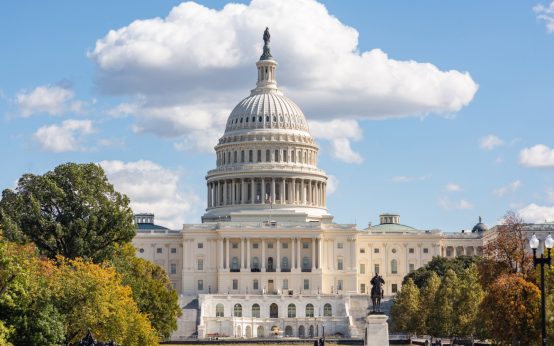 Senate Race Forecasts Shift in Favor of Democrats Ahead of Midterms
 Pentagon Revises U.S. Military Casualty Figures Related to Iran Conflict
 Republicans in Defensive Mode Ahead of Midterm Elections
 Tensions Rise Between DOJ and California Over Voter Rolls