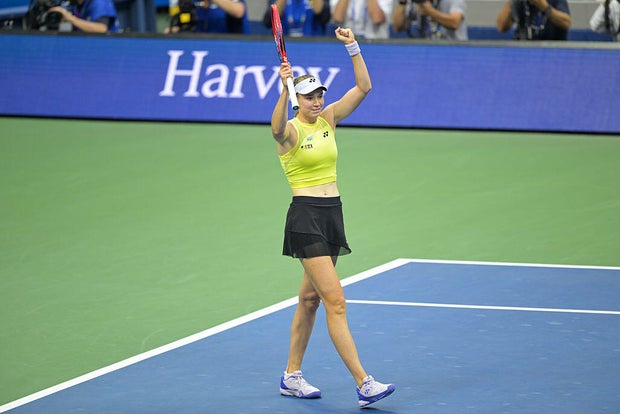
Elena Rybakina arrived in New York with determination, taking over Aryna Sabalenka’s accolades. She claimed the No. 1 ranking in women’s tennis and secured the U.S. Open trophy. Previously a challenge, the tournament transformed into a triumph for Rybakina. She celebrated her first U.S. Open victory by defeating Sabalenka 6-4, 5-7, 6-2.

Guaranteed to take the No. 1 spot from Sabalenka the following week, Rybakina took the title Sabalenka held for two years. “It’s hard to describe this feeling,” Rybakina expressed. “I didn’t expect this outcome, especially with a recent injury, but everything came together.”
Rybakina’s triumph marked her third Grand Slam title and her second of the year against Sabalenka on hard courts. Earlier, she defeated Sabalenka for the Australian Open title. Her win interrupted Sabalenka’s 19-match winning streak at the U.S. Open.
Rybakina earned $5.5 million, the highest prize in Grand Slam history. She shared a tour-high three titles this season with Sabalenka and French Open winner Mirra Andreeva.
Despite taking home $2.8 million, Sabalenka was visibly upset, smashing her racket after the match. She aimed to replicate Serena Williams’ three consecutive wins at Flushing Meadows, last achieved from 2012 to 2014. Sabalenka admitted, “I was competing with all I had today, but it wasn’t enough.”
Rybakina, even not at her best, applied relentless pressure on Sabalenka with a strong return game, converting three out of 12 break opportunities. This was the third meeting of No. 1 vs. No. 2 since 2000 in a U.S. Open women’s final, and Rybakina emerged victorious.
Sabalenka held the top ranking for 99 weeks, but Rybakina accrued enough points to surpass her by reaching the semifinals. The 27-year-old, born in Russia but representing Kazakhstan, seeks the French Open to complete her career Grand Slam. Her distinct power game unsettled Sabalenka.
“Her serve is incredible. She overpowers you on a fast U.S. Open court,” acknowledged Sabalenka. “It’s a significant advantage for her.”
Rybakina’s calm demeanor contrasts Sabalenka’s aggressive play style. Coco Gauff, who lost to Rybakina in the semifinals, noted Rybakina’s composure, saying, “She doesn’t show much reaction.”
Though initially frustrated during a missed break in the third set’s opening game, Rybakina soon took control. Sabalenka led their rivalry 10-8, with recent victories on hard courts at Indian Wells and Miami, before facing setbacks.
Sabalenka exited Wimbledon in the fourth round to Naomi Osaka and experienced fourth-round defeats in Toronto and Cincinnati. Rybakina paused briefly after a Cincinnati foot injury versus Iga Swiatek but recovered in time for the U.S. Open.
“I’ve been coming here for 10 years without success,” Rybakina shared. “Winning here makes me love New York even more.”
While Sabalenka previously dominated at Arthur Ashe Stadium, reaching four consecutive finals, she struggled this time around. During the match, she often turned to her coaches with visible frustration, especially after a double fault gave Rybakina a first-set lead.
Despite gaining momentum in the second set, Sabalenka couldn’t maintain it. Rybakina’s resilience helped her clinch the winning edge, highlighting her prowess in the game.
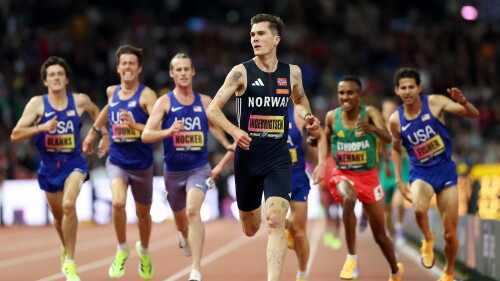 World Ultimate Championship Highlights
 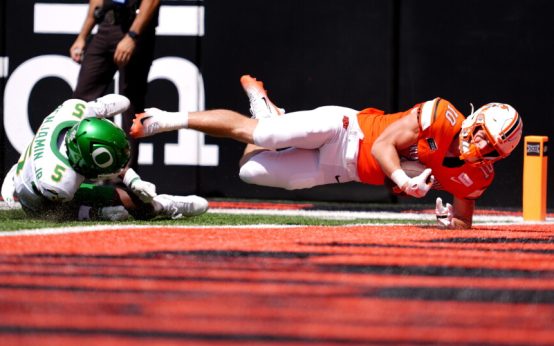 Oklahoma State’s Historic Upset Over Oregon
 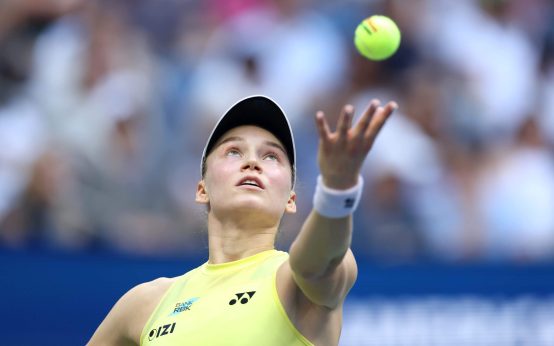 Elena Rybakina Triumphs in the 2026 U.S. Open Women’s Final
 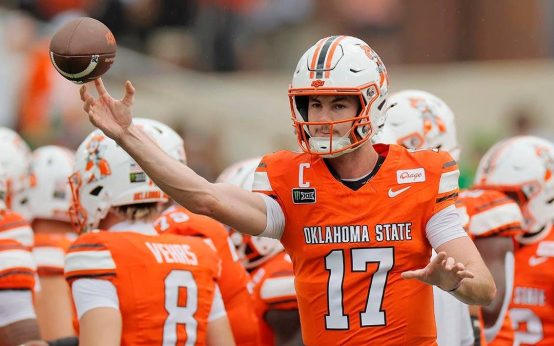 Oklahoma State Upsets Oregon, Ending Winning Streak
 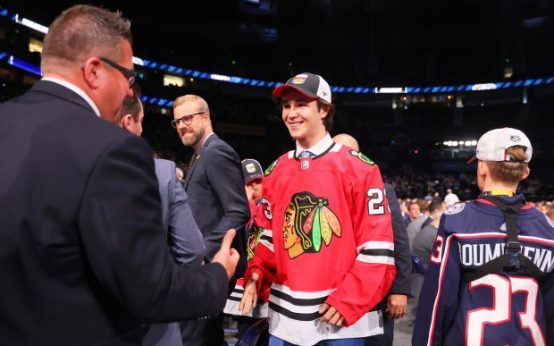 Blackhawks Prospect Camp: Preparation and Promising Players
 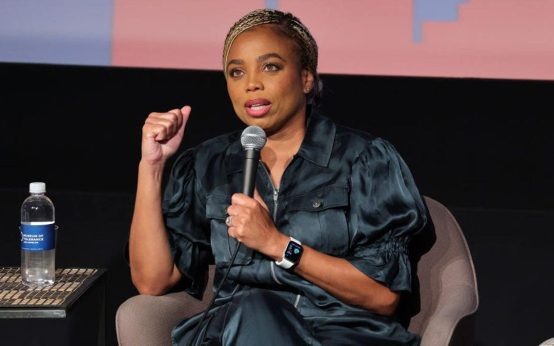 Debate Over Political Voices in Sports Media