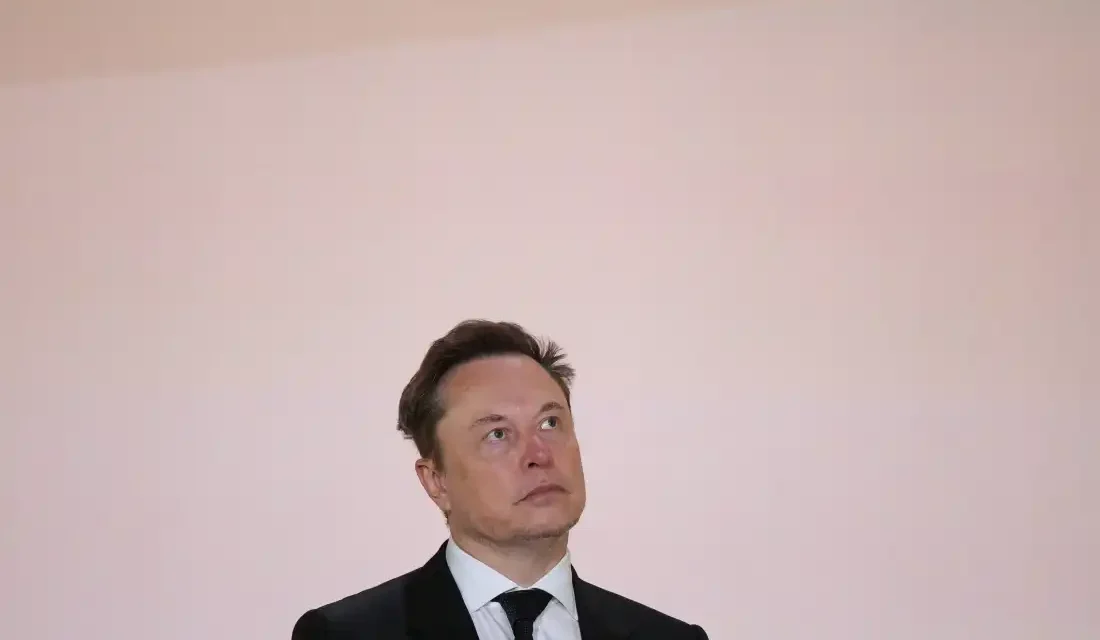
Elon Musk recently attended an event for the America.gov website launch in Washington, D.C., highlighting his prominence. As the world’s richest individual, Musk’s power is evident in his significant political donations. He has given over $400 million to Republican causes before the midterm elections, surpassing combined contributions from major Democratic donors like Michael Bloomberg and George Soros, based on reports from The Washington Post and CNN.
Musk’s influence extends beyond politics. His company, SpaceX, limited Ukraine’s use of the Starlink satellite, impacting Ukrainian drone operations. Tech journalist Kara Swisher argues that no civilian, including Musk, should make wartime decisions. David Nasaw, a history professor, concurs, noting the historical power of wealthy individuals but pointing out Musk’s uniqueness because of his trillionaire status.
Nasaw highlights Musk’s dismantling of the U.S. Agency for International Development through DOGE and notes his companies, SpaceX and Tesla, have received over $30 billion in federal support. Nasaw labels this the “unholy alliance,” where Musk profits and supports allies to retain influence. He suggests Congress should impose higher taxes on billionaires and cap campaign spending to safeguard democracy.
“Democracy is in a death spiral towards oligarchy,” Nasaw warns.
Richard White from Stanford University challenges the notion of Musk’s unique influence, comparing him to J.P. Morgan, who held sway during the Gilded Age. In 1895, Morgan famously rescued the U.S. from a financial crisis, believing he co-partnered with the government. However, his dominance waned after President Teddy Roosevelt disbanded Morgan’s Northern Securities Company.
Despite criticism, some appreciate Musk’s innovation. Marian Tupy of the Cato Institute argues non-conformists like Musk drive progress. Tupy believes such figures understand economic growth better than average voters and defends their political spending as a constitutional right. However, substantial spending doesn’t assure electoral success, as seen when Musk’s favored candidate lost a Wisconsin Supreme Court race.
If Democrats regain power, White suggests Musk’s influence might diminish, noting SpaceX’s reliance on government funding. Democratic plans for Musk investigations are already considered if they win the House. Musk responded on X, his social media platform.
“Live by the sword, die by the sword,” Musk stated.
H.W. Brands, a historian, sees parallels between Musk and past industrial moguls like Morgan and Carnegie. He argues the tension between democracy and capitalism centers on equality versus inequality. Brands notes the current era resembles a “second Gilded Age” with tech leaders dominating. He forecasts a new wave of democratic reform in the U.S., following historical cycles of response to such concentrations of wealth.
 Polymarket Trading Halted After Vendor Security Incident
 Employee Granted Religious Accommodation for AI Use
 The Impact of Online Negativity and How to Address It
 Musk’s Influence Highlights Global Policy Concerns
 The White House Accord on Super Intelligence and Its Implications
 FTC Probes Pricing Strategies of Major U.S. Companies