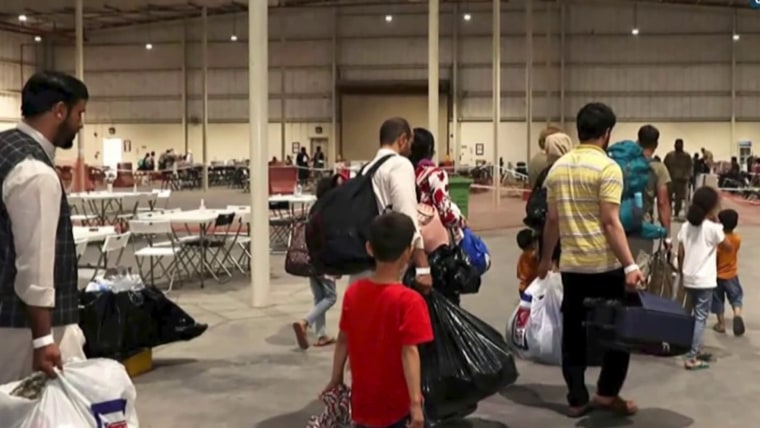
Overnight airstrikes by Pakistani forces resulted in the deaths of at least 36 civilians, with more than 160 others injured, as confirmed by Afghan officials on Monday. This incident marks a significant escalation in tensions between the neighboring countries.
Pakistani security forces initiated a ground operation along the Pakistan-Afghanistan border on Sunday night. It was followed by airstrikes targeting militant hideouts, resulting in the death of 29 militants, according to Pakistan’s Information Minister, Attaullah Tarar. These operations were a response to numerous militant attacks within Pakistan.
Afghanistan condemned the Pakistani airstrikes, labeling them as a “cowardly act of aggression” and “brutality.” Hamdullah Fitrat, the deputy spokesman for Afghanistan’s Taliban government, reported that Pakistani forces struck a home in the Chamkani district of Paktia province. The attack resulted in the death of an elderly man and a child, while other family members sustained injuries. When residents gathered to assist, the area was bombarded again, killing 28 villagers and injuring 158.
Fitrat further reported that six individuals, primarily women and children, were killed in the Giyan district of Paktika province when another home was hit. In Kunar province, an airstrike damaged a civilian home, causing no human casualties but resulting in the death of 30 livestock.
Militant attacks against Pakistan’s police and security forces have increased significantly in recent years. The Pakistani Taliban, known as Tehrik-e-Taliban Pakistan (TTP), along with allied groups, have been blamed for most of the violence. The TTP is separate from the Afghan Taliban, which assumed power in 2021.
The recent security operation came as a response to a militant attack on the regional headquarters of the paramilitary Rangers in Karachi, which resulted in the death of three soldiers. Security forces killed three attackers and apprehended another who was identified as an Afghan national.
Jamaat-ul-Ahrar, a splinter group of the Pakistani Taliban, claimed responsibility for the Karachi attack.
The remains of a building damaged by a Pakistani airstrike in Afghanistan’s Tsamkani district were visible on Monday.
These recent cross-border strikes and ground operations occurred less than three weeks after Pakistan’s military carried out airstrikes on what they alleged were militant hideouts in Afghanistan. This followed approximately a month of relative calm after what Islamabad described as an “open war.” This escalation follows months of military exchanges. Since February, when Afghanistan launched retaliatory strikes against Pakistani airstrikes, hundreds have been killed.
Numerous peace talks have failed to achieve a lasting ceasefire. In April, China hosted both sides, facilitating discussions. Beijing later announced that Pakistan and Afghanistan had agreed not to escalate their conflict further and were exploring peaceful resolutions.
 Lukashenko and Putin’s Unique Relationship and Belarus’ Strategic Role
  Alan Ritchson Faces Backlash Over Political Remarks
  Himalayan Pilgrimage: A Couple’s Narrow Escape and Lingering Questions
  Former CEO Sentenced for Bank Fraud and Sanctions Evasion
  Russia’s Potential Incursion Into Estonia: NATO’s Resilience Under Scrutiny
  Senators Urge Action to Free Imprisoned Journalist in Iran