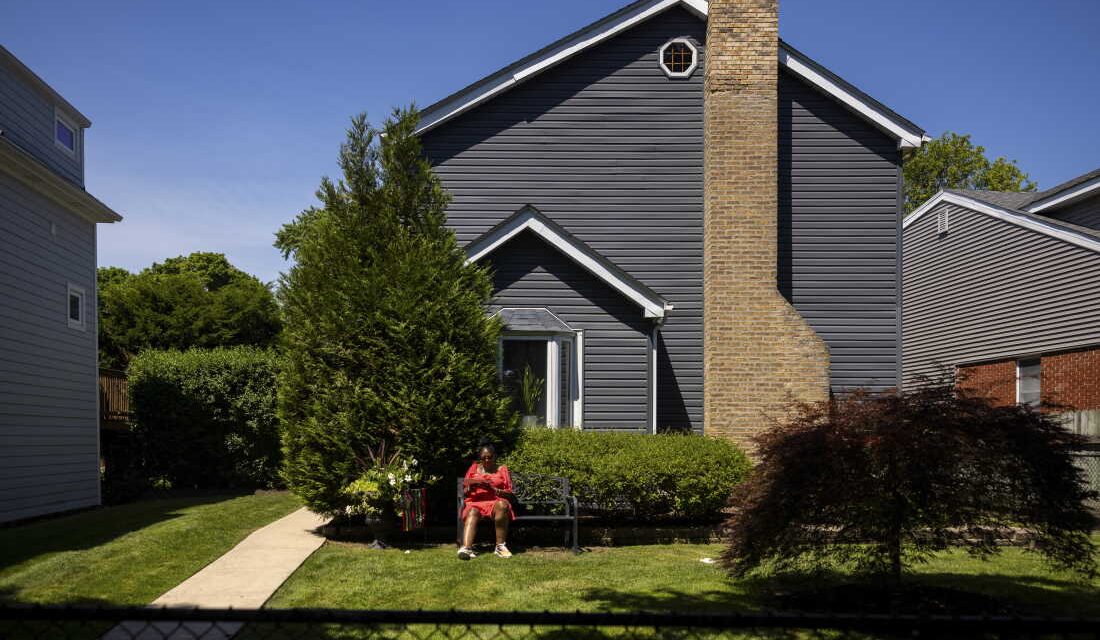
Kimberly Holmes-Ross grew up in Evanston, Illinois’ 5th Ward, a neighborhood historically open to Black residents. Her family recently utilized reparations money to convert her basement into an apartment for her son. This initiative is part of Evanston’s reparations program aimed at addressing historical housing discrimination against Black residents.
In the 1960s, Allie Zemtseff observed her Black mother being denied rental apartments in white neighborhoods. Recently, she received a $25,000 grant via Evanston’s reparations plan, using the money for kitchen renovations. Zemtseff appreciated the city’s apology for its past role in enforcing segregation, saying the initiative was a way to address the wrongs faced by Black residents.
Since 2021, Evanston’s initiative has provided $25,000 grants to over 300 individuals, addressing historical injustices and sparking a wider conversation on reparations for African Americans. Yet, the program faces challenges. The Trump administration, aiming to eliminate government programs promoting racial equity, accuses Evanston of racial discrimination because the reparations are exclusive to Black residents. The Justice Department joined a lawsuit arguing the program violates the Constitution’s equal protection clause which prohibits racial discrimination.
Alvin Tillery, a race and politics professor at Northwestern University, views Evanston’s program as a significant civil rights issue. He argues that preventing such reparations because white residents don’t qualify undermines efforts to rectify historical racial harms. However, the Justice Department insists Evanston’s program discriminates purely on racial lines.
The reparations program idea was born in 2019 when Robin Rue Simmons, a former councilmember, recognized the historical zoning laws that affected Black families financially. Her research highlighted a 1921 zoning law confining Black residents to specific neighborhoods, impacting property values and wealth accumulation. The city council responded with a $20 million commitment funded by cannabis tax and real estate transfers, requiring applicants to prove residency in Evanston during the segregation era.
Laurice Bell, who oversees Evanston’s Shorefront Legacy Center, noted that many residents sought historical confirmation of their residency during the application period. However, Michael Bekesha, representing the lawsuit against Evanston, argues that the program lacks proof of discrimination against applicants, focusing solely on racial identity and residence during a specific timeframe.
Evanston’s Mayor, Daniel Biss, defends the reparations, attributing them to historical decisions that adversely affected Black property owners. The program, he emphasizes, aims to mitigate the wealth gaps resulting from past discrimination. Reparations experts express concerns about the broader implications of the legal challenge, fearing it may deter other cities from pursuing similar programs. Justin Hansford, a Howard University professor, stresses the importance of detailed historical documentation in reparation initiatives for their legal sustainability.
Kimberly Holmes-Ross’s family has deep roots in Evanston, dating back to the early 1900s. The reparations program not only provided financial benefits but offered a chance to reflect on their historical journey. Her son has utilized the grant to create a living space in her basement, reinforcing the family’s ties to Evanston. Holmes-Ross applied grants towards home improvements, fulfilling her late mother’s advice to recognize and honor the city’s acknowledgment of past harms.
Despite ongoing legal challenges, Evanston’s leaders remain committed to their reparations program. Rue Simmons, involved in establishing and managing the initiative, encourages other cities to proceed with caution but determination in addressing historical injustices.
 Reflecting on 9/11 Twenty-Five Years Later
  NFL Week Highlights and Personal Stories from Joe Kinsey
  Farmers Share Concerns with U.S. Rep. Frank Mrvan
  Landon Robinson’s Memorable NFL Debut
  U.S. Diesel Prices Hit Record High Amid Global Inflation Concerns
  Caitlin Clark’s Impact on Women’s Basketball: A New Era of Visibility and Growth