
Much discussion surrounds the documentary “You Can See Everything.” Directed by Nathan Fielder and Lance Oppenheim, it delves into controversial Theranos founder Elizabeth Holmes as her 11-year prison sentence for fraud looms. The film sparked intense debate post its Telluride Film Festival debut, setting a remarkable box office milestone with $15 million on an 855-theater opening weekend, a feat last achieved by Michael Moore’s “Fahrenheit 9/11” in 2004.
Fielder, known for high-concept nonfiction, introduces a fresh narrative approach. His previous work on “The Rehearsal” and “Nathan for You” features a unique blend of reality and fiction, intensifying the dramatic tensions in “You Can See Everything.” Holmes faces new scrutiny through Fielder’s lens, exploring her interactions with the truth.
Viewers witness chaos unfold as Fielder and Oppenheim live with Holmes and her partner, Billy Evans. The film reveals intriguing dynamics, examining topics of truth and deception. Washington Post reporters Ethan, Geoff, and Jade explore why the film captivates audiences so deeply.
Initial Reactions
The quick film rollout left a lasting impression. Ethan reflects on the buzz, while Geoff describes an urgent need to share its impact. For Jade, Holmes’s story remains captivating, yet Fielder’s unusual storytelling draws people in. The film is not simply about Holmes, but about probing the idea of truth.
Fielder’s Influence
Fielder’s presence in the film mirrors the audience’s internal struggle with reality. His blunt questions and deadpan delivery evoke laughter and reflection. He’s depicted attempting to unravel Holmes’s story, as well as his own involvement in the narrative.
Ethan explains how Fielder’s interactions—such as a direct confrontation with Holmes’s partner Billy—reveal authenticity and deceit. These encounters add comedic and dramatic layers, highlighting the film’s complex nature.
Additional Characters
Amanda Seyfried’s unexpected appearance adds more intrigue. Known for her role in “The Dropout,” she interacts with Holmes, deepening the exploration of her character. This meta-narrative blurs lines between portrayal and reality.
Geoff raises questions about Seyfried’s involvement and her insights into Holmes’s story. Jade finds her presence engaging and more than mere mimicry. Seyfried articulates audience concerns, investigating the enigmatic Billy. Geoff suggests her judgment contrasts with Fielder’s observational stance.
Questioning Reality
The film evolves into a discussion on reality and perception. Jade and Geoff speculate on whether there’s a broader narrative at play. Geoff even suggests the documentary itself could be an elaborate fiction. This uncertainty fuels audience intrigue and debate.
Fielder’s method of recreating Holmes’ prison life from memory prompts Ethan to question its authenticity, reflecting audience skepticism.
Sympathy for Holmes?
Despite knowing Holmes’s legal guilt, the film humanizes her, creating ambivalence. Geoff acknowledges how the documentary portrays Holmes as potentially manipulative or misunderstood, challenging viewers to reassess their perceptions.
Jade admits feeling sympathy for Holmes, relating it to her perceived manipulation or naïveté. Ethan likens her journey to someone misled by conspiracies, recognizing a similar path in Billy’s intense on-screen portrayal. Geoff compares Billy’s role in Holmes’s life to infamous side figures.
Cinematic Comparisons
Geoff finds parallels in films like “Adaptation” and “Being John Malkovich,” which blur truth and fiction. Ethan references “Close-Up” by Abbas Kiarostami and Janet Malcolm’s book for insights on representing reality. Jade emphasizes the film’s uniqueness and its capacity to provoke thought.
Inspiration from films exploring reality, deceit, and narrative complexity shapes Fielder and Oppenheim’s documentary, challenging audiences to discern truths.
 Remembering Ann Hornaday: A Revered Film Critic
 Renowned Film Critic Ann Hornaday Passes Away
 Donnie Wahlberg Shares Gratitude After Plane Incident
 Kylie Jenner Shines in $50 Million Fantasy Bra at Victoria’s Secret Fashion Show
 Amanda Seyfried’s Controversial Appearance in Elizabeth Holmes Documentary
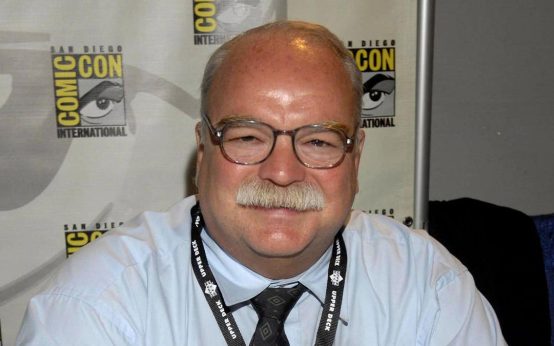 Actor Richard Riehle Dies at 78, Leaving Behind a Legacy