Fertility rates in the United States are approaching historic lows. A significant factor is the steep decline over the past three decades in the birth rate among American women in their 20s. Meanwhile, women’s biological clocks remain unchanged. Could egg freezing be an answer?
Freezing embryos for in vitro fertilization (IVF) has been common for years, but freezing unfertilized eggs was a more challenging endeavor. Initially used for patients with cancer and other fertility-affecting conditions, non-medical egg freezing became accepted about 13 years ago. Since then, the demand has surged; hundreds of thousands of eggs are now frozen, generating significant financial gains and raising important questions about its impact on women’s lives.
The Egg Freezing Process
On a rainy day, Kate Sonderegger visited a fertility clinic for a procedure to harvest and freeze her eggs. The next day, at another clinic, Katherine Schneider underwent the same procedure, overseen by Dr. Tomer Singer, head of Northwell Health’s fertility services.
“Let’s get some eggs,” said Dr. Singer as the harvesting process began.
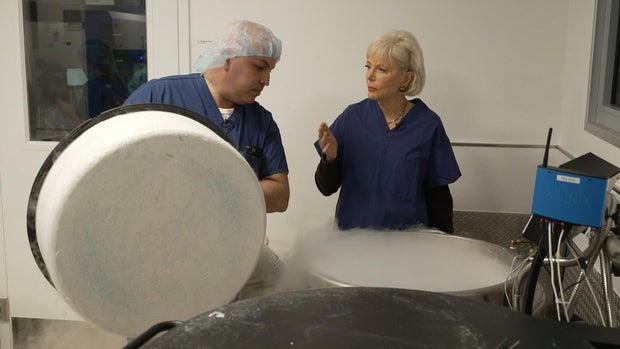
The procedure follows nearly two weeks of self-administered hormone injections. These stimulate the ovaries to produce multiple follicles, each containing an egg. A surgeon uses a needle to extract these, and the eggs are isolated in an embryology lab.
After retrieval, the eggs are stored in liquid nitrogen at -320 degrees Fahrenheit. They remain frozen until the owner decides to fertilize them and potentially start a family.
Critics Voice Concerns
Egg freezing offers no health differences in babies compared with other IVF methods. Dr. Singer claims this technology is as transformative for women as the birth control pill was in the 1960s and 1970s.
“Egg freezing allows women to delay fertility into their 40s,” he said.
While many women report empowerment through egg freezing, critics caution against viewing it as a guarantee. Vardit Ravitsky from the Hastings Center notes the process is a gamble, not a surefire assurance for future children.
Financial and Social Implications
A single egg-freezing cycle can cost between $12,000 and $15,000, excluding additional fees for storage and subsequent fertilization. Larger corporations, like Apple and Facebook, now offer this as a covered employee benefit. However, critics argue this might be a way to retain employees longer without them taking maternity leave.
Tina Rampino and others have noted personal transformations after freezing eggs. Yet, for many, the procedure remains accessible primarily to those with financial means or corporate benefits.
The Broader Impact on Society
Dr. Singer predicts a future where most women will freeze their eggs and have children later. Currently, the majority using this option are white and well-resourced. Dr. Lucky Sekhon emphasizes the challenges in making this technology accessible to all socioeconomic groups.
Despite criticisms, some believe that societal shifts, including policies for better parental leave and workplace childcare, could support women in becoming mothers at a younger age.
As egg freezing advances, it holds promise and challenges for future family planning, highlighting the need for informed decision-making and access to reproductive options for all women.
 Potential Changes in Medicare Reimbursement for Lab Tests
  Understanding and Addressing the Complexity of Suicide
  Dietitian Advises Caution with Costco’s High-Protein Chef Salad
  Recall of Meat Products from Star Meat Delivery Inc.
  Questions Arise After Presley Gerber’s Death in Rehab
  Beach Dispute Turns Tragic