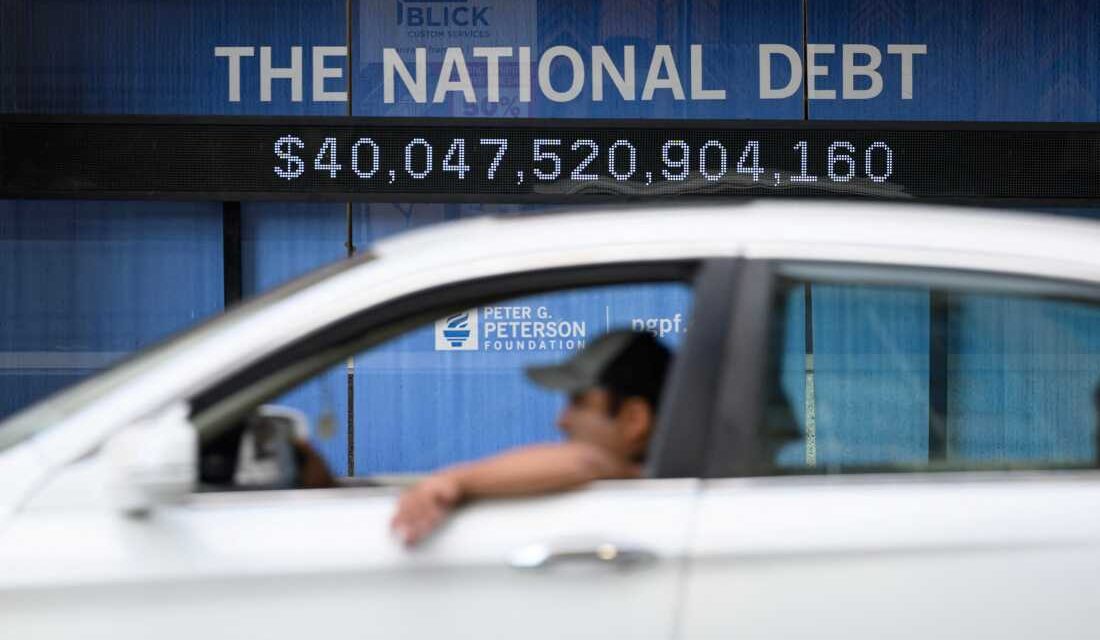
The U.S. federal debt has reached a staggering $40 trillion this week. Investors purchasing government bonds demand higher interest rates due to the increasing debt. This rising debt comes with significant economic implications.
Current Debt Situation
The Treasury Department reported this significant debt milestone, with the accumulated annual interest now exceeding $1 trillion. This makes interest payments the government’s second-highest expense after Social Security. Understanding the complexities behind this growing financial burden is crucial.
Reasons Behind the Debt Increase
The federal debt has grown as the government consistently spends more money than it collects in taxes. Political choices contribute to this imbalance, such as engaging in wars, cutting taxes, and expanding the social safety net. Much of the spending growth occurs automatically, driven by the aging baby boomer population and the associated costs of Social Security and Medicare.
Historically, debt as a percentage of the economy rose during recessions and stabilized during expansions. However, the government has maintained large deficits even during economic growth periods. Since 2017, the debt has doubled, and lenders are now demanding higher interest rates.
Impact on Individuals
The federal debt indirectly affects all Americans by limiting the government’s ability to address other priorities. For some, the impact is more direct, as borrowing costs rise. Michael Peterson, CEO of the Peter G. Peterson Foundation, notes that increased government borrowing drives up interest rates on everything, including mortgages, car loans, and credit cards.
Currently, mortgage rates closely follow the yield on 10-year Treasurys. For instance, the average rate on 30-year home loans has approached 6.7%, according to Freddie Mac.
Government Efforts to Address the Debt
While the Treasury Department has taken steps to manage long-term bond yields, the underlying problem persists. On Wednesday, yields fell after Treasury Secretary Scott Bessent announced an increased buy-back program for government bonds. However, the effect was temporary as yields on 10- and 30-year Treasurys rose again by Thursday.
The government previously acted to support the Japanese yen, preventing Japan from selling its U.S. Treasurys, which would push yields higher. Ultimately, Congress must make tough decisions, like raising taxes or cutting spending, perhaps both.
Although the concept of fiscal responsibility has waned in Washington, signals from the bond market could prompt changes. “$40 trillion should be a wake-up call,” said Carolyn Bordeaux, executive director of the Concord Coalition, highlighting the responsibility of both political parties in addressing the issue.
 Trump Suggests Renaming Oceans and Rivers
  Contentious Race in Pennsylvania’s 10th District Heats Up
  DSA-Aligned Candidates: A New Trend in State Legislative Races
  Political Wardrobes and Their Statements
  Trump Initiates Inquiry into Federal Reserve Governor Lisa Cook
  Michigan Senate Debate Highlights Intense Personal Attacks