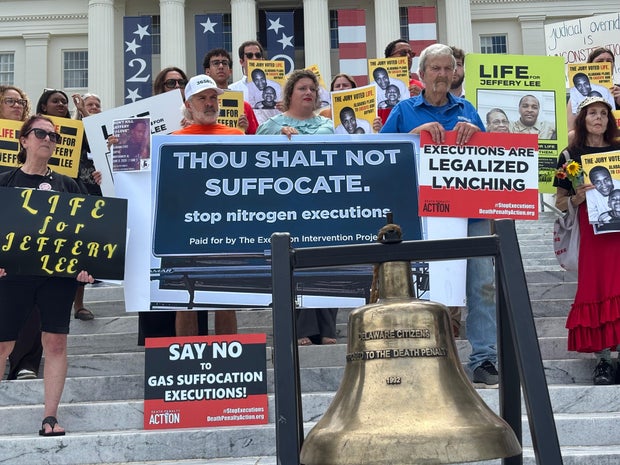
A United States district judge has blocked Alabama from executing a death row inmate using nitrogen hypoxia, overturning an earlier opinion that deemed the method constitutionally acceptable. This ruling permanently prohibits the state from executing Jeffrey Lee, 49, using nitrogen gas.
Lee was scheduled for execution by nitrogen hypoxia, a method that induces suffocation by forcing the condemned to inhale pure nitrogen through a mask. He has been on Alabama’s death row for over twenty years following his conviction for the 1998 murders of a store owner and an employee during an attempted robbery.
Judge Emily Marks, in her ruling, stated that Alabama’s protocol for nitrogen gas execution violates the Eighth Amendment, which safeguards against cruel and unusual punishment. This decision follows a recent appellate ruling that overturned her previous stance that the execution method was constitutional.
“Lee has shown by a preponderance of evidence that the Protocol constitutes cruel and unusual punishment,” Marks indicated, referencing the appeals court’s recent opinion.
During a bench trial in April, experts and witnesses testified on the protocol’s constitutionality. The court concluded that those executed by nitrogen gas likely endure “severe air hunger and accompanying emotional distress, anxiety, physiological stress, and physical discomfort” for one to three minutes before death. The court’s opinion highlighted a “substantial risk of serious harm” within this timeframe, deeming it intolerable under constitutional standards due to the suffering involved.
This ruling signifies a pivotal moment for challenges against capital punishment methods in Alabama, which began nitrogen hypoxia executions in 2024. Demonstrating such claims in court is notoriously challenging for inmates and their legal representatives.
To successfully claim an execution method violates the Eighth Amendment, inmates must prove it poses “a substantial risk” of severe pain. They must also propose an alternative execution method that the state could realistically implement.
Lee suggested a firing squad as an alternative. Marks said this option “is feasible, readily implemented, and significantly reduces the substantial risk of serious harm.” While firing squad executions are not authorized in Alabama, where lethal injection, nitrogen hypoxia, and occasionally electrocution are used, Marks noted the state had “failed to articulate a legitimate penological reason” for rejecting this option.
Alabama Attorney General Steve Marshall’s office intends to appeal the decision, according to court documents. Despite criticisms, the state has denied that nitrogen hypoxia inflicts cruel or unusual suffering. Had Lee been executed, he would have been the ninth person in the United States and the eighth in Alabama to die by nitrogen hypoxia. Louisiana has also employed this method once.
The Supreme Court of the United States may potentially review the constitutionality of Alabama’s nitrogen gas protocol, as they have never deemed any capital punishment method unconstitutional.
 Prosecutors Oppose Kohberger’s Appeal in Idaho Student Murders Case
  Former Bank CEO Sentenced for Fraud and Sanctions Evasion
  Ohio Murder Trial: Investigators’ Search for Missing Gun
  Alex Murdaugh’s Lawyers Demand Key Evidence Release
  Mississippi Grand Jury Rules No Charges in Nolan Wells Case
  Justice Served as Former Foster Facility Manager Sentenced to 30 Years