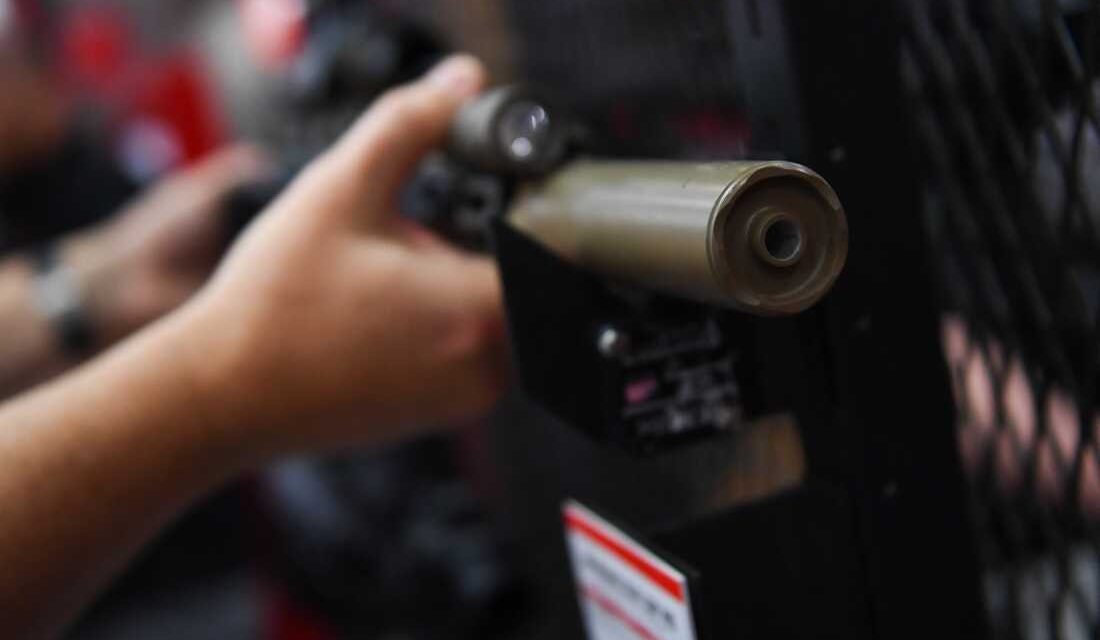
A SureFire firearm sound suppressor, known as a silencer, was showcased during the National Rifle Association (NRA) Annual Meeting in Houston, Texas, on May 28, 2022. A recent court decision has loosened restrictions on purchasing these silencers and certain firearms.
Gun rights groups are celebrating this federal ruling, which eases restrictions on silencers, used to reduce gunshot sounds, and certain firearms. Judge James Wesley Hendrix from the Northern District of Texas invalidated key parts of the National Firearms Act (NFA) in more than twelve states. Hendrix provided the Justice Department one week to file an emergency appeal before the ruling took effect, but the agency did not do so. The department has over a month to submit a non-emergency appeal, but it remains unlikely. The agency is also working to restore gun rights for people with felony convictions, except in cases such as domestic violence and gang-related offenses, as detailed in a final rule released Monday.
The Texas ruling allows some Americans to buy and sell silencers and certain weapons without registering them with the federal government or providing personal details like photos and fingerprints. Gun rights advocates view this as a significant victory. “This is truly one of the greatest Second Amendment victories in the last 100 years,” stated Erich Pratt, senior vice president of Gun Owners of America. This development has led to a patchwork of rules and regulations, affecting only the plaintiffs in the Texas case.
Background on the National Firearms Act
The National Firearms Act, created in the 1930s due to Prohibition-era gang violence, regulated specific rifles, shotguns, and suppressors, or silencers. Established in 1934, the NFA aimed to restrict particularly dangerous weapons by imposing a $200 tax on their manufacture and transfer and requiring owners to register them. This tax persisted until 2025 when the One Big Beautiful Bill Act abolished it for short-barreled shotguns, short-barreled rifles, and silencers. Some states and gun rights groups then challenged the federal government, arguing that without the tax, there was no constitutional basis for other NFA requirements. Hendrix agreed, stating that Congress eliminated the regulations’ constitutional basis by removing the tax.
Gun control advocates, however, argue the ruling undermines public safety. Jack Budish, federal counsel for Everytown for Gun Safety, expressed concerns about an increase in dangerous weapons in communities.
Impact of the Decision
The ruling’s impact is limited geographically to the Texas case plaintiffs, including groups like the Silencer Shop Foundation and Gun Owners of America. It affects certain short-barreled shotguns and rifles, suppressors, and specialized firearms classified by the federal government as “any other weapons.” These include concealable, unique firearms like pen guns or umbrella guns. Some states might still require additional registration or comply with the federal Gun Control Act. Amid legal complexities, Gun Owners of America’s Pratte advises consulting an attorney before bypassing registration.
Future Developments
Two further cases challenging the NFA continue in Missouri and Kentucky. The DOJ has defended the NFA in these instances. Although they did not comment on possible future appeals, the DOJ is evaluating this ruling’s effects. Gun rights groups and Republican lawmakers seek to expand this ruling’s nationwide application.
The Bureau of Alcohol, Tobacco, Firearms and Explosives stated it will continue processing forms based on current laws and regulations. They recommend consulting an attorney for legal guidance on the ruling’s impact. Despite the confusion, Erich Pratt of Gun Owners of America sees this as a step forward for freedom. “In the end, freedom is advancing. We’re slowly dismantling the regulatory shackles that have bound gun owners for generations,” Pratt affirmed, highlighting continuous victories.