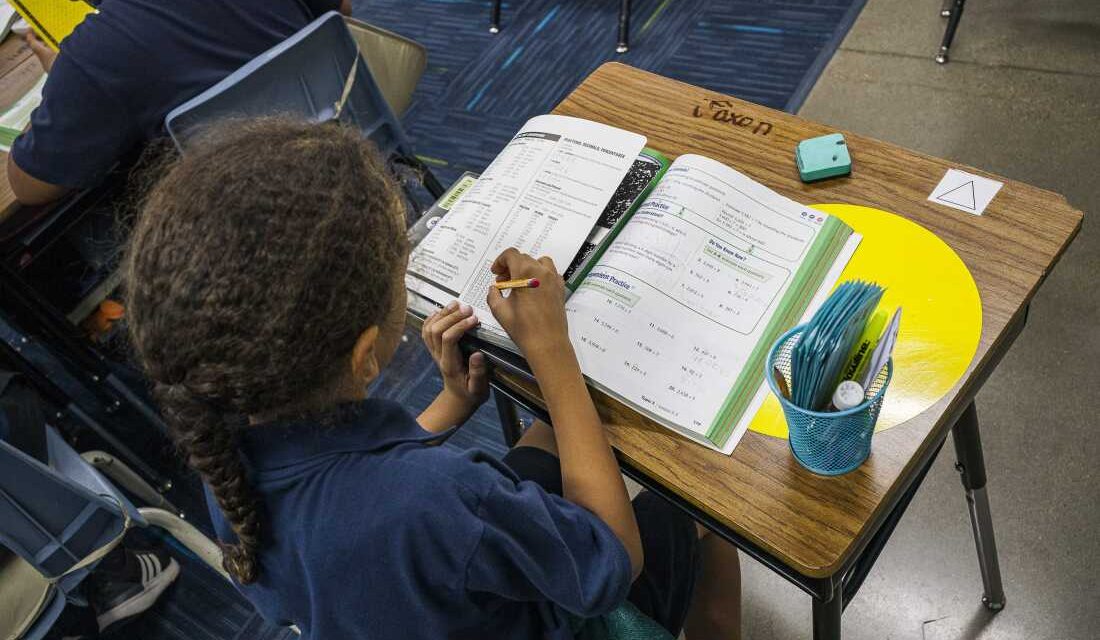
Recent results from the National Assessment of Educational Progress show a positive trend in reading and math scores for 9-year-old students from 2022 to 2025. These findings provide a national overview of educational progress for students aged 9 and 13. More than 30,000 students participated in the exams conducted between October 2024 and March 2025.
Notable Improvements for Younger Students
Nine-year-olds displayed significant progress in both reading and math. This improvement encompasses students from various performance levels, indicating a broad upward trend. These children, aged 4 at the onset of the pandemic, started school after full-time, in-person instruction resumed. This experience allowed them to avoid missing crucial early lessons, offering hope for reversing previous declines in student achievement.
Challenges Among 13-Year-Old Students
The assessment results for 13-year-olds show no substantial progress in reading or math since the last test. Reading scores remain lower than pre-pandemic levels across multiple demographics, including Hispanic and white students, economically disadvantaged students, and female and suburban students. The stagnation in scores mirrors those recorded since the first test in 1971. These students faced significant disruptions during essential learning years due to pandemic-induced school closures, which may explain their stagnant performance.
Decline in Reading for Pleasure
The number of students reading for fun is decreasing. Only 14% of 13-year-olds reported daily reading for leisure in 2022 and 2025, a sharp decline from 35% in 1984. Although more 9-year-olds, at 37%, read for fun daily, this figure still shows a substantial decline from previous decades.
Reversals in Math Progress for Older Students
Historically, 13-year-olds gained 21 points in average math scores from 1978 to 2012. Unfortunately, this recent report indicates most of these improvements have dissipated. The lowest-performing students now score similarly to their 1978 counterparts. This scenario underlines the need for a renewed focus on middle school years to address these challenges effectively.
Limited Future Assessments
Due to the 2025 budget cuts under the Trump administration, the National Center for Education Statistics faces a reduced capacity to conduct assessments. Consequently, many national and state assessments are canceled until 2032, including the upcoming long-term trend test. The next set of questions won’t become available until 2033.
 AFL Investigates Fairfax County Schools’ 9/11 Teaching Guidance
  Challenging the ‘Trust the Experts’ Narrative in School Libraries
  Implications of AI in College Admissions
  Preparing Students for an AI-Shaped Workforce
  Concerns Over Racism and School Funding Inequality Discussed by ‘The View’ Co-Host
  Nikole Hannah-Jones’ Reflection on School Integration and the Impact on Her Daughter