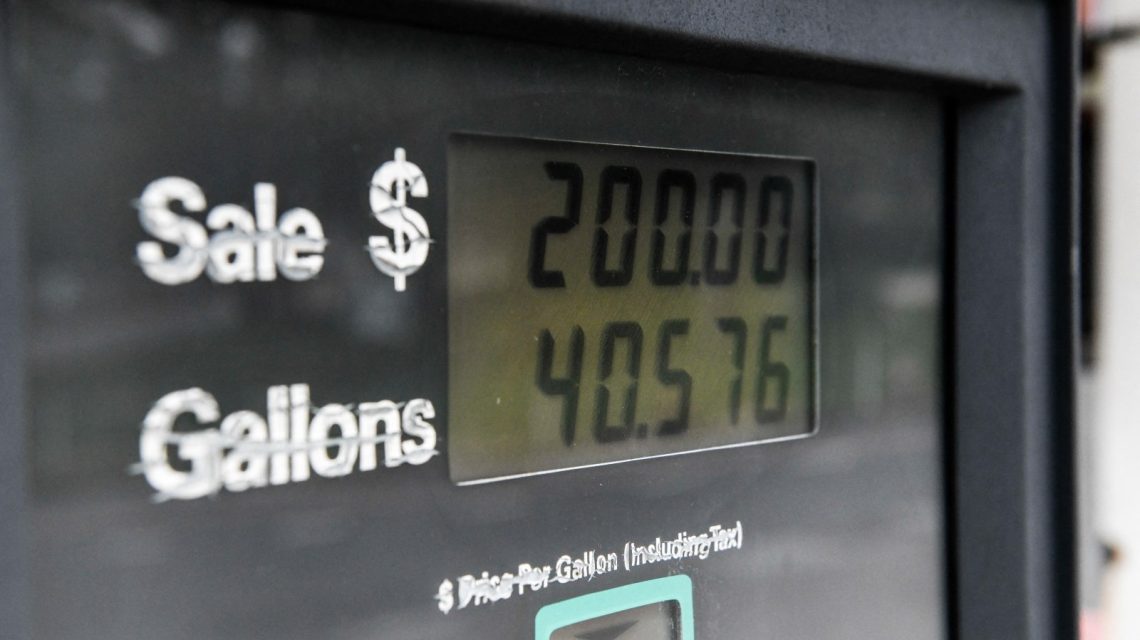
The cost of gasoline has exceeded $4 per gallon across 28 states. This rise, influenced by renewed U.S.-Iran tensions, creates challenges for President Donald Trump, especially as the midterm elections approach in 100 days. According to AAA studies, 60 percent of American drivers will struggle with prices at this level. The $4 mark is considered a crucial point that affects consumer confidence, complicating matters for the Trump administration as voters prepare for the November 3 polls. Newsweek has reached out to the White House for a response.
Battleground State Gas Prices
Newsweek’s map reveals that in 28 states, gas prices have surpassed $4. This includes key battleground states like Michigan ($4.23), Maine ($4.10), and New Hampshire ($4.06), as reported by AAA, with a national average of $4.11. Michigan presents an open seat following Democratic Senator Gary Peters’ retirement, with this race deemed highly competitive. In Maine, Democrat Troy Jackson’s nomination for the Senate race makes it crucial. New Hampshire also sees an open Senate race after Democratic Senator Jeanne Shaheen’s retirement, in a state Trump narrowly lost in 2024.
Meanwhile, Georgia ($3.92) and Ohio ($3.89) have yet to cross the $4 threshold. Georgia features Democratic Senator Jon Ossoff’s reelection campaign in a state Trump won in 2024. Ohio remains a GOP stronghold Democrats hope to contest. California reports the highest gas prices nationally at $5.64, while Indiana sees the lowest at $3.51 per gallon.
Causes of Expensive Gas
On February 28, the U.S. and Israel conducted airstrikes on Iran to weaken its military capabilities and nuclear ambitions. Iran responded by blockading the Strait of Hormuz, a crucial transit route for a fifth of the world’s oil and gas. This disrupted energy markets, pushing Brent crude oil above $100 per barrel. Before the conflict, U.S. gas averaged $2.98 per gallon. The price first surpassed $4 on March 31, a month into the conflict, and reached a four-year high of $4.56 in early May. Hopes for lowered prices emerged after a U.S.-Iran agreement in June, but they surged again following resumed tensions and ship attacks in the Strait.
The Houthi threat in the Bab el-Mandeb Strait further complicates matters. However, White House spokesperson Taylor Rogers suggests that U.S. military actions aiming to safeguard commercial vessels and energy flow through the Strait of Hormuz should help bring oil prices back to pre-conflict levels.
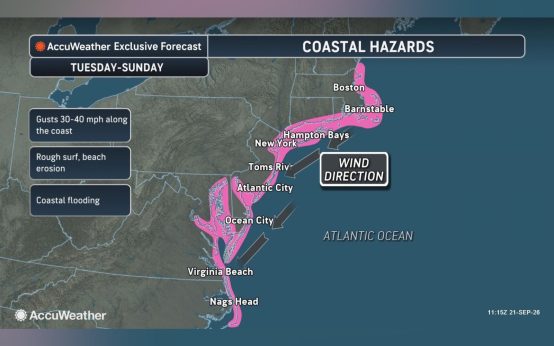 Nor’easter Threatens East Coast with Heavy Rain and Strong Winds
  California’s Growing EV Community Faces Challenges
 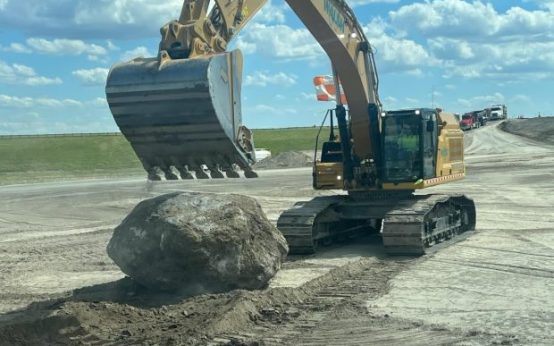 Massive Boulder Unearthed at O’Hare Airport Becomes Local Curiosity
  Trump’s Greenland Agreement
  Manhunt Underway for Armed Suspect in Placer County
  Midair Brawl Erupts on London-Bound Flight