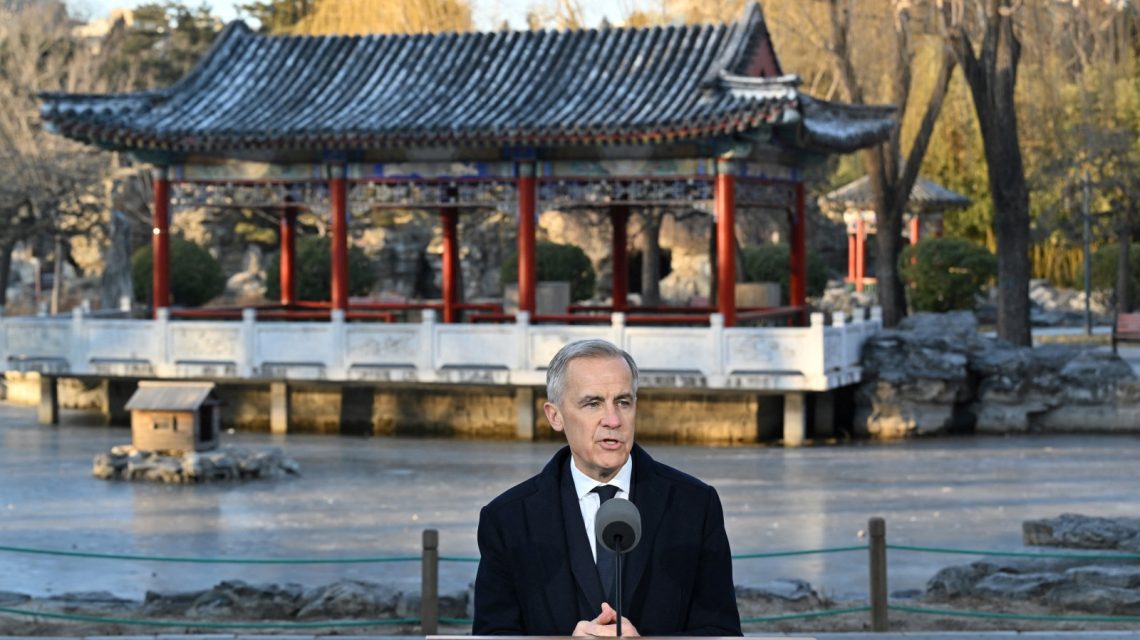
Canada’s decision to reduce tariffs on Chinese electric vehicles is under scrutiny. Allegations have surfaced that a businessman linked to China’s United Front system influenced the policy change days before Prime Minister Mark Carney brokered an agreement with Beijing.
In January, Canada agreed to import 49,000 Chinese-made electric vehicles at a 6.1 percent tariff, replacing a 100 percent surtax imposed in 2024 under former Prime Minister Justin Trudeau. This agreement was part of a broader trade deal during Carney’s visit to China, which also included tariff reductions on Canadian agricultural exports like canola oil.
This move diverged from the United States, which maintains restrictions on Chinese EVs due to national security concerns. The decision prompted questions in North America regarding Chinese automotive technology.
A policy paper urging a reconsideration of Canada’s 100% surtax on Chinese electric vehicles was reportedly delivered to the Prime Minister’s Office shortly before Carney’s trip to Beijing. The dossier identifies Shui Shousong, president of the Sino-Canada Entrepreneurs Association, as the source, but neither he nor his association are registered lobbyists according to Canada’s lobby registry.
Newsweek reached out to Shui, SinoCann, the Prime Minister’s Office, Global Affairs Canada, and the Chinese consulate in Toronto for comments. None responded to requests for more information.
The Canadian source, who wished to remain anonymous due to strained U.S.-Canada relations, described Shui as having extensive United Front membership and activity. Shui has appeared at events with Canadian politicians, including those where Chinese consular officials praised efforts towards political reunification with Taiwan.
Shui has also been active in promoting Canada-China ties. In August, he launched a new Canada-China EV association and unveiled a service center to foster industrial cooperation between the two nations, as reported by Victoria Media.
The involvement of sitting and retired members of the Canadian Parliament, alongside municipal government members and diplomats from China, was noted at these events.
Newsweek’s inquiry raises questions about who initiated discussions with the Prime Minister’s Office prior to the policy change. The source suggested this might not constitute a covert operation but rather an influence channel that wasn’t thoroughly examined. Access to high-level decision-makers was obtained through regular means, openly and legally.
This development coincides with heightened scrutiny of Chinese electric vehicles in North America. The U.S. continues to block Chinese EVs due to concerns over manufacturing strength and potential data security vulnerabilities. China’s EV industry, led by companies like BYD, is expanding internationally, heightening Western concerns.
In September, U.S. Transportation Secretary Sean P. Duffy expressed significant concern about Ford Motor Company’s ties with Chinese companies. The criticism centered on Ford’s use of battery technology from China’s CATL and partnerships with Geely. Although Ford dismissed the criticism, the issue underscores the geopolitical challenges posed by Chinese EV technology.
 Iran’s Attacks on Bahrain: The Impact on Military Families
  United Russia’s Dominant Election Result: Implications for Putin’s Ukraine Policy
  Hunter Shoots Woman Mistaken for Deer in Delaware
  Logan and Jake Paul’s Visit to the Pentagon Raises Eyebrows
  Trump’s Shift in Foreign Policy and Its Implications
  Trump Faces Diplomatic Isolation at United Nations and with China’s Xi