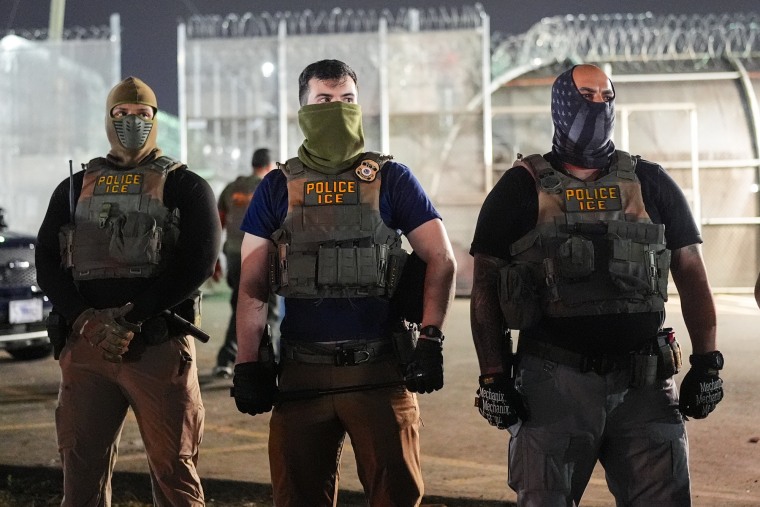
Immigration and Customs Enforcement (ICE) plans to provide body cameras to officers within the next two months. However, the agency controls public access to footage, as release decisions depend on its ‘best interests.’ By the end of September, ICE field officers nationwide expect to use body-worn cameras. This rollout follows recent fatal shootings involving officers during President Donald Trump’s immigration enforcement efforts, increasing demands for accountability through cameras.
The agency’s body-worn camera policy raises concerns about public access to footage, especially in high-profile confrontations. Though taxpayers fund these cameras, the policy states video of incidents, such as shootings, will only release if it benefits the agency. This allows the ICE director to selectively release videos that maintain the agency’s public image while potentially withholding others. Experts note that while selective releases occur elsewhere, ICE’s policy explicitly addresses this through a formal statement.
Professor Christopher Schneider from Brandon University in Canada, and co-author of ‘Police Body-Worn Cameras: Media and the New Discourse of Police Reform,’ commented, ‘In some ways, ICE is saying the quiet part out loud.’
Body Camera Use and Policy Details
The policy prompts officers to activate cameras during standard activities like arrests, searches, and emergency responses. In serious incidents, a committee, including top officials and legal advisers, reviews footage to recommend its release. If the recommendation is positive, footage may be released within 72 hours. However, the ICE director can delay or block releases in ‘specific and compelling circumstances,’ though the policy doesn’t clarify these scenarios.
Across the U.S., practices vary. Chicago’s watchdog agency typically releases shooting footage within 60 days, whereas Philadelphia rarely does. Even when releasing video, ICE mandates redacting officer identities to protect privacy. Schneider noted skepticism about ICE’s willingness to share footage from fatal incidents, referring to similar non-releases by Customs and Border Protection.
Implementation and Financial Aspects
In July, ICE allocated $30.9 million to acquire body cameras from Axon, an Arizona company also producing Tasers. This spending started after a fatal shooting in Maine by an ICE officer with violent history and a similar incident in Houston, both unrecorded. Congressional members criticized ICE, having allocated $20 million for cameras in a funding bill ending a partial government shutdown.
ICE announced over half its field officers have cameras, with full distribution by September’s end, delaying earlier estimates. Maine Senator Susan Collins stated the deployment was expected by August’s end. ICE had initially aimed for mid-September. Texas Representative Henry Cuellar confirmed officer training in Houston, where over 800 cameras are in use.
Tom Homan, White House border czar, emphasized the importance of transparency, stating on CBS News’ ‘Face the Nation,’ ‘The American people need to see what that officer sees and hears.’
Body Camera Adoption and Challenges
ICE started testing these cameras in 2021 under President Joe Biden. They distributed 1,400 devices three years later, contingent on budget availability. Upon President Trump’s return in 2025, a Biden order mandating body cameras was rescinded. Despite receiving $75 billion in Trump’s policy bill, ICE delayed camera purchases until 2025, attributing the delay to existing government contracts from 2023.
Jason Houser, former ICE chief of staff under Biden, criticized the Trump administration for delaying body camera deployment despite expanding enforcement actions. He labeled the rollout a political move rather than a measure for officer or public safety, asserting, ‘This is not hard to deploy, but they’ve slow-rolled it.’
Houser expressed the need for adequate training and equipment to prevent putting officers in situations they’re unprepared to handle, considering current operations.
 NYC Mayor Mamdani and President Trump Discuss Media Access and Criticism
  Presley Gerber, son of Cindy Crawford, passes away at 27
  Piers Morgan Challenges Earl Spencer’s Claims in Upcoming Memoir
  White House Access Denied: Media Outlets Sue for First Amendment Rights
  Venezuelan Man Shot by ICE Agent in Austin Identified
  Teen Arrested in Penn State Student’s Murder, Second Suspect Wanted