
A wave of victories by leftist congressional candidates across key states has marked the Democratic primaries and defined the midterm campaigns. These victories, from New York to Florida, raise questions about the progressive-left’s influence and viability as Democrats aim to take control of the House and Senate.
Democrats seek to capitalize on the president’s low approval rating amid an unpopular war with Iran and economic challenges. Yet, they’re also navigating internal divisions over the party’s future direction. David de la Fuente of Third Way, a centrist Democratic think tank, highlights the far-left’s ability to defeat incumbents but cautions that it predominantly affects deep-blue districts.
“In most pivotal districts, these progressive candidates aren’t competing or winning,” de la Fuente notes.
In this context, the focus for groups like Justice Democrats is on ensuring that representatives of solidly Democratic districts truly reflect the party’s base. Justice Democrats’ communications director, Usamah Andrabi, emphasizes the need to solidify the party’s base before targeting swing voters nationwide.
Progressive candidates, some self-identified as democratic socialists, represent an emerging generation pushing issues like healthcare, workers’ rights, and U.S. foreign policy. CBS News analyzed that approximately two-thirds of House candidates endorsed by key leftist groups have won their primaries. Among those, most are expected to secure seats in strongly Democratic districts.
Victories in New York’s June primaries, led by candidates like Darializa Avila Chevalier, spark speculation about the Democratic Party’s trajectory. Other successes in states like Texas, Pennsylvania, and California reinforce this trend. In Colorado, Melat Kiros’s triumph over a long-serving incumbent exemplifies this new wave.
This momentum continued in Michigan, where Donavan McKinney defeated an incumbent, and Abdul El-Sayed gained attention in the Senate race. In Tennessee, Justin Pearson’s triumph and Angie Nixon’s upset victory in Florida rounded out recent leftist wins.
While some races showcased progressive victories, setbacks persisted. Notable figures like Cori Bush lost their primaries. Other candidates in Illinois, North Carolina, and California faced similar defeats.
Perception towards democratic socialist candidates seems to be shifting. A CBS News poll indicates that about half of Democrats hold favorable views of socialism. Interest in democratic socialism is particularly notable among younger voters aged 18-34.
Comparisons with the Tea Party movement arise due to current leftist energy; however, the scale and impact differ. The Tea Party’s widespread influence in 2010 brought Republicans control of Congress. This year’s progressive wins are more localized, primarily reinforcing strong Democratic districts.
“It’s much more stylistic than a significant shift in political power,” notes Ashik Siddique of DSA’s National Political Committee.
De la Fuente draws parallels with the 2018 rise of ‘The Squad’ but points out that current progressive candidates lack the capacity to flip red districts. A hypothetical Democratic control of the House, Senate, and White House in 2028 may test progressive insurgents’ influence over the party’s agenda.
The presence of leftist Democrats in Congress raises questions about their impact. On the Senate side, a push to challenge existing leadership is gaining traction. In the House, despite current leftist wins, Minority Leader Hakeem Jeffries is favored to lead. Yet, his ability to unite the party may be tested by the progressive-left bloc.
Jeffries, expected to become the first Black House Speaker if Democrats win a majority, acknowledges significant generational shifts within the party. Speaking recently, he recognized the potential for diverse representation post-elections but maintained a stance against the DSA agenda.
AOC, an outspoken progressive, asserts that insurgent candidates’ independence from established powers strengthens their community representation. With tight margins in Congress, progressive-left lawmakers could sway key votes. Siddique underscores the leverage this small bloc of lawmakers can wield, especially if Democrats have a slim majority.
“We expect to advance policies favoring our candidates without compromise,” Siddique states, leaving open the possibility of both cooperation and contention within the party.
 Federal Judge Blocks Trump Administration’s Migrant Fines
 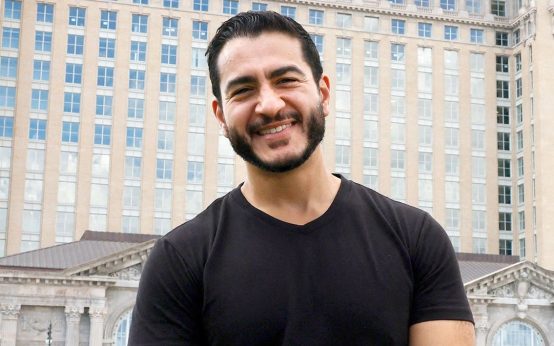 Abdul El-Sayed’s Political Stance Examined
  Supreme Court Evaluates Retirement Fund Management
  Controversial Trump Statue Displayed in European Parliament
  Generational Debate Over Social Security: Taxes and the Future
  Ohio Senate Race and Congressional Contests: Key Details and Developments