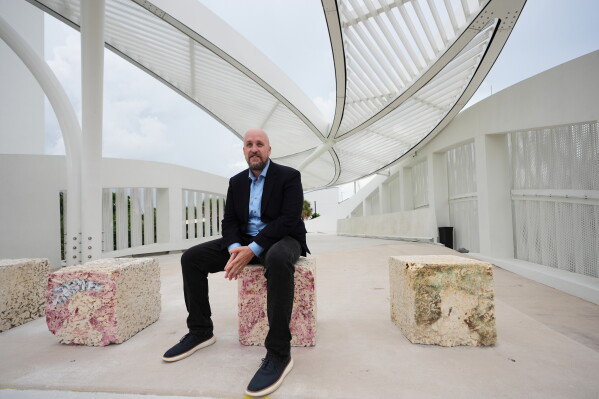
Hurricane Andrew’s Lasting Impact
Jeffrey Huber vividly recalls the aftermath of Hurricane Andrew 34 years ago, which swept away the roof of his childhood home in Florida. The storm left tens of thousands of homes in ruins, with first responders struggling to reach affected areas for days. Huber and his family survived on food donations for six weeks and lived in a trailer for over a year. Reflecting on this experience, Huber highlights the need to design infrastructure that can endure such devastating events.
Increasing Coastal Vulnerability
With nearly 40% of the U.S. population residing in coastal counties, the dangers of coastal flooding are escalating globally due to sea level rise. In Florida, architects and designers are merging infrastructure with urban planning to adapt to climate challenges, including rising waters and saltwater intrusion. Huber, a landscape architect and professor, emphasizes the need to coexist with water rather than resist it.
Seawalls That Encourage Marine Life
“We have a whole library of designs for different marine habitats, and the point is to attract the native species… create caves where they can hide from predators and also to dissipate waves.” – Anya Freeman
As global temperatures rise, low-lying cities face frequent flooding. Anya Freeman witnessed severe flooding in Miami Beach and turned to innovation, founding Kind Designs to build 3D-printed living seawalls. These walls are designed to be affordable and scalable, mimicking natural coastal features to attract marine species. With technology that dissipates wave energy, these seawalls bolster resilience against erosion. Kind Designs has installed numerous seawalls across Florida and plans to expand to California, New York, and U.S. Navy bases.
Housing Projects and Parks As Climate Solutions
Miami Beach’s Vista Breeze housing project, elevated 10 feet above sea level, showcases how architecture can adapt to water threats. Its construction includes water-proof concrete and zinc-coated rebar for durability. The design also emphasizes cooling through strategic orientation, promoting natural breezes. Nearby, DC Alexander Park in Fort Lauderdale serves as both recreation and flood infrastructure, featuring a perimeter forest that absorbs flooding.
Planning for Resilience and Adaptation
Efforts like The Coastline master plan, spearheaded by Aaron DeMayo, aim to protect Southern Florida from storm surges and sea-level rise. While funding poses a challenge, the plan promises significant returns by safeguarding waterfront properties. Thomas Klein, from the University of Miami’s Center for Urban and Community Design, seeks to assist lower-income areas in adapting to climate threats by proposing multi-functional infrastructure that integrates stormwater management.
Looking Ahead
Innovations springing from Florida’s regulatory environment, although challenging, offer replicable solutions for resilience. Klein stresses the importance of infrastructure that serves multiple purposes, addressing both transportation and environmental challenges.
For further information on environmental policies, visit AP’s dedicated hub: AP Climate and Environment Coverage.
 Impact of Potential Canadian Electricity Cutoff on the U.S.
  Louisiana Governor Jeff Landry Discusses SpaceX Launch Facility
  Potential Tropical Storm Named ‘Dolly’ Looms in Atlantic
  Pollution Proximity: The Hidden Risk in U.S. Parks
 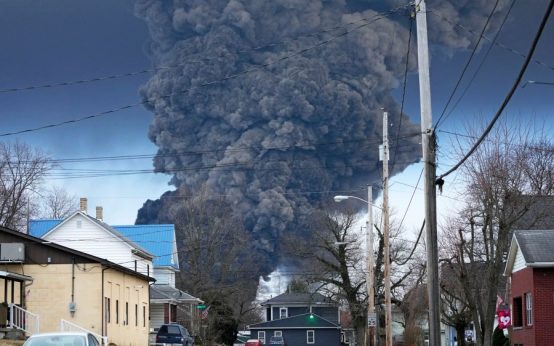 Controversy Surrounding Environmental Testing in East Palestine, Ohio
  DuPage and Cook Counties Plan $6 Billion Water Project