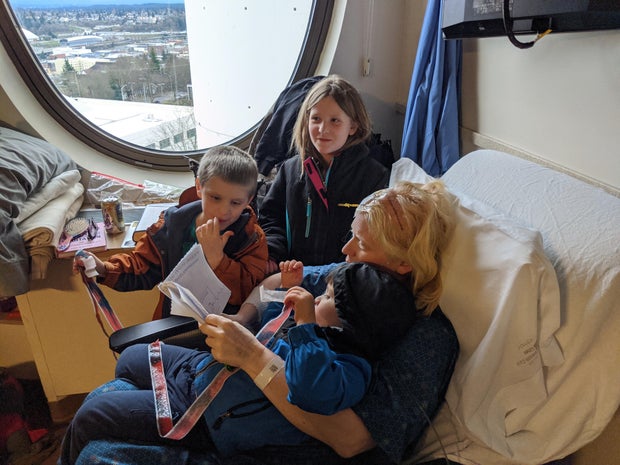
Jenney Bitner eagerly anticipated her annual family trip to San Diego. Visiting her mother offered her three children a two-week stay at their grandmother’s home. For Bitner and her husband, it was a chance to unwind under the sun while escaping the rainy February weather in Washington.
In 2020, this trip was especially significant. Bitner was 22 weeks pregnant and looked forward to family time during her pregnancy. However, after just one day, she felt too ill to leave her bed. She suffered from headaches, nausea, vomiting, and dizziness. Two urgent care visits attributed these symptoms to pregnancy discomfort. Skeptical, Bitner awaited an appointment with her obstetrician for clarity. Shortly after returning home from San Diego, Bitner experienced two falls. Her husband took her to the emergency room.
An MRI uncovered a “giant tumor” in Bitner’s brain. Doctors planned to remove as much of the tumor as possible. Testing revealed Stage IV melanoma, which had spread to her brain. This diagnosis shocked Bitner, who had no prior skin lesions. According to the American Cancer Society, such advanced melanoma has about a 35% five-year survival rate.
Bitner, then 38 and pregnant with her fourth child, was consumed by fear. She worried about witnessing her baby’s milestones, questioning her chances of survival.
Treating Cancer During Pregnancy
Bitner’s doctors advised aggressive treatment. Surgery had removed most of the tumor, but some remained, posing the risk of permanent brain damage if fully excised. A cancerous nodule on Bitner’s back added to her health concerns. Although she needed immunotherapy, it was unsafe for her unborn child. Decisions needed to be made about delivering the baby early to commence treatment. After weeks under observation, Bitner delivered her child via C-section at 34 weeks.
Shortly before delivery, Bitner’s symptoms worsened. A scan confirmed the tumor’s regrowth to its original size. She required another brain surgery in addition to immunotherapy. Bitner began penning letters to her children, fearing she might not be there to share words with them later.
On May 4, Bitner welcomed her son, Marcus, named after her neurosurgeon. Weighing 3 pounds and 12 ounces, he spent time in the NICU but was described as “a fighter.” A week later, Bitner underwent her second brain surgery, during which surgeons successfully removed the entire tumor. Both mother and son recovered well and returned home together. Being reunited with family brought immense joy to Bitner’s household, despite the challenges ahead.
A Remarkable Recovery
By early June 2020, Bitner started immunotherapy. The treatment’s goal was to strengthen her immune system, enabling white blood cells to target cancerous cells in her body and brain. Tests revealed concern about her lung, thigh, and brain, increasing her anxiety about treatment.
Remarkably, signs of improvement quickly emerged. Bitner’s husband noted the shrinking of cancerous spots, and scans confirmed significant progress. By her final immunotherapy session, Bitner’s health improved enough for her to drive herself. Despite experiencing side effects like an allergic reaction and encephalitis, which required hospitalization, Bitner found the ordeal worthwhile. In October 2020, her oncologist declared her disease-free.
Dr. Alicia Zhou, CEO of the Cancer Research Institute, acknowledged the transformative potential of immunotherapies. These treatments offer patients like Bitner a chance to survive and thrive, marking a breakthrough for those with Stage IV disease.
Nearly six years later, Bitner is determined to raise awareness about immunotherapy research and cherishes time with her family. She reflects on each day as a gift, embracing the joyful chaos that family life brings. The once-daunting sounds of a messy house have become precious music to her ears—sounds she once thought she’d never hear.
 Increased Use of GLP-1 Medications Among Young Adults: Examining Trends and Concerns
  Lisa Fasone’s Journey Through Prolactinoma and New Parenthood
  Examining Testosterone Therapy for Menopausal Women
  Impact of ‘Food Divorce’ on Relationships
  Long-Term Health Impacts of the 9/11 Attacks
  The Link Between Type 2 Diabetes and Mental Health Conditions in Women