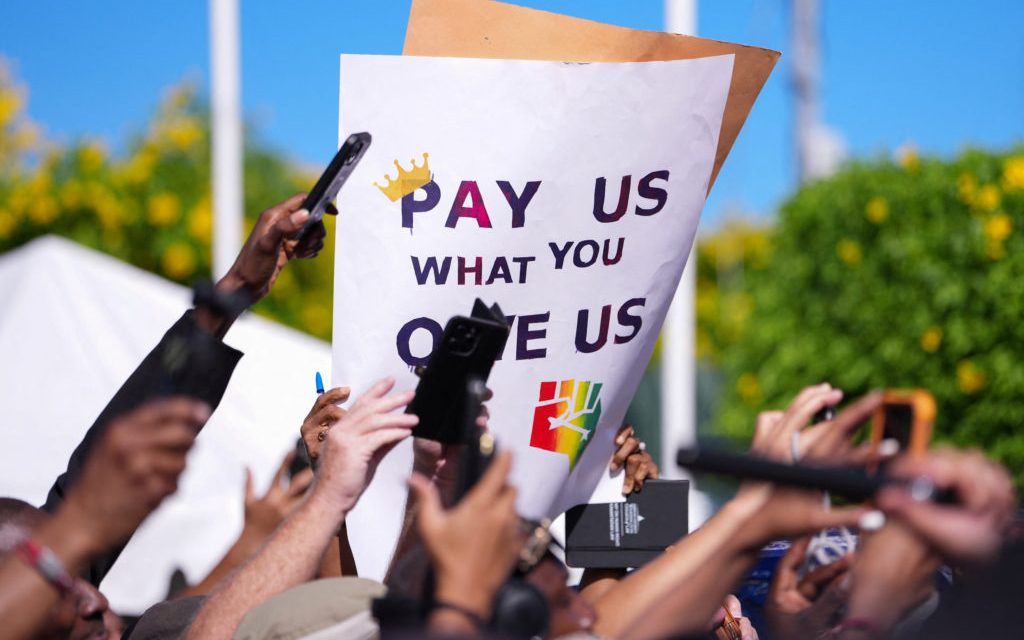
The British royal family faces persistent questions about their historical ties to slavery. King Charles III’s tour of the Caribbean brings these issues to the forefront as he visits the Bahamas, Guyana, and Antigua and Barbuda. His journey highlights the monarchy’s involvement in the enslavement of millions of Africans who were transported to the Caribbean and North America, benefiting the British Empire.
King Charles is expected to reiterate his previous remarks, calling slavery an ‘atrocity that forever stains our history,’ but he likely will not offer an apology. This stance may not satisfy critics. Brooke Newman, author of The Crown’s Silence: The Hidden History of the British Monarchy and Slavery in the Americas, argues that such comments lack substance and fail to engage with the descendants of enslaved people.
“That is hollow,” Newman remarked about Charles’ anticipated comments. “It doesn’t create dialogue.”
The British monarchy’s links to slavery are long-standing. In a comprehensive study, Newman details these connections dating back to 1563, when Queen Elizabeth I supported a slave-trading venture. Later, King Charles II granted exclusive trading rights in West Africa to what became the Royal African Company, engaging in the slave trade under royal patronage.
Calls for Britain and other nations involved in the slave trade, like the United States and Spain, to pay reparations have gained momentum recently. This includes a United Nations resolution urging reparatory justice, which the UK did not support by abstaining from the vote.
Constitutional constraints prevent King Charles from offering personal apologies, as he represents government policy. Craig Prescott, a constitutional expert, clarifies that the monarchy echoes the government stance acknowledging slavery while rejecting reparations.
“It’s not a matter for the king,” Prescott explained. “Reparations are not payable.”
The financial implications of reparations pose challenges to a government already addressing rising living costs. Nevertheless, Charles must consider his words’ impact within the Commonwealth, a multinational association including former British colonies.
During his stay, Hilary Beckles, representing the Caribbean Community’s reparations commission, urged Charles to empathize with Caribbean demands as a person rather than solely as a king. Beckles noted the monarchy’s historical wealth from slavery enriched the royal family.
Britain and its monarchy have faced similar challenges in the past. In 2007, at the bicentenary of the abolition of the slave trade, protests highlighted inadequate acknowledgment of slavery’s harm. This remains a challenge for Charles today, with Newman asserting that superficial acknowledgments fall short of addressing historical and ongoing injustices.
A free press underpins democracy, facilitating informed public dialogue. Support reliable journalism to maintain a healthy democracy.
 Stranded Americans: Cruise Ship’s Financial Collapse
 Tragic Train Collision in Spain Claims 68 Lives
 Pilot Fatigue: A Growing Concern in Aviation Safety
 Brazil’s Pursuit of Bolsonaro Family Raises Legal Concerns
 Luiz Inácio Lula da Silva’s Fourth Presidential Victory in Brazil
 The Rising Impact of Borrowing Costs on Democracy