
Democratic and Republican lawmakers are voicing differing opinions on the expansion of data centers, especially in light of President Donald Trump’s recent push to advance these facilities. Some Democratic lawmakers are advocating for tighter regulations, while certain Republicans highlight potential economic benefits.
President Trump has emphasized the importance of data centers, rejecting calls to decelerate their development. He warns that communities preventing their establishment may end up lagging economically. His stance has provoked varied responses from lawmakers across party lines.
Democratic Concerns Over Data Centers
Rep. Yassamin Ansari of Arizona stresses the need for her state to halt data center expansion until potential long-term impacts are thoroughly assessed. “We in Arizona need to pause the expansion of data centers in the state until we really figure out a plan on how we’re going to preserve our water, how we are going to make sure that ratepayers aren’t taking on the responsibility,” Ansari said.
Similarly, Rep. Ro Khanna from California is pursuing legislative action with his proposed Data Center Bill of Rights. This legislation intends to ban data centers within 2,500 feet of sensitive locations like homes and schools, granting communities greater control over placement decisions.
Rep. Jonathan Jackson, representing Illinois, argues that lawmakers should prioritize equity for local communities. He asserts that the current wealth concentration within the tech sector remains largely unregulated, which impacts local philanthropic contributions.
Another Democratic voice, Rep. Haley Stevens of Michigan, highlights concerns related to rising electricity bills in affected areas. “It baffles me that we are just not guaranteeing, for average ratepayers, low utility bills,” Stevens remarked.
Republican Support for Economic Growth and Local Autonomy
Republicans express varied opinions. Rep. Nancy Mace emphasizes AI investments to maintain competitiveness with China but insists on thoughtful placement of data centers, avoiding residential neighborhoods.
Rep. Rich McCormick sees data centers as beneficial for boosting tax revenue, improving infrastructure, and supporting energy production. “You should be fighting over them,” McCormick said. “But if you don’t want one, that’s up to you. I think you’re missing out.”
Advocating for local decision-making, Rep. Ralph Norman champions states’ rights under the 10th Amendment, suggesting local communities should have the authority to make decisions regarding the establishment of data centers.
As more states scrutinize implications related to electricity costs, water usage, and community development, the debate over data centers underscores significant ideological divisions among lawmakers.
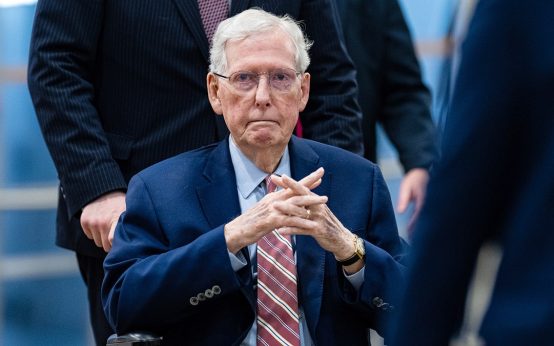 Senator Mitch McConnell Returns to Senate After Recovery
  Delaware Voters Conclude 2026 Primary Season
  The Struggle to Free Dr. Gulshan Abbas: A Case of Transnational Repression
  Sanders and Bannon Unite to Address AI Concerns
  Vice President JD Vance Campaigns for Sen. Roger Marshall Amidst Challenging Political Landscape
  Record Immigration Arrests Under Trump Administration