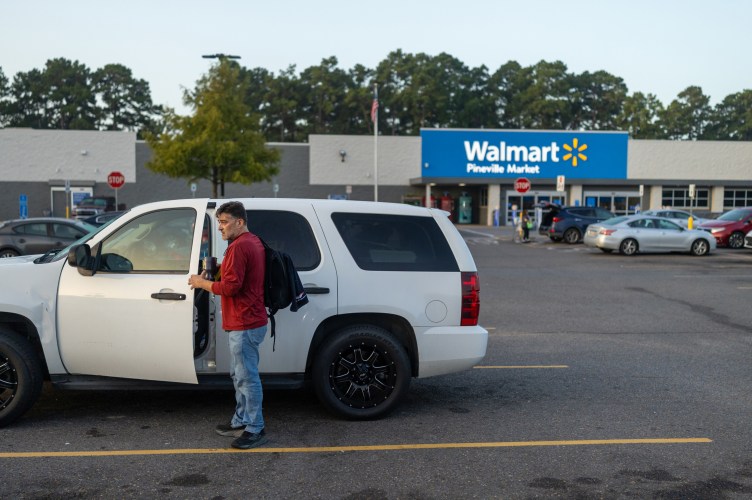
Jimmie “Chris” Duncan wipes his face as he reviews his current residence from a parking lot outside a motel in Louisiana. Despite the drug activities and suspected meth labs nearby, he feels secure, saying, “I’ve been on death row. I feel safe anywhere.” Wrongly convicted three decades ago for the murder of his ex-girlfriend’s toddler, Duncan fights to prove his innocence.
Investigations by Verite News and ProPublica revealed that fabricated evidence from forensic experts using debunked bite mark analysis led to Duncan’s conviction. Louisiana prosecutors still argued for his execution, a stance expedited by Governor Jeff Landry, despite the state’s record of convicting innocent people.
In June, the Louisiana Supreme Court dismissed Duncan’s murder conviction. They determined the bite marks, the sole physical proof against Duncan, couldn’t be from a human. It’s akin to 17th-century witch trials,” Chief Justice John Weimer remarked about the flawed prosecution. The ordeal remains unresolved for Duncan though. District Attorney Steve Tew, who plans to retry Duncan, still contends he’s guilty and deserving of death.
Duncan finds himself in a financial and mental limbo. Released from Angola with no savings, he works at Walmart for $17 an hour. Despite enjoying the job and being named employee of the month, he struggles financially. Louisiana offers compensation for wrongful convictions, but Duncan’s eligibility remains uncertain until arraignment ends, a potentially lengthy process.
Attorney General Liz Murrill’s nearly universal opposition to compensation claims further complicates Duncan’s situation. Reflecting on his uncertain future, Duncan states, “The foreseeable future is the year between now and when they can’t prosecute me no more.” Despite being certain of his actual innocence, prosecution threats persist.
Reflecting on the past, Duncan recalls his horror upon arrest in 1993. Neighbors and relatives believed the worst of him, despite his claim of an accident. He had told police he left the 23-month-old Haley Oliveaux too briefly, only to find her drowned. Initial charges of negligent homicide escalated to murder based on dubious evidence.
Duncan’s hardship intensified with rejection on appeal in 2002 and personal losses, including his mother’s death and his brother David’s overdose. “No one was immune,” Duncan states. Prison solitary confinement for 23 years compounded the anguish. Heat, illness, and isolation, along with seizures, debilitated him physically and mentally.
Attempts in 2012 to address extreme prison conditions yielded fleeting respite; the heat index in one section hit 126 degrees continuously over 85 days. Amidst desperation, Duncan found resolve. “Sometimes the louder you scream, the more people look at you and laugh,” reflecting on the ordeal in the rain of miscarriage of justice.
Signs of hope emerged around 2009 as news of forensic fraud by Steven Hayne and Michael West helped Duncan find legal allies. An Atlanta firm and the Innocence Project, offering legal aid, helped uncover key evidence, including a video showing West tampering with bite marks on Haley’s body.
Released under bail, Duncan found advocates in judges who denounced the original conviction as “questionable.” This June, Inspector Catherine Legge’s documentary unraveled the case further. Haley’s mother now supports Duncan, refuting attorneys’ claims.
Life post-release remains challenging. Duncan now seeks stability, securing a temporary residence and permanent employment. He manages internal pain, focusing on his Walmart responsibilities while engaging future pursuits through management training. Looking ahead, Duncan prioritizes actions to ensure justice prevails, hoping to protect others from the plight he endured.
A recently rekindled bond with a childhood friend provides some solace. Reflecting on aspirations and hardships, Duncan remarks, “I try to find ways to be happy, but nothing is simple anymore.” Every struggle contributes to forging resilience, exhibiting the intricate balance of past and future pursuits.
 Lash Technician Battles Hodgkin Lymphoma: A Journey and New Beginnings
  Titan’s Journey from Hearing Loss to Laughter: A Heartwarming Transformation
  Young Adults Turn to Spiritual Practices for Dating Insights
  Exploring the Influence of the Manosphere on Young Men
  Adoptive Mother’s DNA Discovery: A Tale of Heritage and Connection
  Rebuilding Trust Between Police and Communities in Chicago