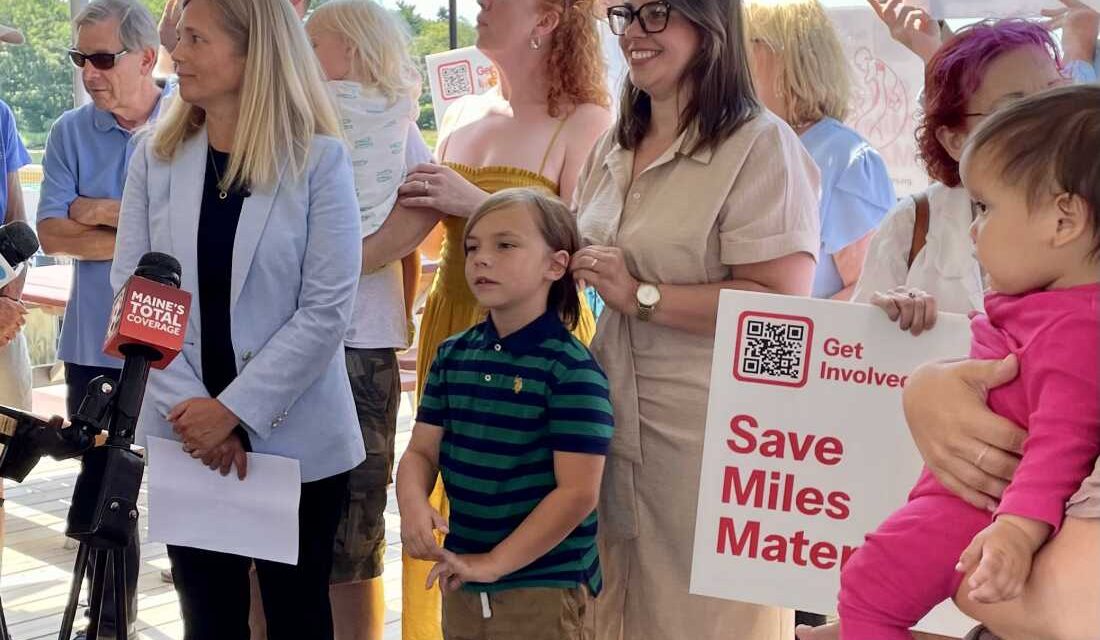
On July 24, Margaret Reynolds, the cofounder of Miles Delivers Action Coalition, stood with her son Otto during a press conference alongside Maine Democratic gubernatorial candidate Hannah Pingree. This event took place in response to the potential closure of a vital labor and delivery unit in Damariscotta, Maine.
Artist Bailey Romaine and her partner Ed Vlcek, residents of midcoast Maine, are expecting their first child in January. They chose their home for its natural beauty but are now facing anxiety. The local hospital in Damariscotta, critical for their child’s birth, may close its labor and delivery services in December, leaving them more than an hour away from the nearest hospital during peak winter season. Romaine expressed concerns about road conditions, emphasizing the urgency of this issue.
The potential closure mirrors a larger national problem, especially in rural areas. Since 2020, about 150 rural birthing units across the U.S. have shut down, reflecting a troubling trend. In Maine, 11 birthing units closed over the past decade, with the state facing the second-fastest rate of maternity care closures nationwide, just behind West Virginia.
Grassroots Efforts and Community Impact
The Miles Delivers Action Coalition has gained significant traction since its inception. It was formed by Reynolds and her friends in response to the potential closure of the birthing unit at MaineHealth Lincoln Campus, known as Miles Hospital. The group quickly amassed around 10,000 supporters, emphasizing the critical nature of these services for the community.
The coalition argues that accessible labor and delivery services are essential, not just for health and safety, but for the state’s economy as well. Young families, the coalition notes, must have reliable birthing services to consider relocating to or staying in a community.
Recruitment Challenges and Economic Realities
MaineHealth, the state’s largest nonprofit health system, cites staffing shortages and safety concerns as the reasons for considering closure. They claim a significant shortage of OB/GYN specialists has made maintaining the unit difficult. The coalition has proposed alternative staffing models and collaborative solutions to address these challenges.
Economically, rural obstetrics departments often operate at a loss, compounded by declining birth rates and increased costs due to Medicaid cuts. However, Miles Hospital, according to coalition findings, is more profitable compared to other regional hospitals within the same health system.
This financial data has put pressure on MaineHealth to reconsider its position. Critics, including local physicians, argue that closing the unit could lead to dire consequences, such as increased maternal and infant mortality rates due to extended travel times for mothers in labor.
Legal and Legislative Actions
As a part of its ongoing efforts, the coalition has filed a lawsuit seeking an emergency injunction to prevent the vote on closing the birthing unit. They have also pursued a rule-making petition, calling on Maine’s health department to provide accountability based on a state law that requires hospitals to provide ample notice before such closures.
The coalition’s advocacy continues to gain attention, highlighting the precarious state of maternity care in rural areas and pushing for systemic change to ensure these essential services remain available.
 Trump Administration Seeks to Influence NIH Grantmaking
  Understanding School Shooting Preparedness Drills
  Addressing the Complex Issue of Suicide and Its Prevention
  Quality of Sleep Linked to Risk Reduction in Various Diseases
  Exploring Diets and Their Potential to Reduce Alzheimer’s Risk
  Understanding School Safety Drills: Lockdowns vs. Active Shooter Simulations