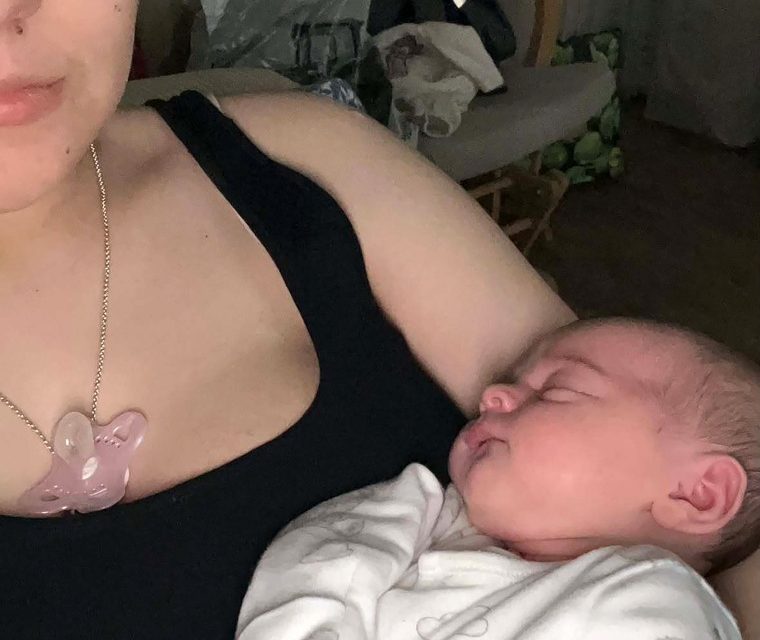
Sofii Lewis, a part-time baker from Aberdare, Wales, recognized serious concerns shortly after giving birth to her daughter, Evie, in January 2023. She felt disconnected from her newborn and experienced distressing thoughts that threatened her well-being and safety.
Lewis feared that harm could come to Evie or herself. Night brought anxiety, as she believed someone might take her child away. These feelings escalated to suicidal and harmful thoughts.
Upon receiving treatment for postpartum psychosis, Lewis credits the United Kingdom’s maternal mental healthcare system for saving both her and Evie’s lives. The system’s Mother and Baby Units (MBUs) provided crucial support during a challenging time.
“I know I certainly was hours, days away,” Lewis reflected, emphasizing the timely intervention.
Her attention was drawn to the case of Lindsay Clancy in Massachusetts, who faced trial for killing her three children. Clancy’s defense argued she suffered from postpartum psychosis, highlighting the importance of appropriate care.
Importance of Specialized Care
Veerle Bergink, Director of Mount Sinai’s Women’s Mental Health Center, believes Clancy’s outcome could have differed in the U.K.’s healthcare system. The U.K. is seen as pioneering modern maternal mental healthcare, while the U.S. lags in perinatal psychiatry knowledge and resources.
The National Health Service (NHS) notes that up to 26% of new and expectant mothers face perinatal mental health issues. These conditions range widely and include postpartum psychosis, characterized by delusions, hallucinations, and other severe symptoms.
Although rare, suicide and infanticide are linked to postpartum psychosis, underscoring the need for effective treatment. APP, a British charity, reports that out of approximately 1,200 cases annually, very few result in these extreme outcomes.
Effective Treatment Approaches
MBUs offer specialized, inpatient treatment in the U.K., allowing mothers to stay with their babies while receiving care. This approach is considered highly effective in managing postpartum psychosis.
Dr. Sally Wilson from APP notes that the U.K.’s MBU program is unparalleled in its scale and effectiveness. While some countries offer similar services, few match the comprehensive nature of the U.K.’s support system.
In contrast, the U.S. lacks a unified inpatient care system comparable to MBUs, although certain hospitals and clinics provide specialized psychiatric care.
MBUs were developed through advocacy from psychiatrists and survivors to address postpartum psychosis and broader maternal mental health needs.
Healing and Recovery
Within MBUs, treatment plans include therapies like Video Interaction Guidance (VIG) and Eye Movement Desensitization and Reprocessing (EMDR) to support recovery and healing. Mothers continue care through perinatal community teams after discharge.
Lewis shares that recovery requires time and support. Her volunteer work with APP as a peer supporter helps others on similar journeys.
Raising awareness about postpartum psychosis and improving resources remain critical. Lewis encourages others to recognize their condition does not define their character or parenting abilities.
“It doesn’t make you a bad person,” she says. “It’s just part of the illness.”
For support, reach out to mental health hotlines and resources available to new mothers experiencing distress.
 Voice Disorders Linked to Higher Dementia Risk in Study
  Protecting Yourself from MyChart Phishing Scams
  GLP-1 Drugs and the Potential for Life Span Extension
  Microplastics and Lung Health: New Study Reveals Key Findings
  Improving Access to Preventive Care in Alaska
  Starting Statins Soon After Diabetes Diagnosis May Lower Dementia Risk