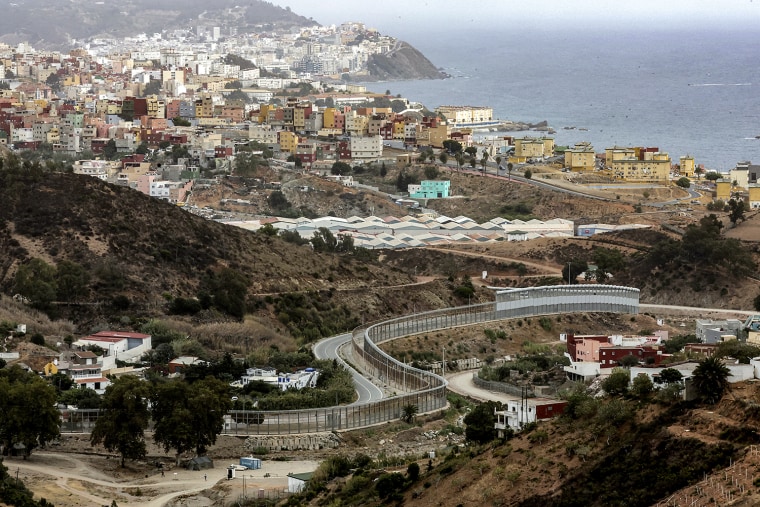
On July 30 and 31, tens of thousands of migrants crossed from Morocco into Ceuta, an autonomous Spanish territory in North Africa. This unexpected crisis strained local authorities and infrastructure, serving as a test for the European Union’s new Pact on Migration and Asylum. Questions arose regarding whether the EU’s system is failing or functioning as intended.
The surge prompted criticism from Washington and European capitals. The U.S. State Department accused the Spanish government of facilitating mass illegal migration into Europe. Denmark and Italy led similar critiques at the EU level, co-signing a letter with 22 member states. The letter demanded coordinated EU border measures, blaming Spain’s policies for attracting undocumented migrants. Meanwhile, far-right parties across Europe used the crisis to criticize Spain and the EU’s migration policy.
According to Charles A. Kupchan, an expert on European affairs at CFR, the surge was surprising because EU migration is generally steady, not a sudden influx. He described the rush as unusual because of the rapid, large-scale arrival. Although most migrants have returned to Morocco, the incident has reignited the debate about European border and migration policy.
The Situation in Ceuta
Ceuta’s interior minister reported that approximately 72,000 migrants crossed into Ceuta from Morocco in a few days. Some reports estimated between 50,000 and 60,000. Many arrived by sea, using makeshift flotation devices or swimming. Over 80 people died during the incident, with causes including drowning and stampedes.
Ceuta, with a population of 84,000, has been a migration flash point. It is one of two autonomous Spanish cities located in North Africa. While both Ceuta and Melilla have faced migration waves before, experts note that this incident’s scale was unprecedented. In 2021, another surge involved about 12,000 people crossing into Ceuta in two days.
Causes of the Migration Surge
Experts attribute the surge to various factors. A recent ruling by Spain’s Supreme Court influenced event developments. The court decided that migrants arriving by sea to Ceuta cannot be summarily returned through expedited processes. They must enter Spain’s regular deportation proceedings, offering greater due process.
Rita Fernández from CFR highlighted misinformation as a major catalyst. Rapid online spread of rumors suggested that migrants reaching Ceuta or Melilla would not be deported. Many migrants were motivated by social media information rather than human traffickers. Fernández noted similar misinformation incidents have occurred in the Western Hemisphere.
Criticism also targeted Spain’s progressive migration policies under Prime Minister Pedro Sánchez. In April 2026, a regularization program allowed undocumented migrants to apply for one-year residency and work permits. More than 1 million applied before applications closed in June.
Spain’s Response to the Crisis
Spain deployed armed forces and police to Ceuta, confronting migrants with water cannons and tear gas. Migrants were escorted back across the border. Ceuta’s leader declared an emergency due to the humanitarian and security situation. The migrant reception center, overcrowded before the surge, exceeded its limit.
Sánchez visited Ceuta on July 31. He labeled the influx a violation of Spain’s territorial sovereignty and defended his policies. According to Sánchez, misinformation about the Supreme Court ruling triggered the surge. Spain later installed a 1640-foot long floating sea barrier off Ceuta’s coast to deter similar crossings.
Approximately 1,100 unaccompanied minors remained in Ceuta after the crisis. The Spanish government allocated $29 million to support these minors, many of whom found shelter in warehouses or on the streets due to overcrowded reception centers.
Implications for Europe’s Migration Policy
Ceuta’s situation was the first test for the EU’s new Pact on Migration and Asylum. Some member states imposed unilateral Schengen suspensions. This indicated that trust-building for the new system might require more time, according to Fernández.
Irregular migration has become a contentious European political issue. Twenty-two of the EU’s 27 member states issued a call for an immediate, coordinated European response. Other countries also took action. Italy suspended its open-border policy with Spain and reinforced patrols. France increased police presence at its border with Spain, and Portugal strengthened controls at its southern borders.
The EU held an emergency meeting on August 4. Ministers discussed improving situational awareness, introducing early warning systems, and monitoring social media. EU migration chief Magnus Brunner emphasized European solidarity with Spain and condemned attempts to divide the bloc over illegal migration debates.
Frontex reported a 40% decrease in irregular border crossings into the EU in early 2026 compared to 2025. Kupchan noted that Ceuta represented a temporary breach. Spain’s quick response and migrant removal signaled that the system is functioning rather than failing. He acknowledged existing gaps but viewed this as a controlled breach in migration management, not a systemic crisis.
 Migrant Caravan Moves North Through Mexico Amid U.S. Crackdown
  Pope Leo XIV Praises EU for Its Unity Efforts
  Colombian Warlord Extradited to U.S. on Drug and Terrorism Charges
  Rise in Troop Wounded Numbers in Iran Conflict
  Pacific Hurricanes Nolo and Polo Pose Threats to Hawaii and Mexico
  Calm Amidst Crisis: Finnish President Stubb on Europe’s Security