
A Missouri mother, Layna Wells, shared a heart-stopping experience when she found her newborn daughter, Stevie, unresponsive. The morning started normally. Wells attended to her three-week-old daughter, feeding and comforting her before settling her back to sleep. Around 7 a.m., Wells awoke to a sight every parent fears: her daughter was blue and cold.
Without hesitation, Wells unwrapped Stevie and began emergency procedures. She described rolling Stevie over to deliver back blows and chest compressions. “I noticed her starting to breathe again,” Wells said. She massaged her skin to encourage blood flow, leading to Stevie opening her eyes. Despite these efforts, Stevie remained silent on the journey to the ER, only crying when checked by medical staff.
“It’s by far the most gut-wrenching, horrible, nauseating experience I’ve ever lived through,” Wells said.
Stevie’s diagnosis was a Brief Resolved Unexplained Event (BRUE), an event that resolves by the time an infant receives medical care. BRUEs differ from Sudden Infant Death Syndrome (SIDS) and Sudden Unexpected Infant Death (SUID). Most low-risk BRUE cases in infants have positive outcomes. Previously, such events were termed ALTE (Apparent Life-Threatening Event), but research led to the distinction from SIDS, prompting the American Academy of Pediatrics to redefine these incidents.
Despite initially believing her CPR technique was incorrect, doctors reassured Wells of its effectiveness, advising her to repeat her actions if necessary. The experience has left a lasting impact on Wells. She often finds herself watching Stevie breathe and occasionally panics if her breathing slows.
Wells emphasizes the importance of learning infant CPR. “You never think you’ll need it until you do,” she stated. Yet, she stresses the role of chance in her experience. “I never want another parent to think that they could have prevented a different outcome,” she said, acknowledging that some tragic events are beyond a parent’s control.
Wells’s story serves as a call to action for parents to equip themselves with lifesaving skills, recognizing both the unpredictability and sudden demands of parenting.
 Study Links Meal Timing to Mortality and Life Expectancy
  Medicare Advantage’s Impact on Seniors with Type 2 Diabetes Questioned by Study
  Dallas Judge Delays Decision in Surrogacy and Custody Case
  NFL’s Efforts to Address CTE and Player Safety
  Cook County Judge Questions Hospital Sale Settlement Delay
 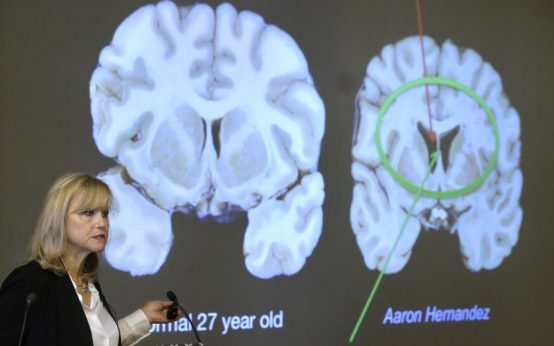 NFL Players Face High Rates of CTE, New Study Finds