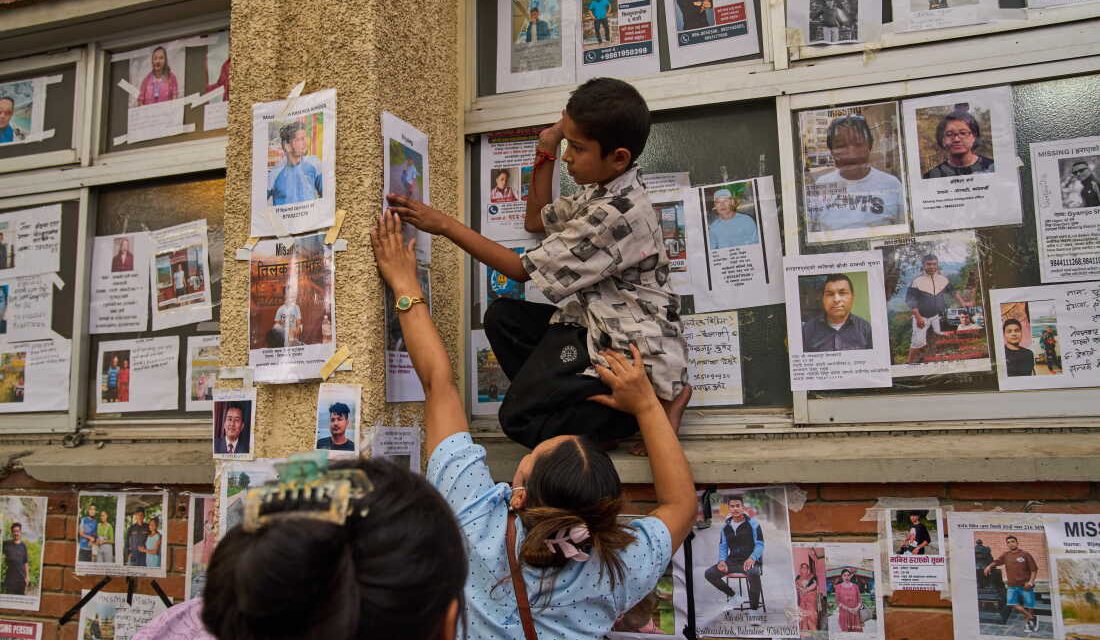
A young boy in Kathmandu, Nepal is assisted by a woman to put up a photograph of her missing relative. This image is displayed among many of missing and deceased individuals outside a government hospital on August 30th, 2026, as captured by Dar Yasin/AP.
Towns near the Nepal-China border face the threat of more mudslides as the search continues for over 2,400 missing persons, including several U.S. citizens following last week’s devastating floods. According to Amrit Bahadur Rai, Foreign Secretary of Nepal’s Ministry of Foreign Affairs, 734 bodies have been found four days after waves almost 30 feet high swept through mountain valleys. The Red Cross reports an impact on over 90,000 individuals due to the flooding.
Nepal has deployed thousands of rescue workers, continuing to find survivors over the weekend. As of Sunday morning, 85 Americans remain unaccounted for. U.S. State Department Spokesperson Tommy Pigott stated to ABC News “This Week” that nine Americans have been evacuated safely, with no reported deaths among U.S. citizens so far.
Missing Americans include tourists, hikers, and pilgrims visiting Mount Kailash, a sacred site in China’s Tibet Autonomous Region. For many faiths, the pilgrimage represents a unique and significant journey. Divya Chandrashekar shared with NPR that her brother-in-law, Ragu Rajan, and his wife, Archana Suresh, planned their visit to Mount Kailash for a year. The couple from Murphy, Texas began their trip from Kathmandu on August 25th, using the Nepal-China border crossing at the time of the floods. Their last known presence was near the Gyirong Port border post.
The Bhote Koshi River completely destroyed the border checkpoint and the Friendship Bridge between Nepal and China, as shown in security footage shared by China’s CCTV. Chandrashekar described Rajan and Suresh as spiritual lovers of nature and trekking, adding they were devoted parents with plans to celebrate their 25th wedding anniversary in November.
Shreya Ahuja from North Carolina recounted communicating with her parents, Deepak and Madhu Ahuja, shortly before the flood. Her parents, both U.S. citizens and Dallas-based small business owners, had finalized their pilgrimage for Deepak’s 60th birthday before intending to cross the border post. Shreya mentioned her initial lack of concern regarding their safety.
Drone footage reveals rescue personnel examining damaged structures along the Trishuli River in Nepal’s Nuwakot district. AP imagery captured by Rajesh Kumar Singh underscores the severity of the floods.
The U.S. State Department has bolstered support to U.S. embassies in Beijing and Kathmandu, deploying $3.6 million in emergency aid. Catholic Relief Services channels the first $500,000, focusing on addressing food relief for roughly 10,000 households over three months. Senthil Kumar Gurunathan, South Asia representative, conveyed challenges of aid delivery due to flood-induced roadblocks and mudslides. Immediate necessities include food, water, clothing, menstrual hygiene products, and mental health support. Efforts to identify alternate routes aim to ensure lifesaving supplies reach affected residents.
U.S. assistance began arriving Saturday and Sunday in the Rasuwa and Nuwakot districts, featuring 500 blankets, mosquito nets, insulating foam sheets, and 2.5 tons of food provisions.
Nepalese authorities forecast further monsoon rains, which could cause additional flooding. The U.S. Embassy predicts potential flash floods, landslides, riverbank erosion, and disruptions to roads and rescue operations in central Nepal through September 1st.
Report information contributed by NPR’s Steve Inskeep and Majd Al-Waheidi.
 Venezuelan Leadership at the United Nations
 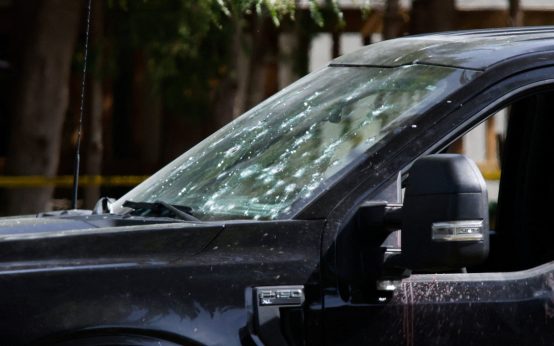 Ontario Synagogue Shooting During Yom Kippur Leaves One Officer and Shooter Injured
 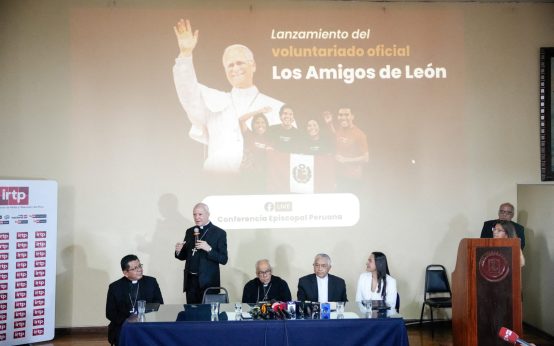 Pope Leo XIV’s Upcoming Visit to Latin America: An Overview
 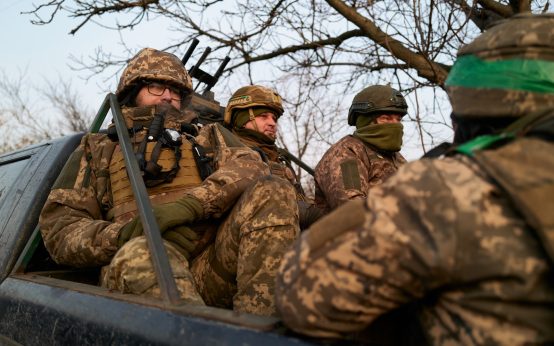 Ukraine Deploys Ground Robots in ‘Operation Vivaldi’
  Understanding AI’s Impact Compared to Historical Threats
  State Department Alerts on Middle East Travel Amid Rising Tensions